1.9 - Types of Plate Margins & Their Hazards
Tectonic plate boundaries and interactions
Plate boundaries are the zones where tectonic plates meet. These interactions are driven by dynamic geological processes, primarily convection currents in the mantle that cause the plates to move in various directions. The movement results in three distinct types of boundaries, each with unique characteristics and global distributions.
Key aspects of tectonic plate movement
- Convection currents - Heat from the Earth's core creates currents in the mantle, driving the movement of tectonic plates above.
- Meeting points - Plate boundaries are the specific locations where these plates come into contact.
- Types of boundaries - The direction and nature of plate movement create three main boundary types: convergent, divergent, and conservative.
- Global distribution - Plate boundaries are distributed worldwide, with specific patterns influenced by the direction of plate motion.
Characteristics of convergent boundaries
Convergent boundaries occur where two tectonic plates move towards each other, often leading to significant geological activity. The outcomes depend on the types of plates involved in the collision.
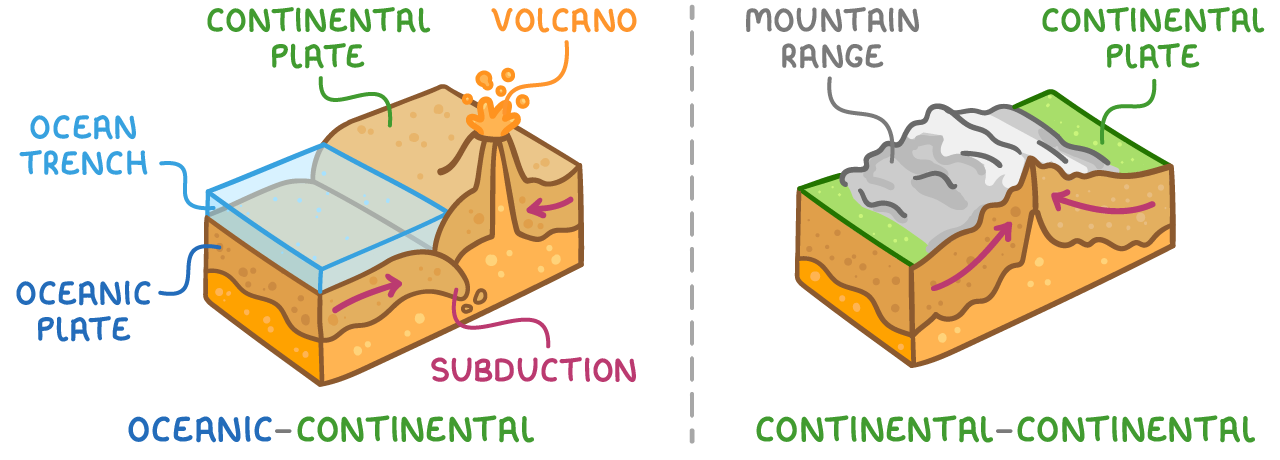
Processes and features at convergent boundaries
- Oceanic-continental collision - When an oceanic plate meets a continental plate, the denser oceanic plate is forced beneath the continental plate into the mantle in a process called subduction. This destruction of crust often results in:
- Formation of volcanoes due to melting of the subducted plate.
- Creation of ocean trenches, which are deep depressions in the ocean floor where the oceanic plate descends.
- Continental-continental collision - When two continental plates meet, neither is dense enough to sink into the mantle. Instead, the plates smash together, causing the ground to fold and rise, forming mountain ranges.
Divergent boundaries and crust formation
Divergent boundaries are zones where two tectonic plates move away from each other. This separation allows for the creation of new crust as material from the mantle rises to the surface.
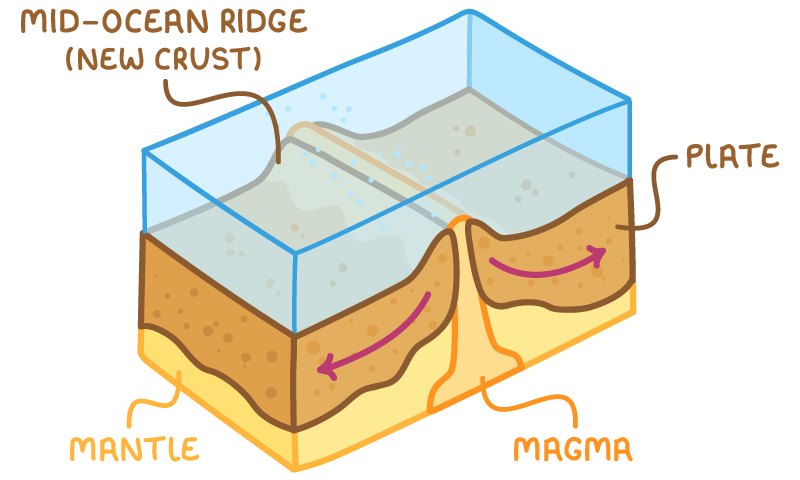
Processes and outcomes at divergent boundaries
- Plate separation - As plates pull apart, a gap forms between them.
- Magma activity - Molten rock, known as magma, rises from the mantle to fill the gap left by the separating plates.
- New crust formation - The magma cools and solidifies upon reaching the surface, creating new crust.
Properties of conservative boundaries
Conservative boundaries, also known as transform boundaries, are areas where two tectonic plates slide past each other horizontally. This lateral movement does not result in the creation or destruction of crust.
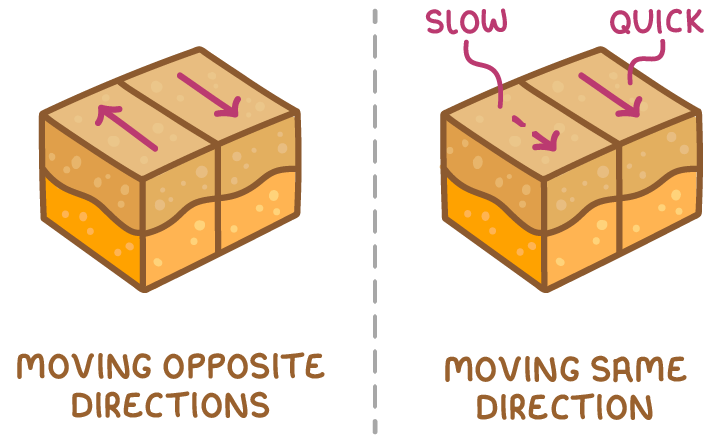
Characteristics of conservative boundaries
- Sideways motion - Plates move sideways relative to each other, or in the same direction but at differing speeds.
- No crust alteration - Unlike convergent or divergent boundaries, there is no significant creation or destruction of crust at these boundaries.