8.4 - Taiga Forests: Characteristics
The structure and characteristics of taiga forests
Taiga forests, also known as boreal forests, are vast, cold-climate ecosystems primarily found in the northern hemisphere. They have a distinct structure that differs significantly from other forest types, such as tropical rainforests, due to their harsh environmental conditions.
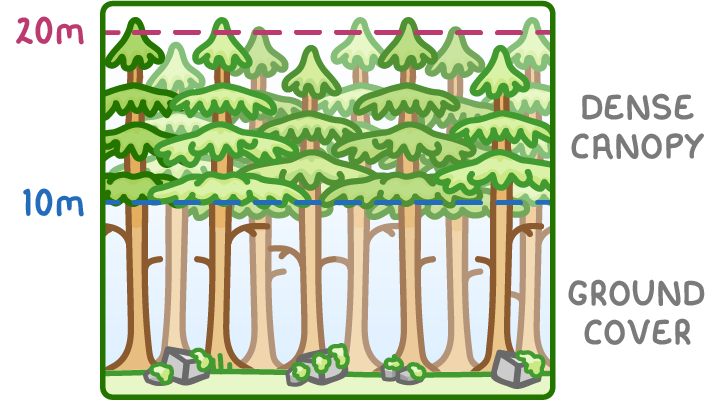
Key features of taiga forest structure
- Simplified layout - Unlike tropical rainforests, taiga forests have a simpler structure with tall trees growing closely together, forming a dense canopy.
- Minimal understory - The forest floor supports very few plants because of poor soil quality and limited sunlight penetration through the thick canopy.
- Dominant vegetation - Predominant trees are conifers, such as spruce, fir, and pine, which are well-suited to the cold, dry climate.
- Ground cover - Surviving plants on the forest floor are mainly mosses and lichens, which can tolerate the low light and nutrient-poor conditions.
Plant and animal adaptations
The extreme conditions of taiga forests, including long, cold winters and short growing seasons, require specific adaptations for both plants and animals to survive and thrive in this challenging ecosystem.
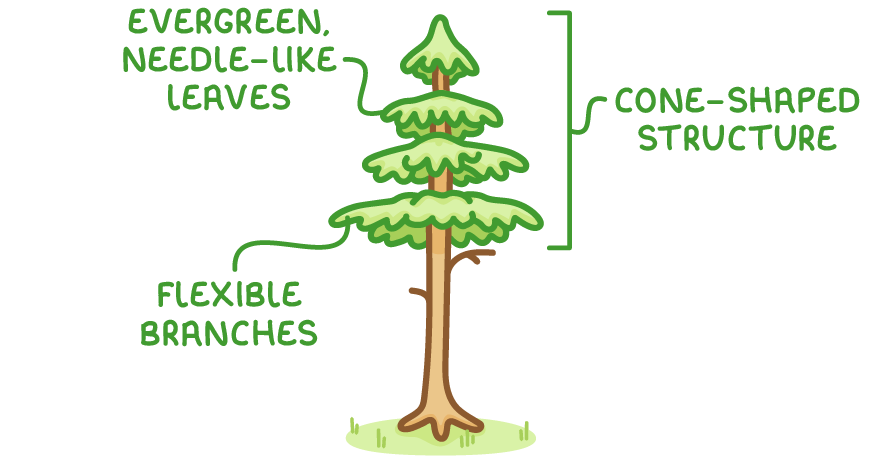
Conifer adaptations for cold, dry climates
- Evergreen nature - Conifers retain their needles year-round to make the most of limited sunlight for photosynthesis.
- Needle-like leaves - These reduce surface area, minimising water loss in the dry climate.
- Cone-shaped structure - This design allows heavy snow to slide off easily, preventing branch breakage.
- Flexible branches - Branches bend under snow weight rather than snapping, ensuring structural integrity.
Animal adaptations for survival
- Insulation against cold - Many animals have thick fur, while birds like snow grouse possess dense layers of downy feathers to retain body heat.
- Migration for food - Larger mammals, like elk, travel long distances to access vegetation during scarce winter months.
- Hibernation strategies - Some species enter hibernation to conserve energy when food is limited during the cold season.
- Camouflage techniques - Animals like arctic hares develop white winter coats to blend into snowy surroundings, aiding in predator avoidance or hunting efficiency.
Nutrient cycling and soil fertility challenges
Taiga ecosystems face significant challenges in maintaining nutrient availability due to the cold climate and slow ecological processes. This impacts soil fertility and overall productivity.
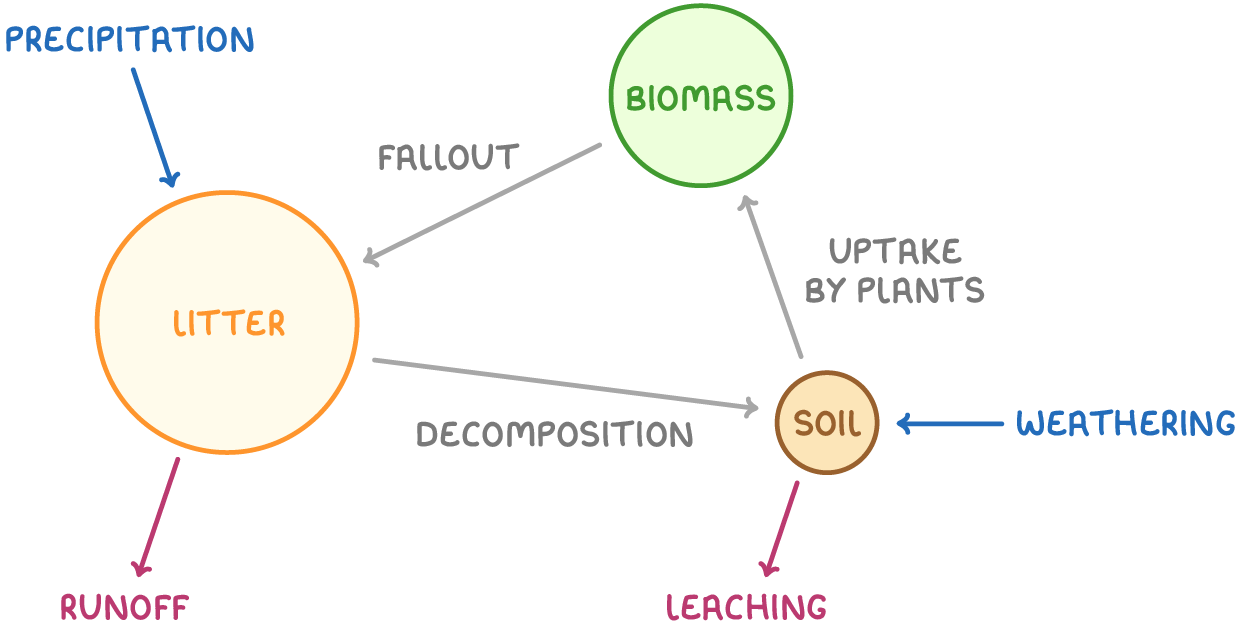
Factors affecting nutrient cycling
- Limited nutrient input - Very few nutrients enter the ecosystem through precipitation or weathering of rocks.
- Nutrient loss - Nutrients are often lost via runoff and leaching, reducing availability for plants.
- Slow decomposition - Low temperatures prolong the breakdown of organic matter, such as fallen needles, which are shed continuously by conifers.
- Reduced decomposer activity - Harsh conditions limit the presence and activity of decomposer organisms, further slowing nutrient release.
- Storage in litter - Most nutrients are stored in dead organic material on the forest floor rather than being recycled quickly into the soil.
Impact on soil and plant growth
- Low soil fertility - The slow decomposition and limited nutrient cycling result in soils with poor nutrient content.
- Restricted plant growth - Cold temperatures and low nutrient availability hinder the rate of plant growth and the transfer of nutrients from soil to plants.
Factors contributing to low biodiversity
Taiga forests exhibit much lower biodiversity compared to ecosystems like tropical rainforests. This is due to a combination of historical, environmental, and ecological factors that limit species variety.
Reasons for limited species diversity
- Recent glacial history - Much of the taiga region was covered in ice until about 15,000 years ago, leaving limited time for species to adapt to current conditions.
- Simple forest structure - The uniform structure offers fewer habitats and ecological niches, reducing the variety of species that can thrive.
- Low productivity - Slow plant growth results in less biomass, providing limited food resources for other organisms.
- Short growing season - Only a few months in summer allow for active growth, constraining the life cycles of many species.
- Intense competition - Limited food availability leads to fierce competition among species for survival.
- Cold intolerance - Few amphibians or reptiles inhabit taiga forests as they struggle to regulate body temperature in the absence of consistent warmth.
Interdependence within taiga ecosystems
Taiga forests are highly interdependent ecosystems where climate, soils, water, plants, animals, and human activities are closely linked. A change in one component can trigger widespread effects across the entire system.
Key interactions between ecosystem components
- Plant-soil relationship - Plants draw nutrients from the soil to grow, while also providing nutrients to herbivores through consumption. Decomposing plant material eventually returns nutrients to the soil.
- Animal-plant dynamics - Animals aid plant reproduction by spreading seeds through their excrement, while relying on plants for food. Herbivores, such as mountain goats, depend on accessible vegetation like lichens and migrate to find it, with carnivores like foxes following these populations.
- Climate influence - The cold climate slows plant growth and organic matter decomposition, limiting nutrient availability and soil fertility. In summer, trees absorb heat and shade the ground, preventing permafrost (permanently frozen ground) from thawing, which in turn provides water for plants.
- Permafrost effects - Permafrost acts as a water source for vegetation, but if it melts due to warming temperatures, it can cause flooding that inhibits plant growth. Thawing also releases trapped greenhouse gases, contributing to global warming.
Consequences of ecosystem disruptions
- Deforestation impacts - Removing trees disrupts the balance, affecting soil stability, animal habitats, and climate regulation, with knock-on effects throughout the ecosystem.
- Climate change threats - Rising temperatures and changing precipitation patterns threaten both flora and fauna, altering migration patterns, growing seasons, and habitat suitability in taiga forests.