8.5 - Taiga Forests: Threats
Exploitation of resources in taiga forests
Taiga forests face significant threats due to the extraction of natural resources. These northern woodlands are targeted for various economic activities.
Major activities threatening taiga forests
- Logging for softwood - Trees are felled to produce timber for construction, furniture, and smaller items like matches.
- Pulp and paper production - Harvested trees are processed into pulp, which is then turned into paper products.
- Hydroelectric power (HEP) - Dams built on rivers within taiga regions flood extensive areas of forest.
- Fossil fuel extraction - Vegetation is cleared to access underground reserves of oil and gas.
- Tar sands mining - Found beneath taiga forests in northern regions, tar sands are a source of thick, black oil processed into fuels like petrol. Extraction methods, such as open pit or strip mining, involve removing surface layers of land, causing deforestation.
- Mineral exploitation - Taiga areas are rich in valuable minerals like iron ore, gold, copper, and silver. Forests are cut down to create mines and build access roads.
Impacts of acid rain on biodiversity
Acid rain is a significant environmental issue affecting taiga forests, resulting from human activities that release pollutants into the atmosphere.
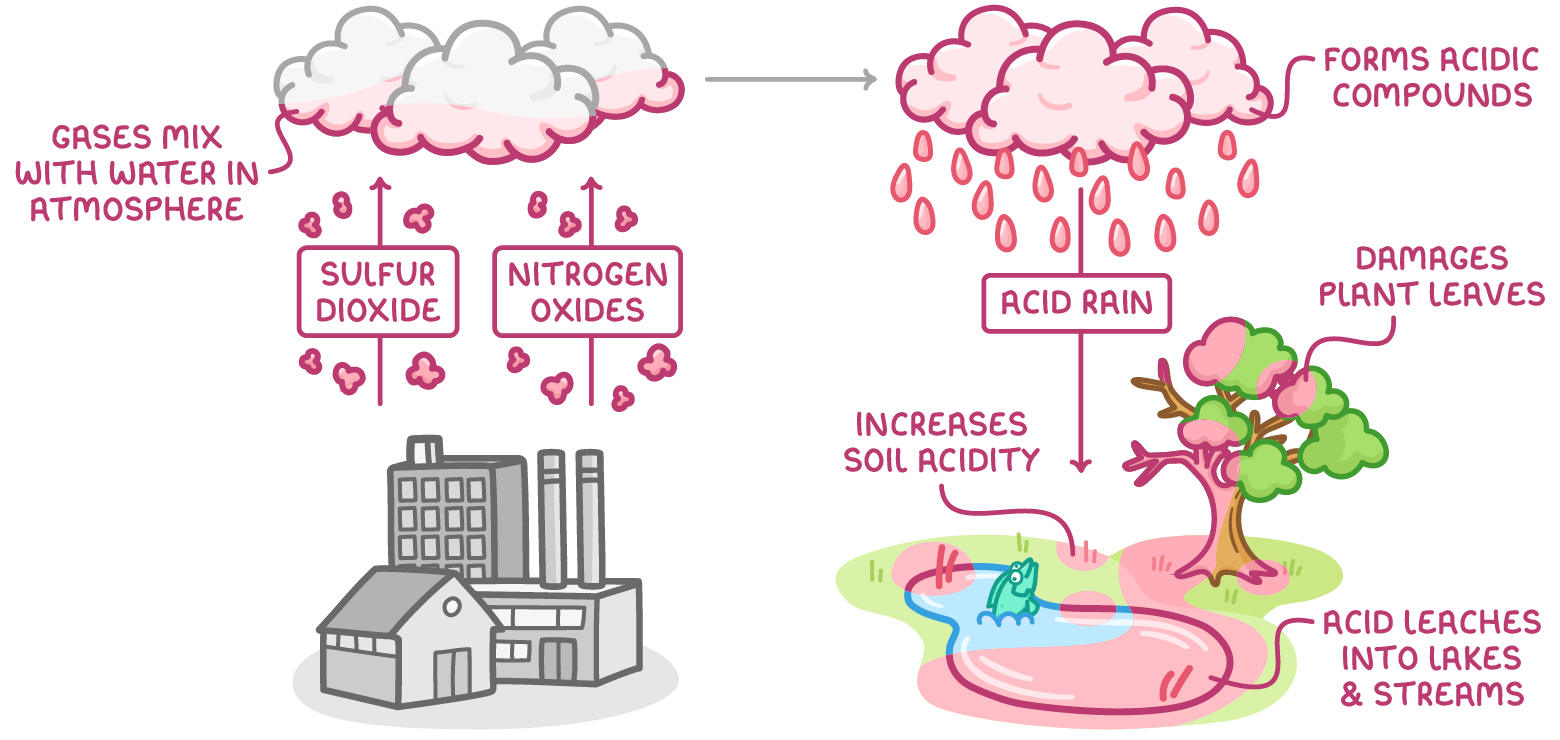
Causes and consequences of acid rain
- Formation of acid rain - Burning fossil fuels emits gases such as sulfur dioxide and nitrogen oxides, which mix with water in the atmosphere to form acidic compounds.
- Damage to vegetation - Acidic precipitation harms plant leaves, weakening their ability to withstand harsh, cold conditions typical of taiga regions.
- Soil degradation - Acid rain increases soil acidity, making it difficult for many plants to grow.
- Aquatic ecosystem impact - Acids leaching into lakes and streams kill off aquatic organisms.
Effects of pests and diseases on taiga ecosystems
Pests and diseases pose a threat to taiga forests, damaging trees and other organisms.
Factors contributing to pest and disease spread
- Species-specific attacks - Many pests and diseases target specific tree types, such as bark beetles infesting coniferous trees. With taiga forests often having large areas of a single tree species, infestations can spread rapidly and cause extensive damage.
- Climate change influence - Rising temperatures due to climate change create more favourable conditions for pests and pathogens to survive. This has led to the arrival of new threats and an increase in the frequency of attacks.
Role of forest fires in altering taiga landscapes
Forest fires, while a natural component of taiga ecosystems, have become more frequent due to changing climatic conditions.
Dynamics and impacts of forest fires
- Natural regeneration role - Fires are a normal part of the taiga ecosystem, allowing new growth and regenerating the forest.
- Increased frequency due to climate change - Warmer and drier conditions, driven by climate change, have extended the fire season and increased the occurrence of wildfires in taiga regions.
- Destruction of vegetation - Large-scale fires can destroy huge numbers of trees, altering the forest's composition as certain species are better adapted to recolonise burnt areas.
- Habitat fragmentation - Fires can split forests into smaller sections, making it challenging for migratory animals that require large areas to find sufficient food.
TermDefinition
Hydroelectric power (HEP)The generation of electricity using flowing water to drive turbines, often requiring large dams that flood surrounding land.
Tar sandsA mixture of sand, clay, water, and thick, heavy oil that can be mined and processed into fuel.
SoftwoodWood from gymnosperm trees such as conifers, widely used for timber and paper production.
Acid rainRainfall made acidic by atmospheric pollution from sulfur dioxide and nitrogen oxides.
Habitat fragmentationThe breaking up of a large, continuous habitat into smaller, isolated sections, often by human activity or fires.