4.20 - Causes & Effects of Flooding
Physical factors contributing to flooding
Flooding occurs when river levels rise so high that water overflows the banks onto the surrounding flood plain. Several physical characteristics of an area can significantly increase the likelihood of such events by influencing how water behaves in the landscape.
Natural conditions that heighten flood risk
- Coastal location and prevailing winds - Areas on coasts facing dominant wind directions often experience higher precipitation, increasing flood potential.
- Mild and wet climates - Regions with consistently damp weather face a greater chance of flooding due to regular rainfall.
- Intense rainfall events - Places prone to heavy, sudden downpours are more likely to see rivers overflow.
- High rainfall records - Areas with historically significant precipitation levels are at greater risk of flood hazards.
- Upland impermeable rocks - Hard, non-porous rocks in higher areas prevent water from soaking into the ground, leading to rapid runoff into rivers.
- Snowfall and melt in highlands - Winter snow accumulation on elevated terrain adds large volumes of water to rivers when it melts, often over a short period.
Human activities that increase flood risk
Beyond natural factors, human actions play a critical role in elevating flood risks. Modifications to the landscape often disrupt the natural water cycle, accelerating water movement into river systems.
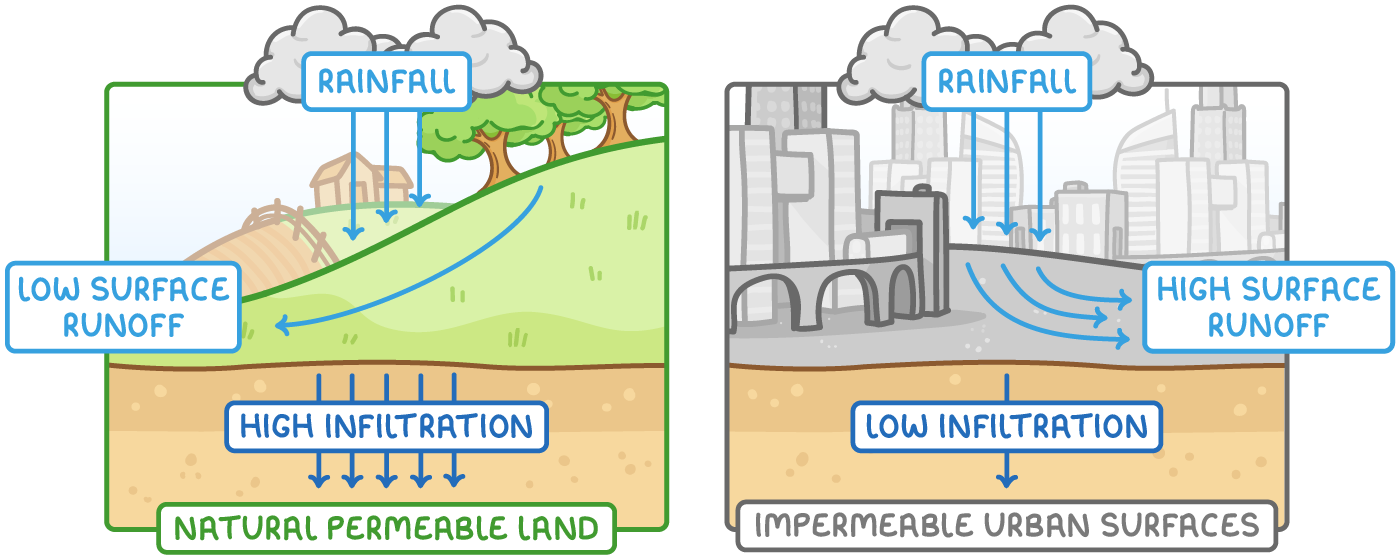
Human influences on flooding likelihood
- Urban development on flood plains - Building on natural flood plains reduces the land's ability to absorb water, as concrete and other surfaces prevent infiltration.
- Reduced absorption in built-up areas - Urban environments lack soil and vegetation, leading to minimal water soaking into the ground and higher surface runoff.
- Deforestation and land clearing - Removing natural woodland or heathland speeds up water flow to rivers by eliminating vegetation that would otherwise slow it down.
- Agricultural drainage systems - Draining land for farming, including the use of ditches, hastens water movement into main river channels, increasing flood potential.
Combined factors leading to flooding events
Flooding often results from a combination of physical and human factors interacting during specific weather events. These conditions can overwhelm river systems and lead to water spilling over onto surrounding areas.
Key interactions causing floods
- Prior soil saturation (antecedent conditions) - If soils are already waterlogged before a storm, they cannot absorb more, leading to increased runoff.
- Heavy storm rainfall - Intense downpours during storms can exceed a river's capacity to contain water within its banks.
- Short lag time - When rainwater reaches river channels quickly after falling, there's little time for natural dispersal, heightening flood risk.
- Debris blockages - Accumulated material at bridges or narrow river sections can obstruct flow, forcing water to spread outwards.
- Inadequate drainage systems - Urban drainage infrastructure often struggles to handle large water volumes during heavy rain.
- Impermeable urban surfaces - Hard surfaces like roads and pavements cause rapid runoff, adding to the volume of water entering rivers.
Environmental and societal changes increasing flood risk
Flood risks are not static; they are rising due to broader environmental shifts and human pressures. These trends suggest that flooding events may become more frequent and severe over time.
Factors driving higher flood risks
- More frequent and intense storms - Potentially linked to climate change, storms are occurring more often and with greater rainfall intensity.
- Larger scale flood events - Increased precipitation is leading to more extensive flooding incidents.
- Prolonged wet weather - Extended rainy periods saturate the ground, reducing its capacity to absorb additional water.
- Population growth and urban expansion - Growing populations push development into flood-prone areas, increasing impermeable surfaces like concrete.
- Loss of vegetation and permeable land - Removing natural cover and replacing it with hard surfaces prevents water absorption, worsening runoff.
- More people in vulnerable areas - As development continues in risky locations, the number of individuals exposed to flooding rises.
Threats to people from flooding
Flooding poses significant dangers to human life and well-being. The immediate and longer-term effects can disrupt communities and cause substantial personal and economic hardship.
Human consequences of flooding
- Risk of injury or death - Floodwaters can be deadly, causing harm through drowning or physical trauma.
- Damage to transport links - Roads, bridges, and rail lines may be destroyed or made unusable, isolating communities.
- Contaminated water supplies - Floodwater mixed with sewage can pollute drinking water, creating health risks.
- Loss of possessions - Personal belongings can be damaged or destroyed by water inundation.
- Homelessness - Property damage often leaves individuals without shelter, sometimes for extended periods.
- Business disruption - Flood damage can force businesses to close, leading to income loss for owners and employees.
- Power supply interruptions - Flooding frequently cuts off electricity, affecting daily life and livelihoods.
- Economic impact - The combined effect of business closures and rebuilding costs creates significant financial losses.
Environmental impacts of flooding
Flooding doesn't just affect people; it also has profound consequences for the natural environment. These effects can alter ecosystems and landscapes, often with long-lasting results.
Ecological and landscape changes due to flooding
- River contamination - Sewage and debris carried by floodwaters pollute rivers, harming aquatic life.
- Wildlife habitat damage - Pollution and physical destruction impact the areas where animals live, disrupting ecosystems.
- Agricultural land degradation - silt and sediment deposited by floods can ruin farmland, affecting food production.
- Riverbank erosion - Floodwaters erode banks, reshaping the landscape over time.
- Channel widening and deposition - Rivers may widen during floods, with increased sediment deposition downstream altering river courses.
- Vegetation loss - Plants can be uprooted or damaged by prolonged exposure to water, reducing natural cover in affected areas.