4.21 - Strategies for Managing Rivers
The concept of flood management and its importance
Floods can cause significant destruction to communities, infrastructure, and the environment. Effective flood management is essential to reduce the risk of flooding and lessen its impact when it occurs. This involves a range of strategies that either prevent flooding or mitigate its effects.
Hard engineering strategies for flood control
Hard engineering involves constructing man-made structures to control river flow and prevent flooding. These methods are often used in areas where immediate and robust protection is needed.
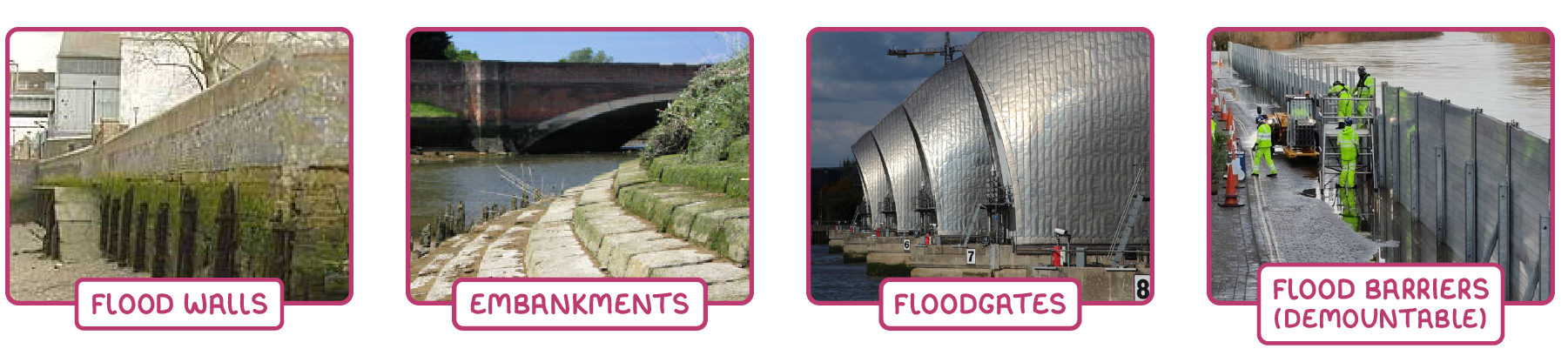
Types of hard engineering strategies
| Strategy | Description | Benefits | Costs |
|---|---|---|---|
| Flood walls | These are artificial barriers erected along river banks to increase their height, allowing the river to contain more water during high flow periods. | Provides strong protection against flooding for nearby areas. | Extremely costly to construct; can be visually unappealing and obstruct river views. |
| Embankments | Raised banks built along or close to river edges to prevent water from spilling into surrounding built-up areas during floods. | Shields buildings and infrastructure on flood plains; can be constructed from natural materials like earth, making them less intrusive than flood walls. | Expensive to build; poses a risk of catastrophic flooding if water overtops or breaches the embankments. |
| Flood barriers (floodgates) | Structures placed on river estuaries to block flooding caused by storm surges or exceptionally high tides. | Can be closed during predicted surges, safeguarding large areas, including major cities. | High construction and maintenance expenses. |
| Flood barriers (demountable) | Temporary barriers installed only when flooding is forecasted. | Preserves the aesthetic appeal of scenic locations as they are not permanent. | Costly to set up; risk of delays in installation during sudden flood events. |
Soft engineering strategies for flood reduction
Soft engineering focuses on working with natural river processes to manage flooding. These strategies aim to reduce the impact of floods by enhancing the environment's natural ability to handle excess water.
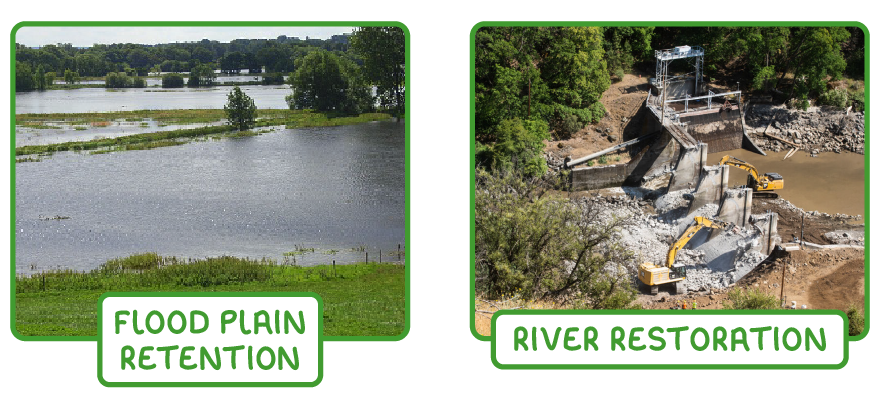
Types of soft engineering strategies
| Strategy | Description | Benefits | Costs |
|---|---|---|---|
| Flood plain retention | Preserving the natural flood plain by avoiding construction on it, allowing it to act as a buffer zone for excess water. | Slows down floodwaters and maintains the flood plain's capacity to store water; no expenditure on artificial flood defences. | Limits development opportunities, making it impractical for urban settings. |
| River restoration | Returning a river to its natural state by removing artificial barriers like levees, enabling the flood plain to flood naturally. | Decreases flood risk downstream by reducing river discharge; requires minimal ongoing maintenance as the river remains natural. | May heighten local flood risk if additional measures aren't implemented to manage severe flooding. |
Costs and benefits of flood management
Both hard and soft engineering strategies offer distinct advantages and drawbacks, which must be weighed when planning flood management. The choice of approach often depends on the specific needs of an area, available budget, and environmental priorities..