3.2 - Growth & Decline of Cities
The concept of migration and its types
Migration refers to the movement of people from one place to another, often in search of better living conditions or opportunities.
Types of migration
- National migration - Movement of people within the same country, typically from rural areas to urban centres.
- International migration - Relocation from one country to another, often to cities in the destination country.
- Rural-urban migration - Specific movement from countryside regions to urban areas, driven by the search for improved prospects.
Push and pull factors influencing migration
Migration is driven by a combination of factors that either compel individuals to leave their current location or attract them to a new one.
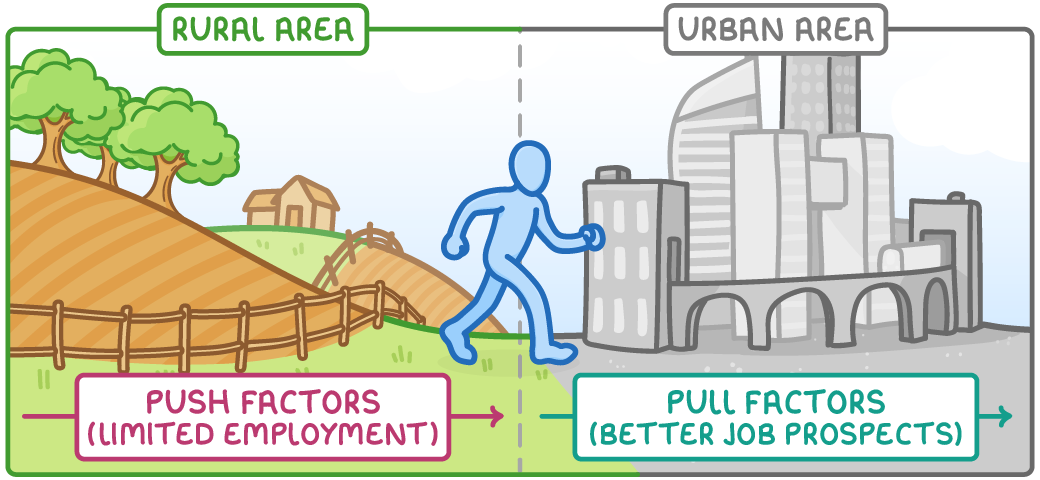
Push factors encouraging people to leave an area
- Limited employment - A lack of job opportunities or low wages in the current location.
- Substandard living conditions - Poor quality of life, including inadequate housing or basic services.
- Inadequate services - Limited access to healthcare and education facilities.
- Conflict and instability - Wars or ongoing violence creating unsafe environments.
- Environmental hazards - Natural disasters such as floods or earthquakes disrupting lives.
- Degraded surroundings - High levels of pollution or crime making an area undesirable to live in.
Pull factors attracting people to a new area
- Abundant job prospects - Greater availability of employment and better pay in urban areas.
- Enhanced living standards - Improved quality of life with access to better amenities.
- Superior services - Access to high-quality healthcare and educational institutions.
- Safety and stability - Lower crime rates and reduced risk of natural disasters.
- Cleaner environments - Better environmental conditions with less pollution.
Patterns of urbanisation by development level
Economic transformations significantly influence migration patterns, causing cities in countries at varying development levels to either expand or shrink in population. Urbanisation follows distinct patterns based on a country's level of economic development.
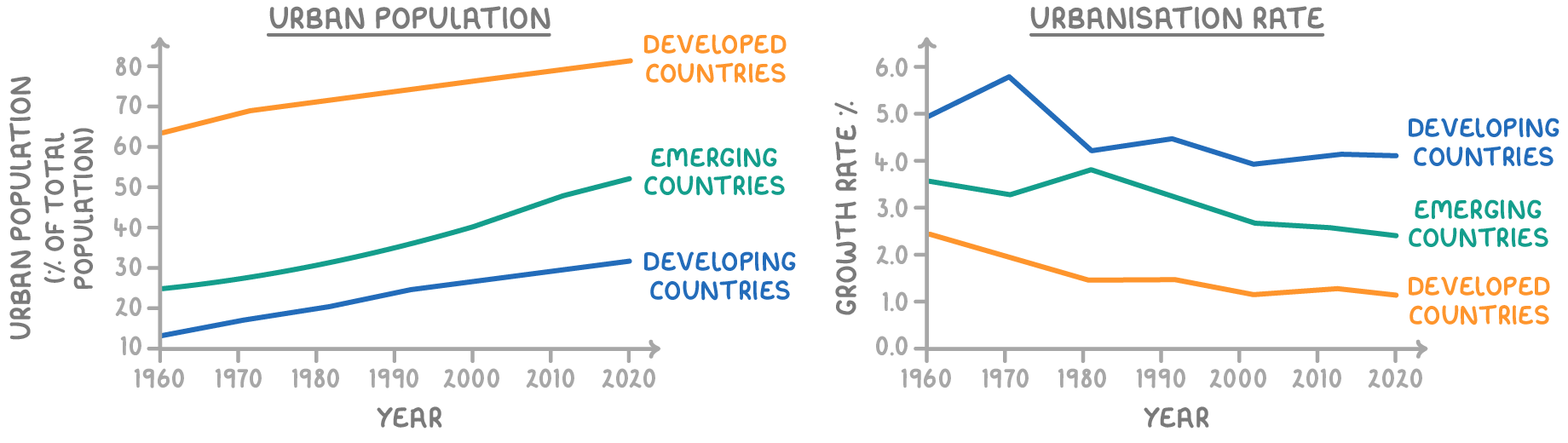
Urbanisation in developing countries
- Rapid city growth - Cities expand quickly due to extreme poverty in rural areas pushing people to urban centres.
- Agricultural advancements - Improvements in farming technology reduce the need for rural labour, leading to national migration to cities.
- Informal sector opportunities - Low-skilled rural migrants find work in informal jobs within urban areas.
- Trade and connectivity - Cities with strong transport links become focal points for trade, attracting more residents.
- Industrial expansion - Foreign companies invest in manufacturing, creating jobs and drawing workers to urban areas.
Urbanisation in emerging countries
- Varied city growth - Some cities experience rapid population increases, while others stabilise.
- Industrial hubs - Certain cities develop into manufacturing centres, offering numerous factory jobs.
- Service sector boom - Coastal cities often become hubs for services like financial technology, attracting workers.
- Infrastructure investment - Wealthier emerging countries build flagship projects such as exhibition centers to lure foreign investment.
- Job attraction - New industries and services create employment, pulling migrants to these urban areas.
Urbanisation in developed countries
- Stable or declining populations - Some cities maintain steady populations, while others see declines.
- De-industrialisation effects - Loss of traditional industries like textiles causes population outflows as people seek work elsewhere.
- Urban regeneration - Former industrial cities, such as old manufacturing centers, transform into creative industry hubs, attracting residents back.
- Attraction to successful cities - Many workers migrate to thriving regional cities, leading to further decline in less prosperous urban areas.
- Regional shifts - Movement towards economically vibrant cities contributes to the ongoing decline of struggling urban centres.
These patterns illustrate that urbanisation is not a random occurrence but a direct result of people moving towards areas with job opportunities and away from regions with limited prospects.
TermDefinition
MigrationThe movement of people from one place to another in search of better living conditions or opportunities.
Rural-urban migrationThe movement of people from the countryside to towns and cities.
Push factorA negative aspect of a current location that encourages people to move away.
Pull factorA positive aspect of a new location that attracts people to move there.
UrbanisationThe increase in the proportion of a country's population living in urban areas.
De-industrialisationThe decline of traditional manufacturing industries in a country or region.
Urban regenerationThe revival of old, declining urban areas by improving their physical and economic environment.