4.3 - Physical Processes Shaping the Landscape
Physical processes in shaping landscapes
Landscapes are continuously transformed by natural physical processes that break down, transport, and deposit materials across the Earth's surface. These processes work together over time to create the varied terrains seen in different regions.
Key physical processes in landscape formation
- Weathering - The disintegration of rocks into smaller fragments through various mechanisms.
- Erosion - The wearing away and removal of rock and soil by natural forces such as water, ice, and wind.
- Post-glacial river processes - The actions of rivers following glacial periods, which carve out distinct features due to increased water flow from melting ice.
- Slope processes - Movements of material down slopes, which alter the shape of hills and valleys.
Types of weathering and erosion
Weathering and erosion are fundamental processes that initiate the transformation of landscapes by breaking down rocks and moving the resulting debris.
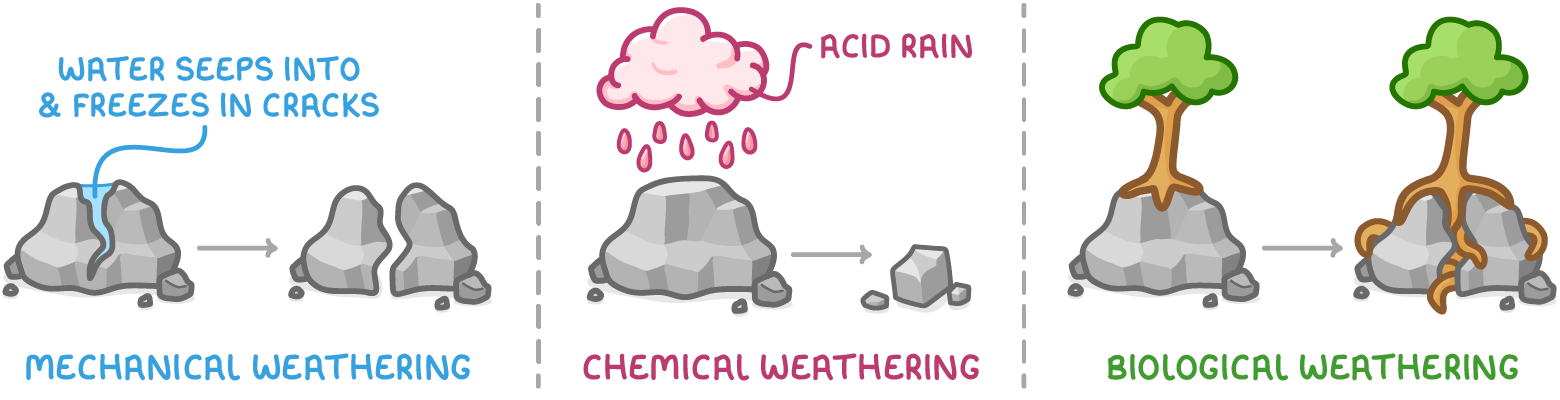
Mechanisms of weathering
- Mechanical weathering - Physical breakdown of rocks without changing their chemical composition.
- Chemical weathering - Alteration of rock composition through reactions with water, acids, or gases.
- Biological weathering - Breakdown caused by living organisms.
Agents and effects of erosion
- Glacial erosion - During past ice ages, glaciers scoured the land, carving landscapes.
- River erosion - Flowing water in rivers continuously cuts into the landscape.
- Coastal erosion - Seas and oceans wear away coastal rocks through wave action.
Post-glacial river processes and slope movements
Following glacial periods, specific processes related to rivers and slopes have played significant roles in sculpting landscapes.
Impacts of post-glacial river processes
- Increased river power - At the end of glacial periods, melting ice resulted in larger, more powerful rivers capable of significant erosion.
- Formation of landforms - As ice retreated, it left features like hanging valleys, which are smaller valleys positioned at higher elevations compared to the main valley floor.
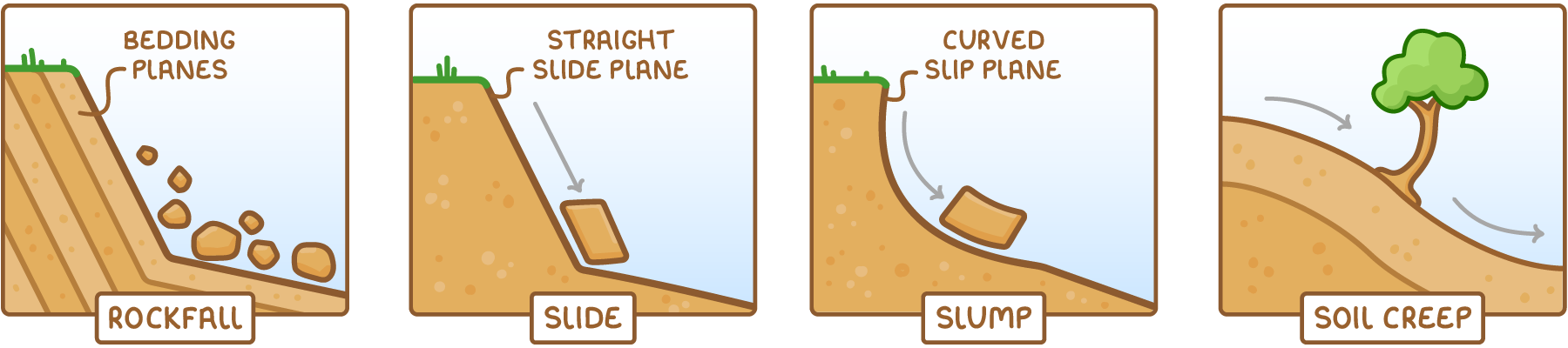
Types of slope processes
- Rockfalls - Sudden drops of rock fragments from steep slopes.
- Slides - Large masses of rock or soil moving downslope.
- Slumps - Rotational movements of material where the base slips downward.
- Soil creep - Slow, gradual movement of soil down a slope.
Climate's influence on physical processes
Climate plays a crucial role in determining the rate and type of physical processes that shape landscapes.
Effects of climate on landscape processes
- Cold climates - Promote freeze-thaw weathering, where water freezes in rock cracks, expands, and splits the rock apart.
- Wet climates - Lead to an abundance of streams and rivers, increasing erosion.
Characteristics of upland and lowland landscapes
Physical processes create distinct landscapes in upland and lowland areas, each with unique features shaped by the dominant forces of erosion, weathering, and deposition.
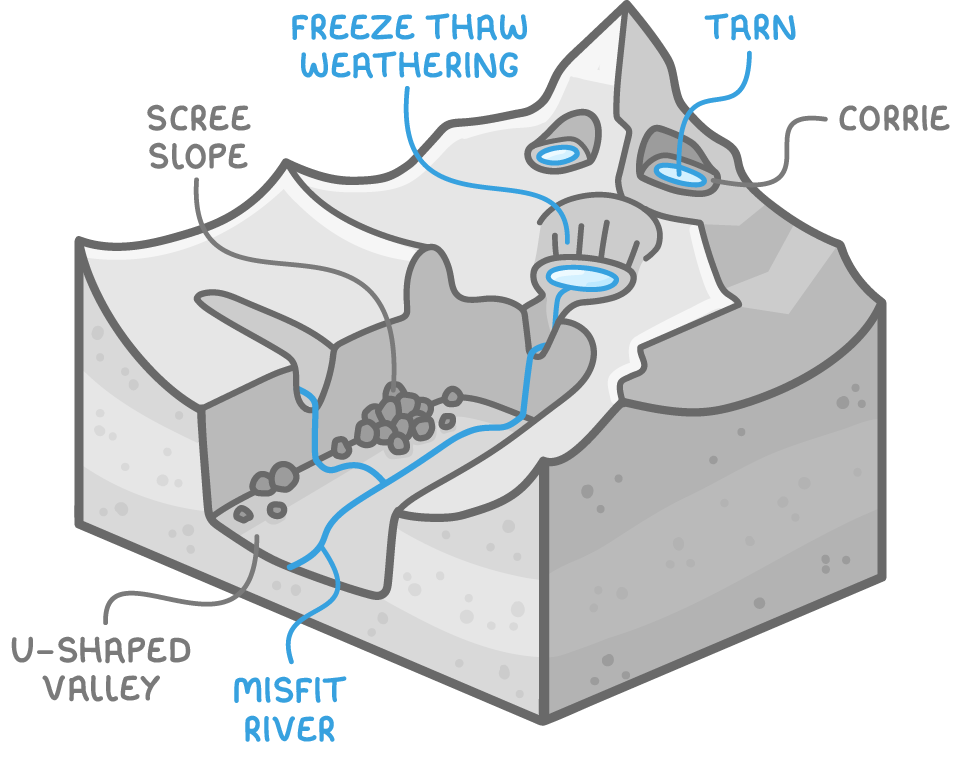
Features of upland landscapes
- Tightly packed contours - Indicate steep terrain on maps.
- Rocky crags - Jagged rock outcrops.
- Tarns - Small mountain lakes found in corries or basins hollowed out by glacial ice.
- Freeze-thaw weathering - Active on steep corrie back walls.
- Scree slopes - Accumulations of loose rock debris at the base of cliffs.
- U-shaped valleys - Wide, flat-floored valleys with steep sides, carved by glacial erosion.
- Misfit rivers - Streams that appear too small for the large valleys they flow through.
- Impermeable rocks - Lead to numerous streams that erode steep valley sides, forming deep gullies.
Features of lowland landscapes
- Chalk escarpments - Steep slopes formed from resistant chalk layers.
- Large flat clay areas - Expansive, level regions.
- Flat valleys - Characterised by widely spaced contour lines.
- Meandering rivers - Rivers on impermeable surfaces wind across wide valley floors.
- Dry valleys - Formed where streams now flow underground through permeable chalk.
- Glacial influence - Colder climates in past glacial periods increased freeze-thaw weathering.
- Snowmelt impact - Glacial melt provided streams with greater water volumes than today.
- Flood plains - Created by wet climates causing river overflow, depositing silt across wide, flat areas.
These distinct features of upland and lowland landscapes demonstrate how multiple physical processes interact over time to sculpt the Earth's surface.