3.1 - Global Urban Growth Trends
The definition and process of urbanisation
Urbanisation refers to the increase in the proportion of a country's population that resides in urban areas, such as towns and cities. This process transforms societies as more people move from rural to urban settings, often driven by economic opportunities and lifestyle changes.
Key terms associated with urbanisation
- Megacity - An urban area with a population exceeding 10 million inhabitants.
- Urban primacy - A situation where one city holds significant dominance over others within the same country.
- Primate cities - Cities that are disproportionately larger than any other in their country, often having at least twice the population of the next largest city.
Global trends in urbanisation
Urbanisation is a global phenomenon, but its pace and impact vary significantly across different types of countries. Over half of the world's population, approximately 3.9 billion people, currently live in urban areas, and this figure continues to grow daily.
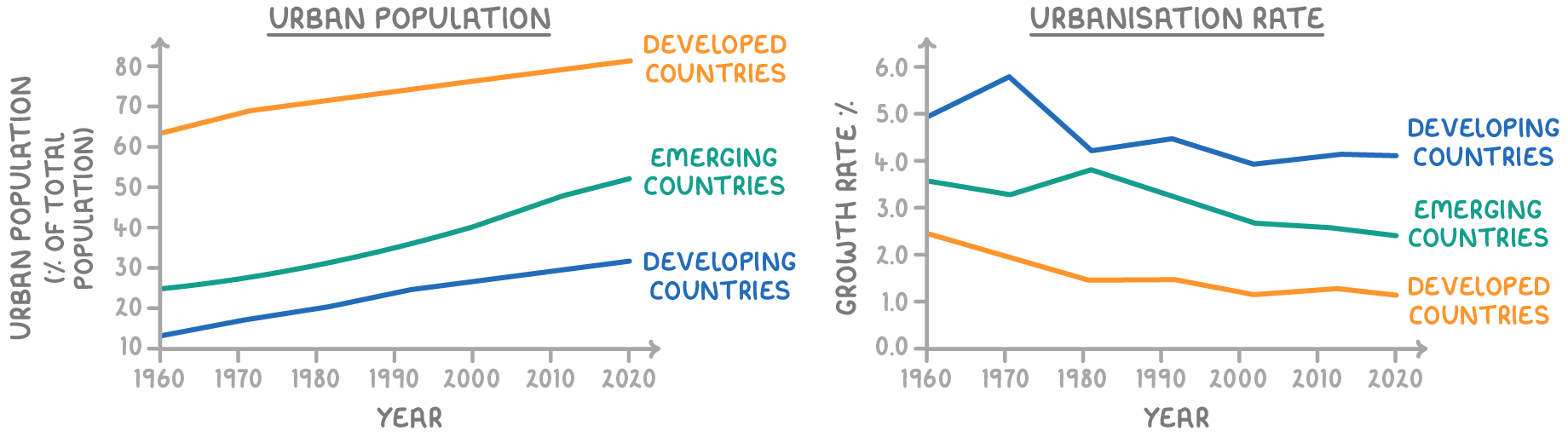
Patterns of urbanisation by region
- Developed countries - Urbanisation occurred earlier, during the Industrial Revolution of the 18th and 19th centuries. Currently, about 79% of the population in these countries live in urban areas, but the rate of urban growth is relatively slow.
- Developing countries - Only around 35% of the population reside in urban areas, yet these regions experience the fastest rates of urbanisation globally due to large rural populations moving to cities.
- Emerging countries - The level of urbanisation varies widely. Some, like Brazil, Malaysia, and Vietnam, are seeing rapid urban growth as industrialisation and economic development accelerate.
By 2050, it is anticipated that the majority of people in every region worldwide will live in urban areas, particularly as rural populations in developing regions continue to migrate at a rapid pace.
The growth and significance of megacities
The rapid pace of urbanisation has led to the emergence of megacities, which are urban areas with populations over 10 million. These cities are becoming increasingly common, especially in regions experiencing fast urban growth.
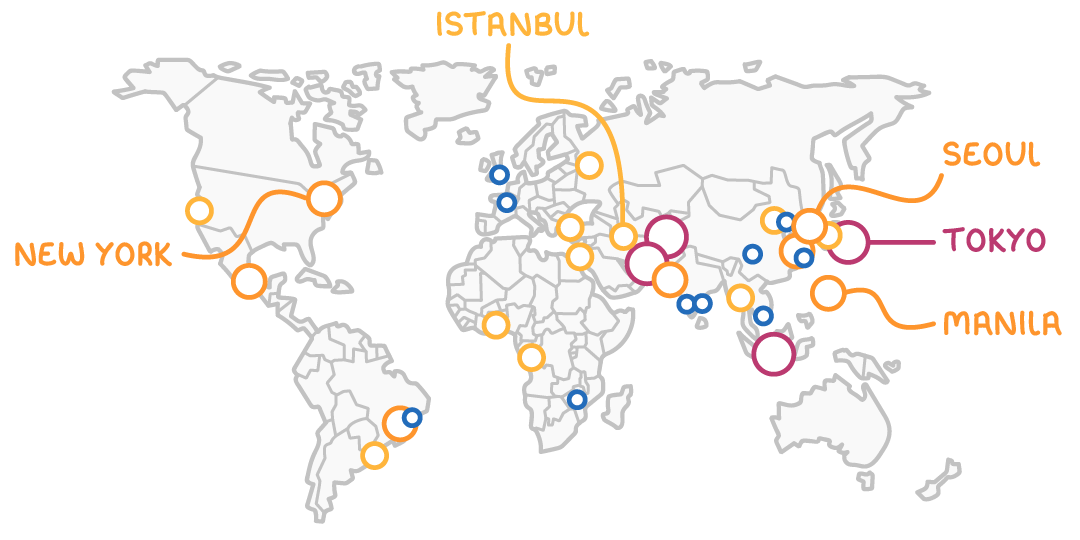
Development of megacities over time
- Historical context - In 1950, there were just two megacities globally: Tokyo and New York, both located in developed countries.
- Current scenario - By 2014, the number of megacities had risen to 28, with over two-thirds situated in developing and emerging countries, particularly in Asia, with examples including Manila in the Philippines, Seoul in South Korea, and Istanbul in Turkey.
- Future outlook - Projections suggest that by 2035, the number of megacities will increase to around 48, reflecting ongoing urbanisation trends in less developed regions.
The role and influence of primate cities
Primate cities are urban centres that dominate their respective countries in terms of population size and influence, often having a population at least double that of the next largest city. These cities play a pivotal role in shaping national development.
Economic influences of primate cities
- Investment attraction - Businesses frequently establish operations in primate cities, leading to enhanced infrastructure and service development.
- Migration pull - The abundance of job opportunities draws people seeking work, particularly highly skilled individuals looking for prestigious, well-paid roles.
- Transport connectivity - These cities often host major international ports and airports, which further encourage investment and migration.
Political influences of primate cities
- Centralised power - Governments and the headquarters of influential corporations are commonly based in primate cities, concentrating decision-making authority.
- Development bias - Policies and resources often prioritise the needs of the primate city over other regions, potentially leading to uneven national development.