11.8 - Flood Management
Flood management and its importance
Floods can cause significant damage to communities, infrastructure, and the environment. Effective flood management is essential to reduce the risk and impact of flooding, protecting lives and property. Flood management involves strategies designed to control river flow or mitigate the effects of excess water.
Hard engineering strategies
Hard engineering involves the construction of man-made structures to control the flow of rivers and prevent flooding. These methods are often implemented in areas prone to severe flooding.
Types of hard engineering strategies
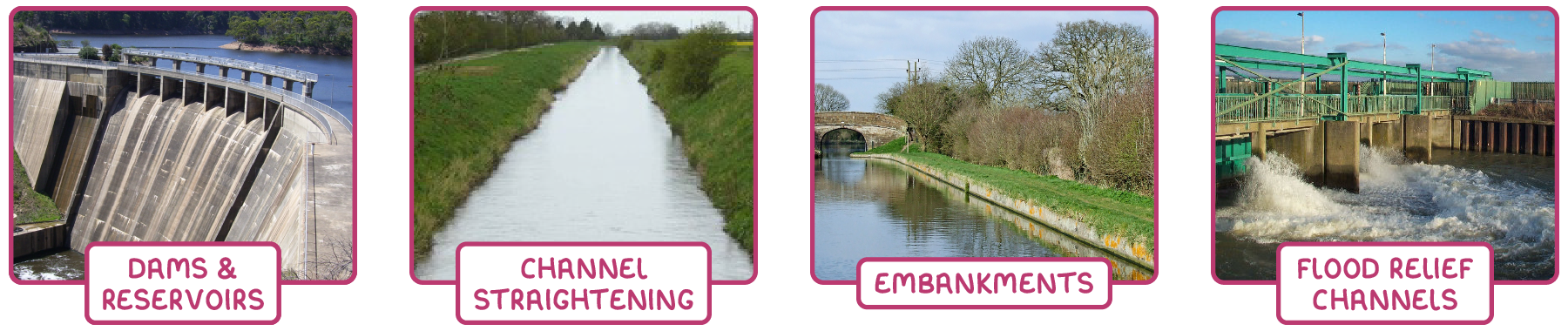
- Dams and reservoirs - Large barriers constructed across rivers, typically in upper courses, creating artificial lakes to store excess water.
- Benefits - Holds back water during heavy rain, regulates flow to prevent downstream flooding, and can generate hydroelectric power.
- Disadvantages - High construction costs, potential displacement of communities due to flooding behind the dam, and reduced sediment supply downstream affecting farmland fertility.
- Channel straightening - Artificial channels are built to remove natural meanders, creating a straighter river path.
- Benefits - Speeds up water flow, reducing flood risk in the immediate area as water leaves quicker.
- Disadvantages - Increases flood risk downstream due to faster water movement, and causes greater erosion in lower river sections.
- Embankments - Raised walls constructed along river banks to contain water within the channel.
- Benefits - Allows the river to hold more water, decreasing the frequency of flooding in surrounding areas.
- Disadvantages - Expensive to build and maintain, with a risk of catastrophic flooding if water overtops or breaches the walls.
- Flood relief channels - Additional channels created to divert water away from vulnerable or developed areas.
- Benefits - Controlled gates manage water release, reducing flood risk in key locations.
- Disadvantages - Increases water discharge where the relief channel rejoins the main river, potentially causing flooding there.
Soft engineering strategies
Soft engineering focuses on working with natural river processes to manage flooding, often aiming for sustainable and less intrusive solutions. These methods use an understanding of the river's behaviour to reduce the effects of floods rather than directly controlling water flow.
Types of soft engineering strategies
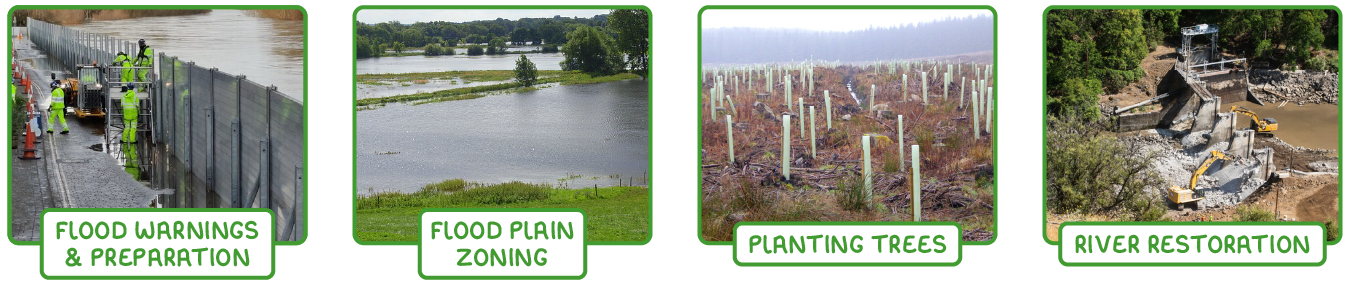
- Flood warnings and preparation - Systems to alert communities of impending floods, alongside modifications to buildings to withstand water damage.
- Benefits - Provides time for residents to protect belongings or evacuate, minimising damage and risk to life.
- Disadvantages - Does not stop flooding from occurring, limited effectiveness if warnings are inaccessible, costly modifications, and may lead to complacency among residents.
- Flood plain zoning - Policies that restrict development on areas prone to flooding, preserving natural flood plains.
- Benefits - Limits the creation of impermeable surfaces, reducing runoff and flood risk, while minimising potential damage to property.
- Disadvantages - Restricts urban growth and development, and is less effective in areas with existing structures.
- Planting trees - Afforestation in river catchments to increase interception of rainfall and slow down water reaching the river.
- Benefits - Reduces river discharge and flood risk, decreases soil erosion, and supports wildlife habitats.
- Disadvantages - Reduces available land for agricultural use, impacting local farming economies.
- River restoration - Returning rivers to a more natural state by removing artificial structures, allowing flood plains to absorb excess water.
- Benefits - Lowers downstream flood risk by enabling natural flooding in less populated areas, requires minimal ongoing maintenance, and enhances biodiversity.
- Disadvantages - May increase local flood risk in certain areas if not paired with other protective measures.
Comparing hard and soft engineering
Both hard and soft engineering strategies have unique strengths and limitations, and their suitability depends on the specific needs of an area, financial resources, and environmental priorities.
| Advantages | Disadvantages | |
|---|---|---|
| Hard engineering | • Provides immediate and often reliable protection against flooding. • Can offer additional benefits like power generation. | • Involves high costs for construction and maintenance. • Potential environmental damage. • Risk of failure leading to severe consequences. |
| Soft engineering | • More sustainable and environmentally friendly. • Often cheaper in the long term. • Supports natural river processes and biodiversity. | • May not provide immediate or complete protection. • Can limit land use options. • Its effectiveness depends on local conditions. |
Hard engineering offers robust, short-term solutions but at a high cost and environmental impact, while soft engineering promotes long-term sustainability but may not fully prevent flooding in high-risk areas.