2.1 - Plate Tectonics
The structure and movement of tectonic plates
The Earth's surface is composed of large segments known as tectonic plates, which form the outer layer called the crust. These plates are in constant motion, floating on the semi-molten layer beneath known as the mantle.
Key features of tectonic plates
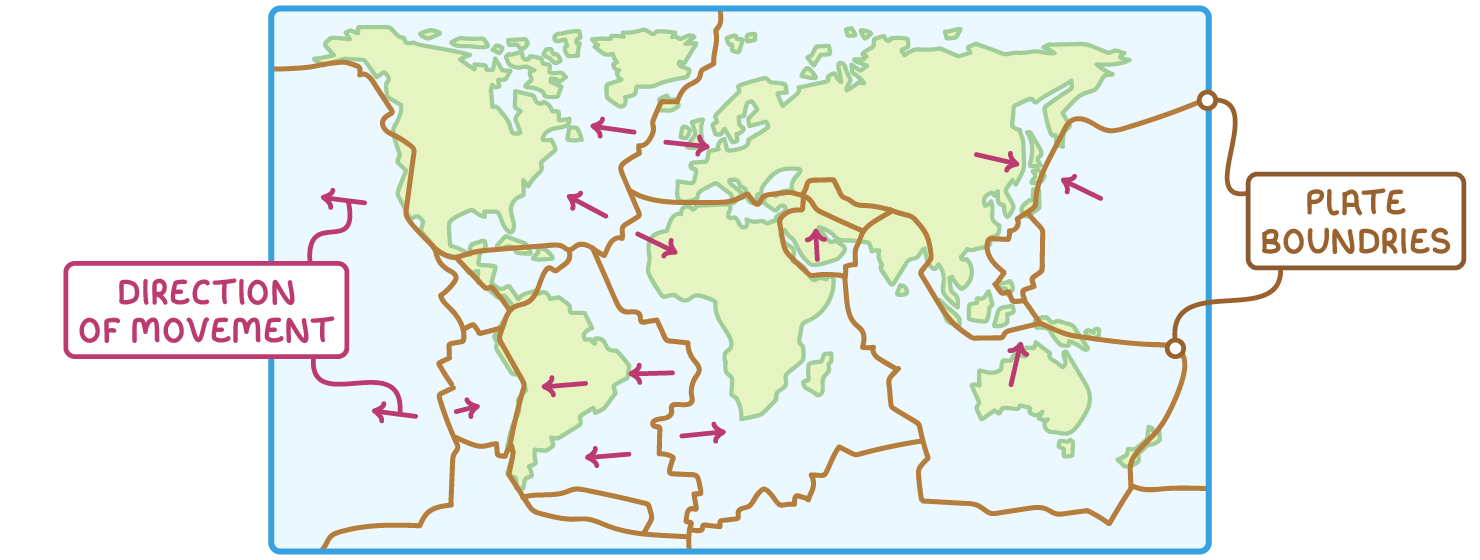
- Composition - Tectonic plates make up the Earth's crust, the outermost solid layer of the planet.
- Movement - Plates shift due to convection currents within the mantle, where heat causes the semi-molten rock to circulate, driving the plates above.
- Boundaries - The areas where tectonic plates meet are referred to as plate margins or boundaries, which are significant for geological activity.
Characteristics of continental and oceanic crust
Tectonic plates are composed of two distinct types of crust, each with unique properties that influence geological processes at plate margins.
Differences between continental and oceanic crust
Continental crust is 30-50 km thick, less dense, and forms the landmasses, making it thicker and lighter. Oceanic crust is 5-10 km thick, more dense, and found under oceans, making it thinner and heavier.
These differences in thickness and density play a crucial role in determining how plates interact at their boundaries, particularly in processes like subduction.
The nature of plate margins and their types
Plate margins, or boundaries, are the zones where tectonic plates interact. These interactions result in various geological phenomena depending on the type of margin and the movement of the plates involved.
Types of plate margins and their processes
| Type of plate margin | Process |
|---|---|
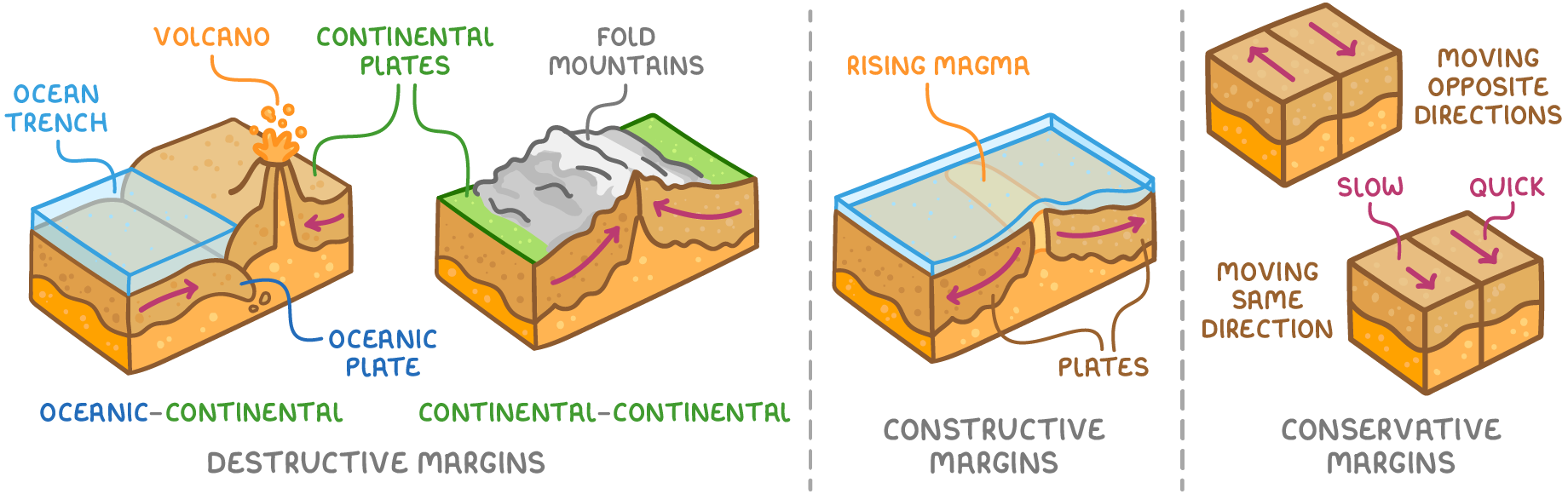
| Destructive margins (oceanic-continental) | Occur where an oceanic plate meets a continental plate. The denser oceanic plate is forced beneath the continental plate in a process called subduction, leading to the formation of ocean trenches and volcanoes as magma is created from the melting plate. |
| Destructive margins (continental-continental) | Occur where two continental plates collide. Neither subducts; instead, the crust is pushed upwards, forming fold mountains. |
| Constructive margins | Found where two plates move apart from each other. Magma from the mantle rises to fill the resulting gap, cooling to form new crust. |
| Conservative margins | Present where two plates slide past each other horizontally or move in the same direction but at different speeds. No crust is created or destroyed in this process, but significant friction can lead to earthquakes. |