2.2 - Volcanic Eruptions & Earthquakes
Volcano formation at plate margins and hotspots
Volcanoes are primarily formed where tectonic plates interact, as well as in specific areas of intense heat within the Earth's mantle.
Processes leading to volcano formation
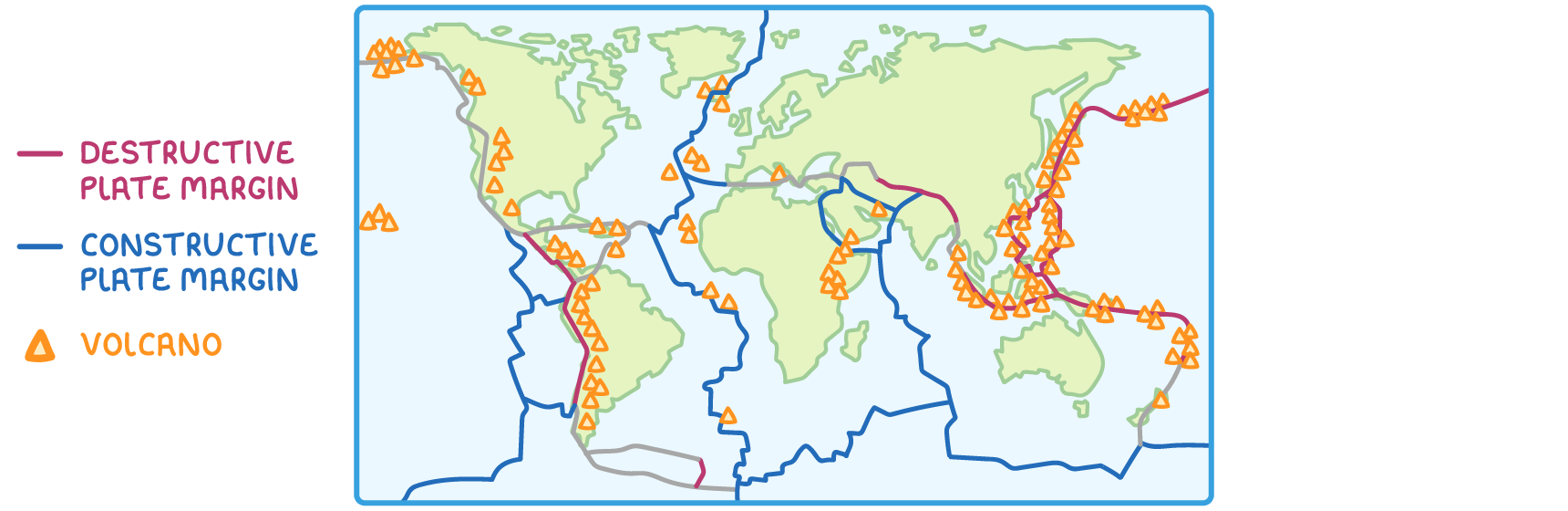
- Destructive plate margins - At these boundaries, a denser oceanic plate is forced beneath a lighter continental plate into the mantle. This process, known as subduction, causes the oceanic plate to melt, forming a pool of magma. The magma rises through cracks or vents in the crust and erupts as lava, creating a volcano.
- Constructive plate margins - Here, tectonic plates move apart, creating a gap. Magma from the mantle rises to fill this space, forming a volcano.
- Hotspots in the mantle - Some volcanoes form over exceptionally hot areas in the mantle, unrelated to plate boundaries. These hotspots allow magma to break through the crust, forming volcanoes in places like Hawaii.
Effects of volcanic eruptions
When a volcano erupts, it releases materials that can have impacts on the surrounding environment.
Materials released during eruptions
- Lava flows - Molten rock, known as lava once it reaches the surface.
- Gases - Volcanic eruptions release gases.
- Ash clouds - Large amounts of ash may be ejected, covering areas of land and blocking sunlight.
- Pyroclastic flows - These are fast-moving, super-heated currents of gas, ash, and rock.
Causes of earthquakes at different plate margins
Earthquakes result from the build-up and sudden release of tension along tectonic plate boundaries.
Mechanisms of earthquake occurrence
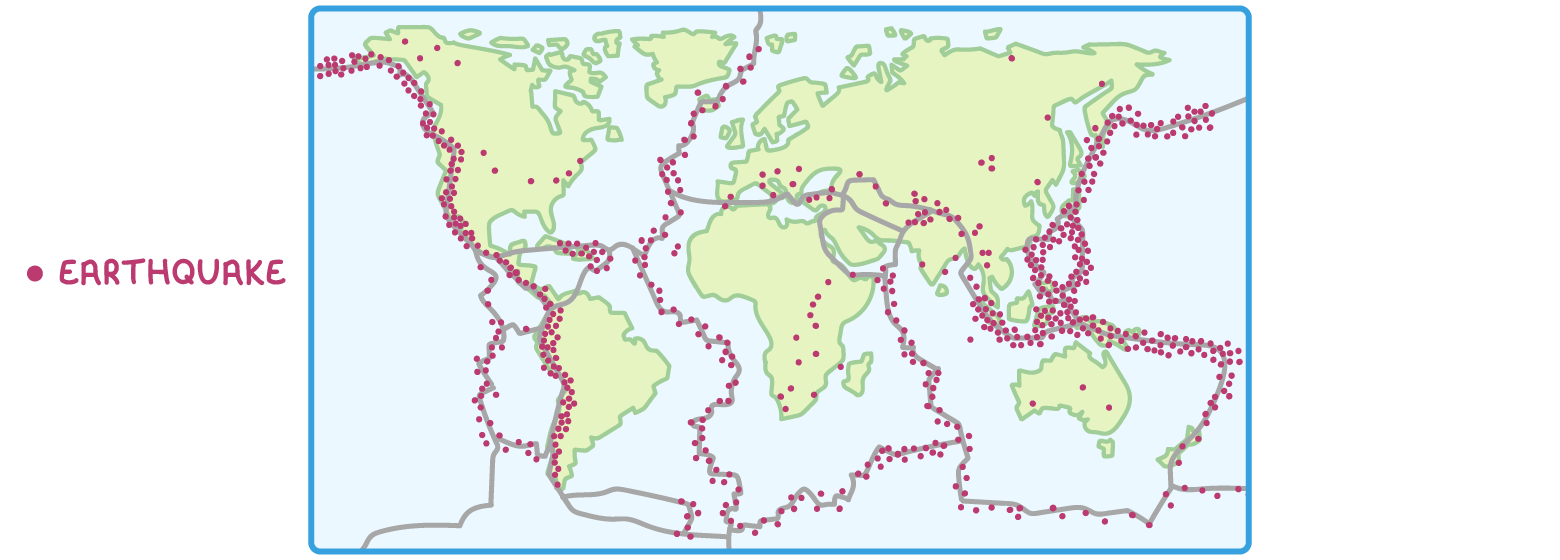
- Destructive margins - Tension accumulates when one plate becomes stuck while attempting to move beneath another. The eventual release of this tension causes the plates to jerk past each other, generating shock waves.
- Constructive margins - As plates pull apart, tension builds along fractures within the plates. When this tension is released, it results in seismic vibrations.
- Conservative margins - At these boundaries, plates slide past each other. Friction can cause them to get stuck, building tension that is released as an earthquake when the plates finally move.
Key features and measurement of earthquakes
Earthquakes are complex events with distinct characteristics related to their origin and intensity.
Defining features of earthquakes
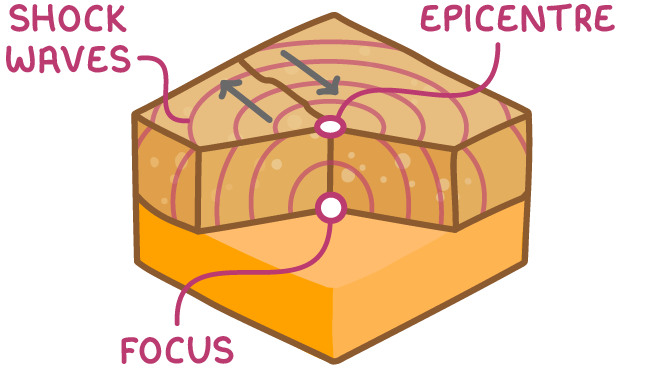
- Focus - This is the point within the Earth where the earthquake originates, marking the spot where tension is released.
- Epicentre - Located on the Earth's surface directly above the focus.
- Shock waves - These are vibrations that radiate outwards from the focus. Their strength diminishes with distance, meaning areas closer to the focus suffer greater impact.
Measuring earthquake magnitude
Earthquakes are quantified using the moment magnitude scale, which assesses the energy released during an event. The scale is logarithmic, meaning each whole number increase represents a tenfold increase in ground shaking. For instance, a magnitude 8 earthquake causes ten times more shaking than a magnitude 7.
Earthquakes of magnitude 6 or below typically cause minor damage, though this can be more severe in densely populated regions. Events of magnitude 7 and above often result in significant destruction and loss of life.
Distribution of volcanoes and earthquakes globally
The occurrence of volcanoes and earthquakes is not random but closely tied to the arrangement and movement of tectonic plates.
Patterns of distribution
- Concentration at plate margins - Both volcanoes and earthquakes are predominantly found along the boundaries of tectonic plates.
- The Ring of Fire - A prominent area of volcanic and seismic activity encircling the Pacific Ocean.
- Exceptions in earthquake locations - While most earthquakes occur at plate margins, some take place within the interior of plates, though these are less common.
- Global spread of volcanoes - Apart from plate boundaries, volcanoes can also appear over mantle hotspots, leading to their presence in areas away from typical tectonic margins.