5.1 - Introduction to Ecosystems
The definition and components of an ecosystem
An ecosystem encompasses all the living and non-living elements within a specific area, working together as a unit. It includes both biotic factors, which are the living organisms such as plants and animals, and abiotic factors, which are the non-living elements like soil, water, and climate.
Key elements of an ecosystem
- Biotic components - Living organisms including plants, animals, and microorganisms that interact with each other.
- Abiotic components - Non-living factors such as temperature, rainfall, soil type, and sunlight that influence the living organisms.
Producers, consumers, and decomposers
Within an ecosystem, organisms are categorised based on how they obtain energy and nutrients.
Categories of organisms in ecosystems
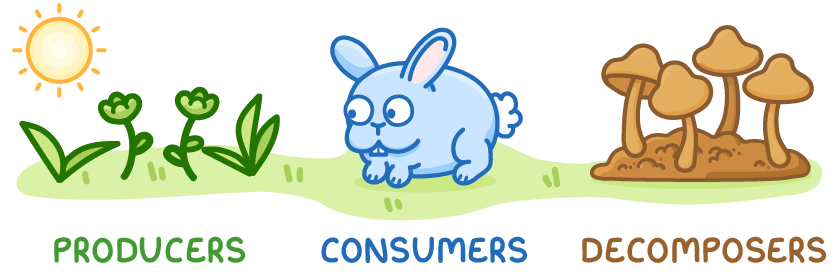
- Producers - These are typically plants that convert sunlight into energy through photosynthesis. For example, grass produces its own energy from sunlight.
- Consumers - These organisms gain energy by feeding on other organisms. They can eat producers (e.g., rabbits eat grass) or other consumers (e.g., foxes eat rabbits).
- Decomposers - These organisms, such as bacteria and fungi, break down dead material, releasing nutrients back into the environment.
The nutrient cycle in ecosystems
Nutrients are continuously recycled within an ecosystem through a process known as the nutrient cycle.
Stages of the nutrient cycle
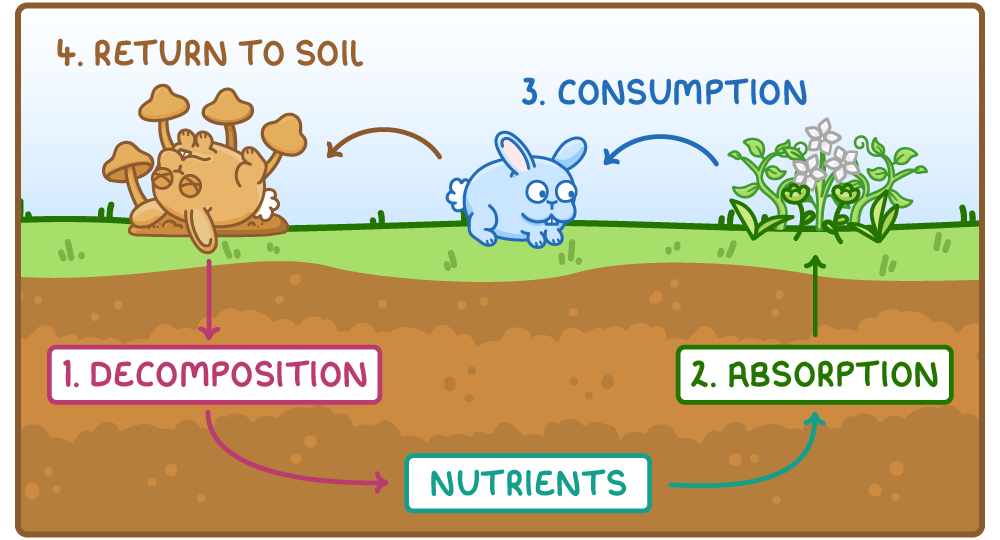
- Decomposition - When plants and animals die, decomposers break down their remains, releasing nutrients into the soil.
- Absorption - Plants take up these nutrients from the soil to grow.
- Consumption - Animals eat plants (or other animals), transferring the nutrients through the food chain.
- Return to soil - When plants or animals die, nutrients are returned to the soil, completing the cycle.
This ongoing process is called nutrient cycling.
Food chains and food webs
Food chains and food webs are tools used to illustrate how energy and nutrients pass through an ecosystem via feeding relationships.
Understanding food chains and food webs
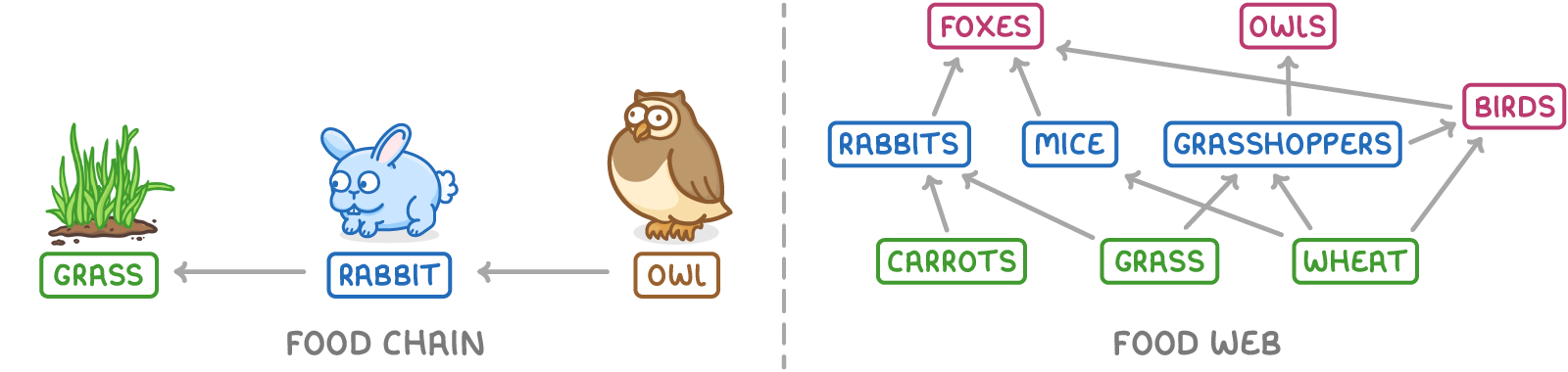
- Food chain - A linear sequence showing what eats what in an ecosystem.
- Food web - A more complex network of interconnected food chains, showing multiple feeding relationships.
Interdependence of organisms in ecosystems
Ecosystems are built on the principle of interdependence, where each organism relies on others for survival.
Examples of interdependence in ecosystems
- Habitat and food reliance - Consumers often depend on producers not just for food but also for shelter.
- Impact of changes - If one species is affected, it can disrupt the balance. For instance, if blackberry bushes are cut back, there is less food for greenfly, so their population may decline. Animals that depend on greenfly for food, such as ladybirds and spiders, also have less to eat, so their populations may decline too..