5.2 - Global-scale Ecosystems
The role of climate in determining ecosystem types
Climate plays a fundamental role in shaping the type of ecosystem that develops in a particular region. Temperature, rainfall, and seasonal patterns influence the kinds of vegetation and animal life that can thrive, leading to the formation of distinct ecosystems across the globe.
The global distribution of major ecosystems
Ecosystems are not randomly scattered across the planet but follow patterns largely dictated by latitude and climate. A world map of major ecosystems reveals seven primary types, each associated with specific latitudinal zones and climatic conditions, from the icy polar regions to the lush tropics.
Major ecosystems and their locations
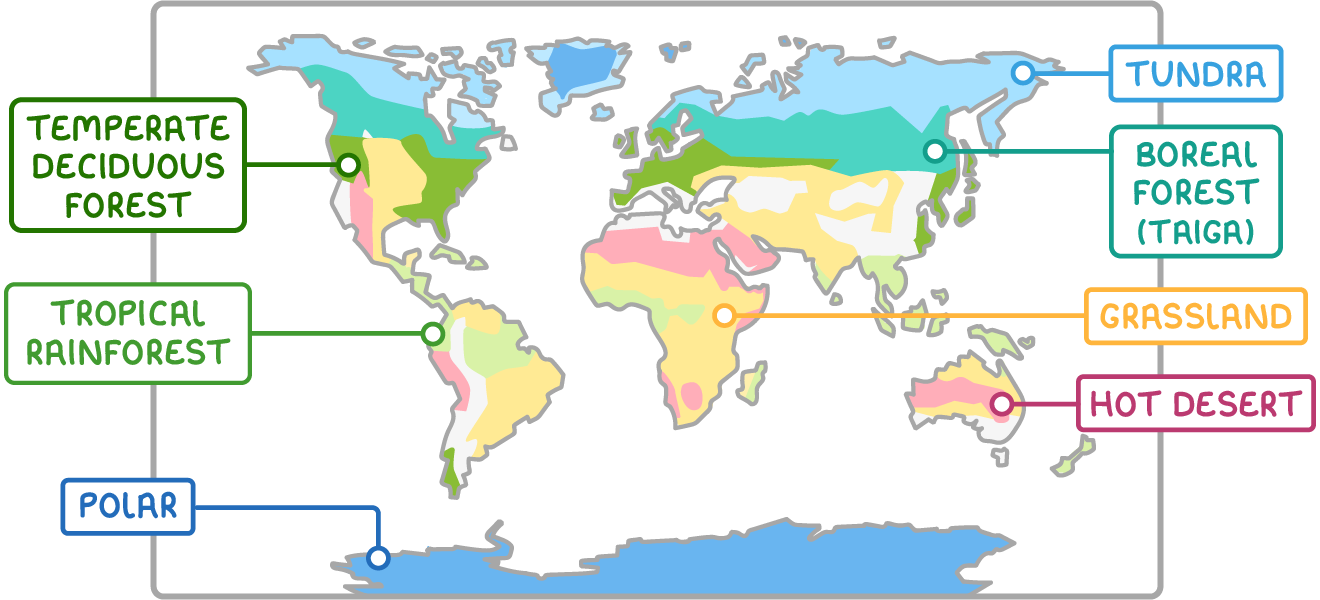
- Polar - Located around the North and South Poles, in regions of extreme cold.
- Tundra - Found at high latitudes above 60° North, including parts of Northern Europe, Canada, and Alaska.
- Boreal forest (Taiga) - Situated between 50° and 60° North, spanning regions like Canada, Russia, and Scandinavia.
- Temperate deciduous forest - Predominantly in mid-latitudes, such as parts of Europe, North America, and East Asia, where seasons are distinct.
- Grassland - Split into tropical savannahs between the Tropics of Cancer and Capricorn, and temperate grasslands at higher latitudes in areas like the North American prairies or the Eurasian steppes.
- Hot desert - Positioned between 15° and 35° North and South of the Equator, in places like the Sahara in Africa or the Sonoran in North America.
- Tropical rainforest - Concentrated around the Equator, between the Tropics, in regions such as the Amazon Basin in South America and the Congo Basin in Africa.
Key characteristics of polar and tundra ecosystems
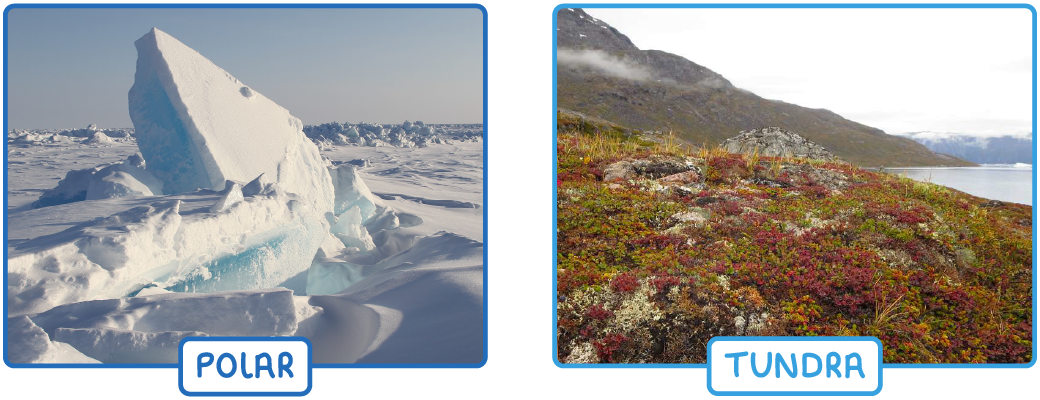
Polar and tundra ecosystems are found in some of the coldest regions of the world. Their harsh climates limit vegetation and create unique environmental conditions that define their landscapes.
Features of polar ecosystems
- Climate - Extremely cold, icy, and dry, with long periods of darkness lasting several months each year.
- Vegetation - Very sparse due to the short growing season of approximately 2 months, with minimal plant life.
- Landscape - Dominated by snow and ice, creating a stark, barren environment.
Features of tundra ecosystems
- Climate - Characterised by very cold winters, brief summers, and low rainfall.
- Vegetation - Lacks significant tree cover; instead, it supports mosses, grasses, and low shrubs adapted to the harsh conditions.
- Unique feature - Contains a layer of permanently frozen ground known as permafrost, which influences soil and plant growth.
Features of boreal and temperate deciduous forests
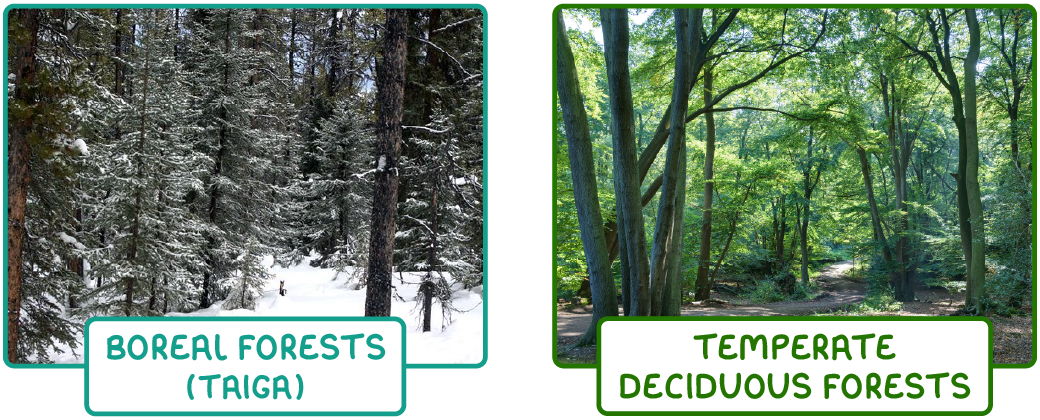
Forest ecosystems vary widely based on their climatic conditions. Boreal and temperate deciduous forests are two distinct types found in different latitudinal zones, each with unique adaptations to their environments.
Characteristics of boreal forests (Taiga)
- Climate - Experiences cold, dry winters and mild, moist summers.
- Vegetation - Dominated by coniferous trees, which are evergreen with needle-like leaves.
- Location - Found in northern regions between 50° and 60° North.
Characteristics of temperate deciduous forests
- Climate - Features four distinct seasons with warm summers, relatively mild winters, and year-round rainfall.
- Vegetation - Composed mainly of deciduous trees that shed their leaves in winter as an adaptation to colder temperatures.
- Location - Common in mid-latitude areas, where seasonal changes are pronounced.
Grassland, hot desert, and tropical rainforests
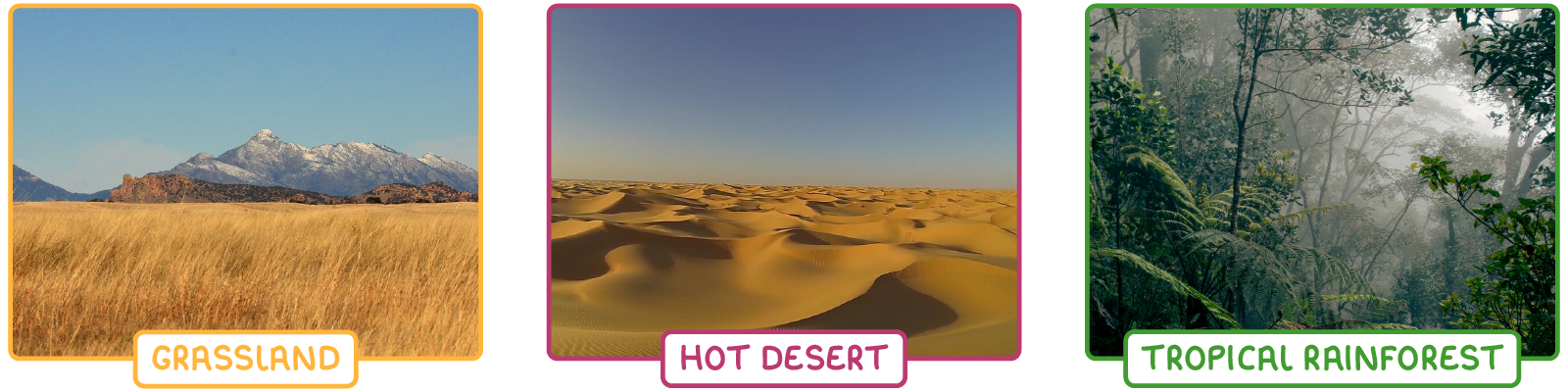
Grassland, hot desert, and tropical rainforest ecosystems represent a spectrum of environments from dry and sparse to wet and dense. Each has adapted to its specific climatic conditions, resulting in diverse landscapes and vegetation types.
Features of grassland ecosystems
- Types and climate - Divided into two categories:
- Savannah grasslands - Located between the Tropics, with distinct wet and dry seasons but overall low rainfall.
- Temperate grasslands - Found at higher latitudes with greater temperature variation and even less rainfall.
- Vegetation - Primarily consists of grasses; savannahs have a few scattered trees, while temperate grasslands are treeless.
- Landscape - Wide, open spaces that support grazing animals.
Features of hot desert ecosystems
- Climate - Extremely dry with minimal rainfall, very hot days, and cold nights.
- Vegetation - Sparse, featuring hardy shrubs and cacti adapted to conserve water in sandy soils.
- Location - Positioned between 15° and 35° North and South of the Equator.
Features of tropical rainforest ecosystems
- Climate - Hot and wet throughout the year, with high humidity and consistent temperatures.
- Vegetation - Exceptionally dense, forming layered canopies with a rich diversity of plant species, creating a lush, vibrant forest.
- Location - Situated around the Equator, between the Tropics, where abundant rainfall and warmth foster rapid plant growth.