15.4 - Resources in the UK: Energy
The historical reliance on fossil fuels in the UK
The UK has traditionally depended heavily on fossil fuels such as coal, oil, and gas to meet its energy needs.
Dominance of fossil fuels in the past
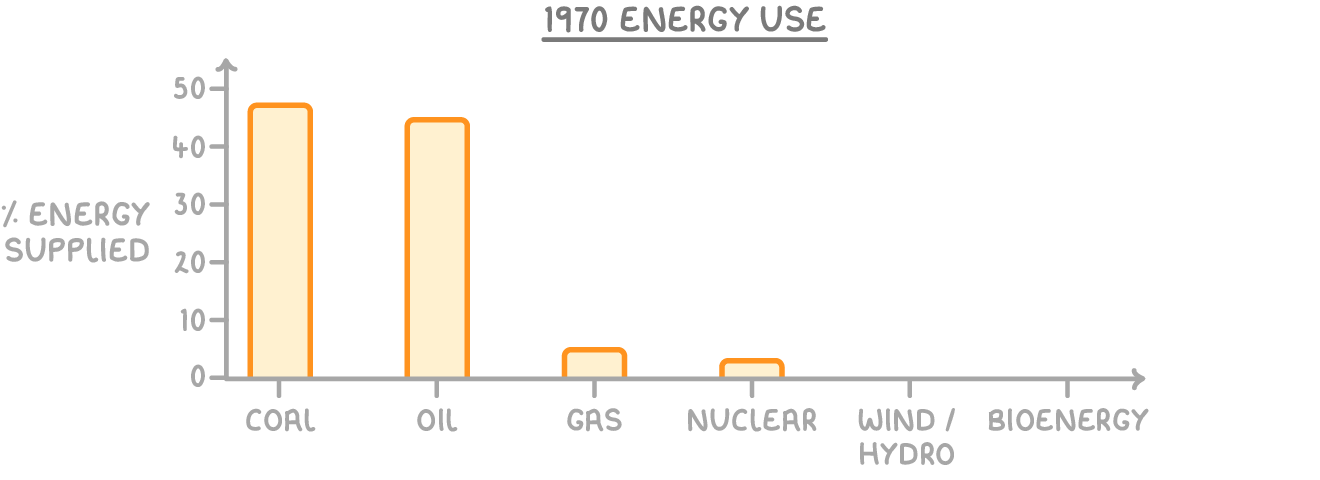
- High dependence in the 1970s - During the early 1970s, 91% of the UK's energy was derived from coal and oil.
- Shift to natural gas - By the late 1970s, the discovery of significant gas reserves beneath the North Sea transformed the energy landscape, with gas contributing 22% of the UK's energy supply by 1980.
The transition to renewable energy sources
In recent years, there has been a noticeable move away from fossil fuels towards renewable energy sources, which are sustainable and do not deplete over time.
Growth of renewable energy in the UK
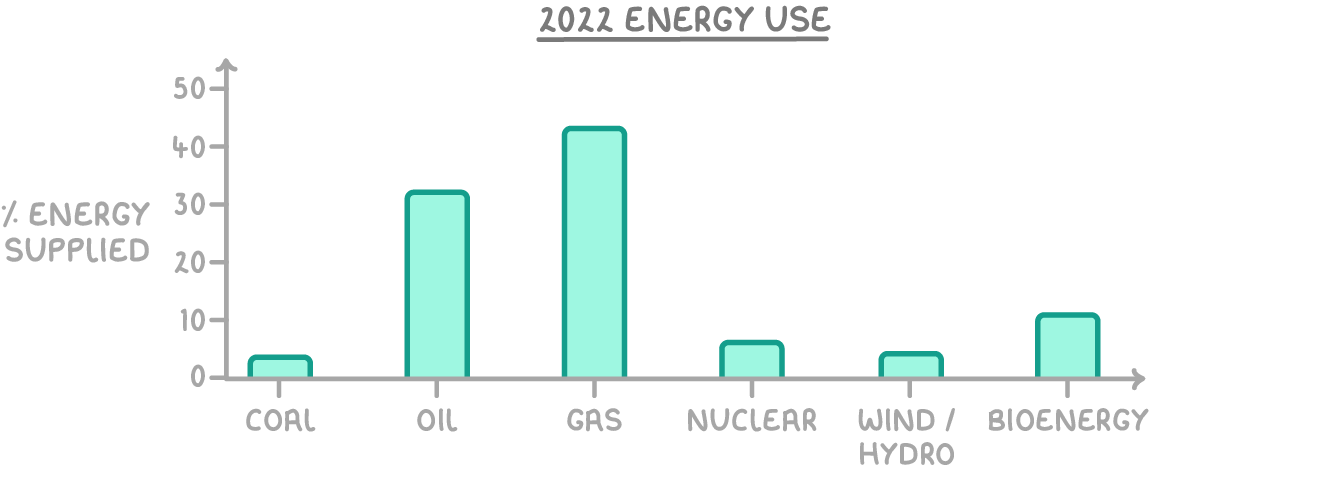
- Closure of coal-fired power stations - All coal-based power stations in the UK are scheduled to shut down by 2024.
- Increase in renewable electricity - By 2022, more than 38% of the UK's electricity was generated from renewable sources.
- Key renewable contributors - Wind power and bioenergy, which involves generating energy from decomposing or combusting biological materials, are the leading sources of renewable energy.
- Rising use of other renewables - Solar power and hydroelectric energy have also seen growing adoption.
The depletion of domestic fossil fuel reserves
The UK's domestic reserves of fossil fuels are diminishing rapidly.
Decline in fossil fuel availability
- North Sea reserves running low - Oil and gas reserves in the North Sea have been in decline since 2000.
- Reduced coal production - Although coal reserves still exist in the UK, production has fallen sharply since the mid-20th century due to decreased demand and a focus on lowering carbon dioxide (CO2) emissions.
- Rising extraction costs - The cost of accessing remaining coal reserves is increasing.
- Fracking - Extracting shale gas from underground rock formations through a process known as fracking has been considered as an alternative. However, this method is highly controversial due to environmental concerns and was banned in the UK in 2019.
Economic challenges of energy production
Producing energy, whether from fossil fuels or alternative sources, involves significant financial considerations.
Financial constraints in energy development
- High costs of fossil fuel extraction - Extracting fossil fuels is becoming more expensive as reserves dwindle, particularly for offshore oil operations where costs can outweigh revenue if global oil prices fall.
- Expensive alternative energy - Generating electricity from nuclear power and renewable sources often comes with a high price tag.
- Research and development needs - Significant funding is necessary to explore and develop new energy technologies.
- Major infrastructure investments - Building large-scale coastal energy facilities can require investments exceeding £20 billion.
- Energy imports - Domestic energy production currently falls short of meeting national demand, necessitating imports.
Environmental impacts of energy extraction and use
The production and consumption of energy have profound effects on the environment.
Ecological consequences of energy activities
- Greenhouse gas emissions - Burning fossil fuels releases CO2 and other greenhouse gases into the atmosphere.
- Risks of fracking - The process of fracking for shale gas can contaminate groundwater supplies and trigger minor earthquakes.
- Industrial accidents - Mishaps at energy facilities can lead to the release of toxic substances into water bodies, soil, and air.
- Impact of renewable projects - Large-scale renewable energy installations, such as tidal energy projects in estuaries, can disrupt marine ecosystems.
- Visual pollution - Energy infrastructure, including power stations and wind farms, is often regarded as visually unappealing.
TermDefinition
Fossil fuelsNon-renewable energy resources formed from the remains of ancient organisms, including coal, oil, and natural gas.
Renewable energyEnergy from sources that are naturally replenishing and will not run out, such as wind and solar power.
BioenergyEnergy generated from decomposing or combusting biological materials.
FrackingThe process of injecting liquid at high pressure into subterranean rocks to force open existing fissures and extract shale gas.
InfrastructureThe basic physical structures and facilities needed for a society to operate, such as power stations and grid networks.