16.1 - Global Patterns in Food Demand
The uneven distribution of global food supply
The production of food varies significantly across the globe. This disparity affects how food is distributed and accessed worldwide.
Regional differences in food production
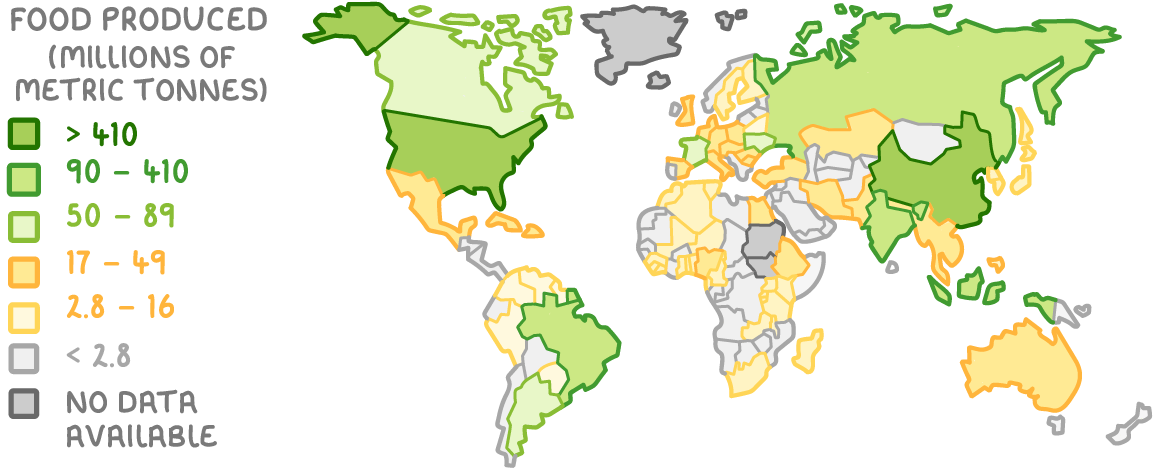
- High production areas - Regions such as Western Europe and Southeast Asia produce a lot of food, including cereals.
- Low production areas - Areas like Southern Africa and Central America produce much smaller amounts of food.
- Pattern consistency - The trend observed in cereal production between 2012 and 2014 mirrors the production patterns of other food types.
Variations in food consumption patterns worldwide
Food consumption levels differ greatly across countries, influenced by economic status and access to resources.
Consumption levels by economic category
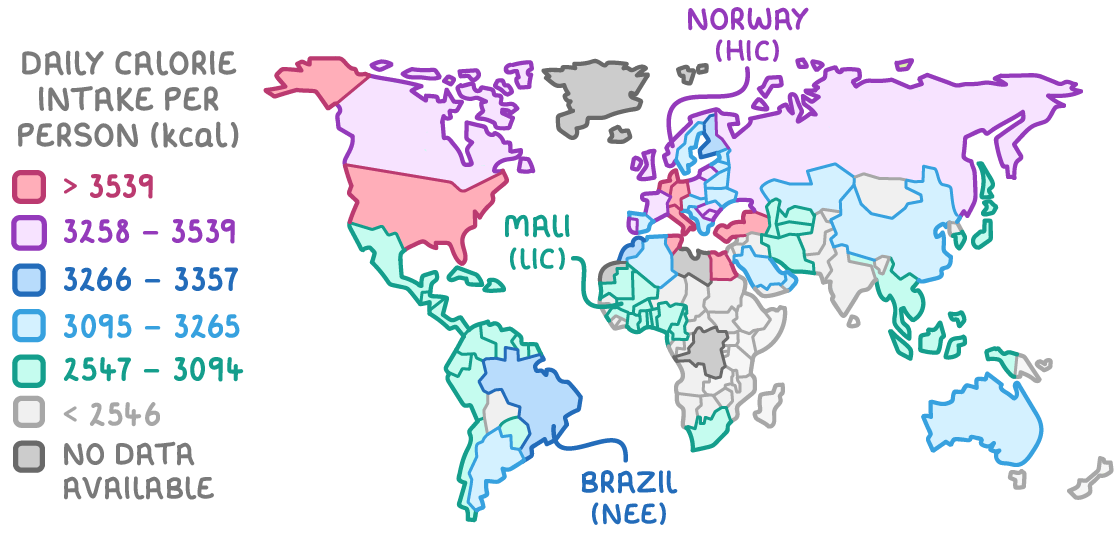
- High Income Countries (HICs) - Nations like Norway have high daily calorie intake, with the wealth to import a diverse range of foods.
- Low Income Countries (LICs) - Countries such as Mali face lower food consumption due to limited availability and affordability.
- Newly Emerging Economies (NEEs) - Countries like Brazil are experiencing rising food consumption as their economic growth increases.
Economic influence on food access
- Wealth and purchasing power - Higher income levels enable individuals to purchase more food.
- Economic disparities - Lower income restricts food access, contributing to reduced consumption in less affluent regions.
The concept of food security and insecurity
Food security and insecurity are critical concepts that determine whether populations can maintain healthy and active lives through adequate nutrition.
Food security
Food security exists when individuals can consistently obtain enough nutritious food to support health and activity. Countries achieve this through substantial domestic production or by having the financial means to import necessary food supplies.
Food insecurity
Food insecurity occurs when people cannot access sufficient food to remain healthy and active. This often results from insufficient local production combined with the inability to afford imported food.
Factors increasing global food consumption
Global demand for food is rising, driven by significant demographic and economic changes.
Impact of rising population
- Population growth - The world's population is expanding, projected to reach approximately 9 billion by 2040.
- More mouths to feed - A larger population directly translates to a greater need for food resources.
Role of economic development
- Increasing wealth - As countries develop economically, disposable income rises, allowing people to spend more on food.
- Dietary diversity and excess - Wealthier populations often purchase a wider variety of foods and sometimes more than they need.
- Year-round imports - Affluent nations can import food continuously, overcoming seasonal limitations.
- Agricultural industrialisation - Advances in farming technology and methods lower production costs, making food cheaper and more accessible.