1.6 - Sensation
The process of sensation and its connection to behavior and mental processes
Sensation is the first step in how we experience the world around us. It involves detecting information from the environment and transforming it into signals that the brain can understand. This process directly influences our behaviors and mental processes by shaping how we respond to stimuli.
What is sensation?
Sensation is the process of detecting environmental stimuli through sensory organs and converting them into neurochemical messages for the brain to interpret. This conversion is called transduction. The absolute threshold is the minimum intensity of a stimulus that can be detected at least 50% of the time. For example, the faintest sound you can hear half the time marks this threshold. Sensation drives immediate reactions, like pulling your hand away from a hot surface, and informs complex mental processes, such as recognizing a familiar face.
Detecting changes and adaptation in sensation
- Just-noticeable difference (JND) - This is the smallest change in a stimulus that can be detected. For instance, you might notice a slight increase in the volume of music.
- Weber's law - This principle states that the change needed to detect a difference in a stimulus is proportional to the original stimulus intensity. A heavier weight requires a larger increase to notice a difference compared to a lighter one.
- Sensory adaptation - Over time, sensitivity to a constant stimulus decreases. For example, when you first enter a room with a strong smell, you notice it, but after a while, you adapt and barely detect it.
- Mental process connection - These mechanisms help the brain prioritize new or changing information, influencing focus and decision-making by filtering out irrelevant constant stimuli.
Sensory interaction and unique experiences
- Sensory interaction - Our sensory systems work together to create a cohesive experience of the environment. For example, the taste of food is enhanced by its smell.
- Synesthesia - A rare condition where stimulation of one sensory system leads to an experience in another, such as seeing colors when hearing music. This shows how interconnected sensory processing can be in the brain.
- Behavioral influence - These interactions shape how we interpret and react to complex environments, like enjoying a meal due to combined taste and smell sensations.
The visual sensory system: structures and functions
The visual system allows us to detect and interpret light from the environment, playing a crucial role in how we navigate and understand the world. Its structures work together to transform light into meaningful images.
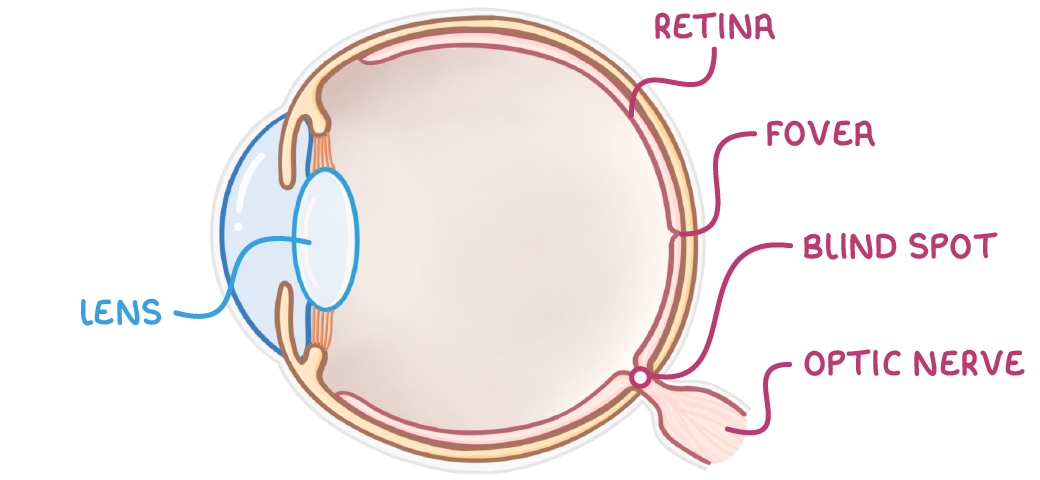
Key structures of the visual system
- Retina - The photosensitive layer at the back of the eye that captures light and converts it into neural signals. It contains specialized cells that send visual information to the brain.
- Lens and accommodation - The lens focuses light onto the retina through a process called accommodation, adjusting its shape to focus on near or distant objects. Issues in this process can lead to nearsightedness (difficulty seeing far objects) or farsightedness (difficulty seeing close objects).
- Blind spot - A small area on the retina where the optic nerve exits the eye, lacking photoreceptors. The brain fills in this gap, creating a complete visual perception despite incomplete retinal images.
Photoreceptor cells and their roles
- Rods - Located in the periphery of the retina, these cells detect shapes and movement but not color. They are highly active in low-light conditions, aiding in night vision and light/dark adaptation.
- Cones - Found in the fovea (center of the retina), these cells process color and fine detail. They detect specific wavelengths: blue (short), green (medium), and red (long).
Theories of color vision
- Trichromatic theory - Suggests that color vision results from the activity of three types of cones (blue, green, red). Different combinations of their activation produce the spectrum of colors we see.
- Opponent-process theory - Explains color vision through opposing pairs of ganglion cells in the retina: red/green, blue/yellow, and black/white. This theory accounts for afterimages, where staring at one color (like red) fatigues those cells, causing the opposite color (green) to appear when looking away.
- Color vision deficiency - Occurs due to damage or irregularities in cones or ganglion cells, leading to conditions like dichromatism (difficulty with two color pairs) or monochromatism (seeing no colors, only shades of gray).
Brain involvement and visual disorders
- Occipital lobes - The primary area in the brain for processing visual information. Damage here can lead to specific disorders.
- Prosopagnosia - Also known as face blindness, this condition results from damage to visual processing areas, making it hard to recognize faces despite intact vision.
- Blindsight - A condition where individuals with damage to visual cortex areas can respond to visual stimuli without consciously seeing them, showing the brain's complex processing pathways.
- Behavioral impact - Vision shapes spatial awareness, recognition, and emotional responses, like identifying a friend's face or reacting to danger based on visual cues.
The auditory sensory system: structures and functions
The auditory system detects sound waves and transforms them into signals the brain interprets as sound, influencing how we communicate and interact with our surroundings.
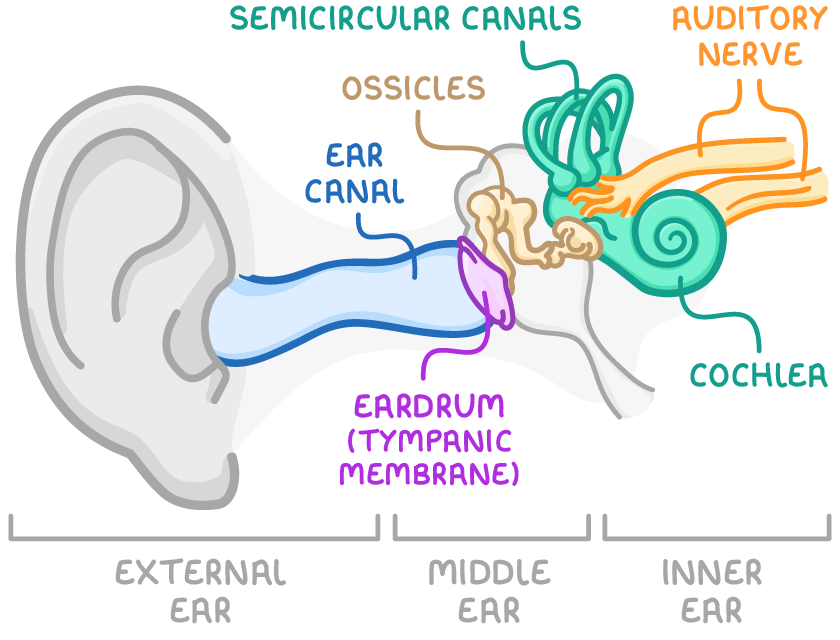
How sound is detected
- Sound waves - Sound is created by the movement of air molecules, characterized by wavelength (pitch, determining how high or low a sound is) and amplitude (loudness, determining sound intensity).
- Transduction process - Sound waves enter the ear, vibrate the eardrum, and are converted into neural signals by structures in the inner ear, ultimately processed by the brain.
Theories of pitch perception
- Place theory - Suggests that different areas of the cochlea (a spiral structure in the inner ear) respond to different frequencies, helping distinguish pitch based on location of stimulation.
- Frequency theory - Proposes that the rate of nerve impulses matches the frequency of a sound wave, allowing the brain to interpret pitch.
- Volley theory - Combines elements of frequency theory, suggesting that groups of neurons fire in volleys to match higher frequencies that single neurons can't handle alone.
Sound localization and hearing challenges
- Sound localization - The ability to determine the origin of a sound in the environment, achieved by comparing the timing and intensity of sound arriving at each ear.
- Hearing loss types - Hearing difficulties can arise from aging or damage:
- Conduction deafness - Results from issues in the outer or middle ear, blocking sound waves from reaching the inner ear.
- Sensorineural deafness - Caused by damage to the inner ear or auditory nerve, impairing the transduction of sound into neural signals.
- Behavioral impact - Hearing influences communication, alerting us to dangers (like a car horn), and emotional connections through tone of voice.
The chemical sensory systems: smell and taste
Chemical senses, including smell (olfaction) and taste (gustation), detect molecular stimuli in the environment, significantly affecting our experiences with food and safety.
Olfactory system (smell)
- Structures involved - Specialized cells in the nose detect odor molecules and send signals directly to the brain, bypassing the thalamus (unlike other senses). This direct pathway links smells strongly to memory and emotion.
- Pheromones - Chemical messages detected by the olfactory system, often influencing behavior subconsciously, such as attraction or social bonding in animals and potentially humans.
- Behavioral impact - Smell warns of dangers (like spoiled food or smoke) and evokes memories, shaping emotional responses.
Gustatory system (taste)
- Types of tastes - The tongue detects five basic tastes: sweet, sour, salty, bitter, and umami (savory). A sixth, oleogustus (fatty taste), is also recognized.
- Structures involved - Taste buds on the tongue and in the mouth transduce chemical stimuli into neural signals, processed by the brain.
- Taste sensitivity - The number of taste receptors varies, categorizing people as supertasters (highly sensitive), medium tasters, or nontasters (less sensitive).
- Interaction with smell - Taste is heavily influenced by smell; without olfactory input, taste sensations are muted or absent, explaining why food seems bland during a cold.
- Mental process connection - Taste and smell guide food preferences, trigger appetite, and influence cultural dietary habits.
The touch sensory system: structures and functions
The touch system detects physical contact with the environment, providing critical information about texture, pressure, and temperature.
How touch is processed
Sensory receptors in the skin detect touch stimuli, sending signals to the brain for interpretation. The feeling of "hot" results from simultaneous activation of warm and cold receptors in the skin, showing the complexity of sensory coding. Touch informs safety responses (like withdrawing from a sharp object) and social bonding (such as a comforting hug), influencing emotional well-being.
The pain sensory system: structures and functions
Pain is a complex sensory experience that serves as a protective mechanism, alerting us to potential harm or injury.
Understanding pain processing
- Dual processing - Pain is detected by receptors in the body and interpreted by the brain, involving both physical and emotional components.
- Gate control theory - Proposes that pain signals can be modulated by other sensory inputs or emotional states. For example, rubbing a bumped elbow can "close the gate" to pain signals by activating non-pain receptors.
- Phantom limb sensation - A phenomenon where individuals who have lost a limb still feel pain or sensation in the missing area, due to the brain's continued mapping of the lost limb.
- Mental process connection - Pain influences attention, mood, and behavior, often prompting protective actions or emotional distress, highlighting its role in survival.
The vestibular and kinesthetic systems: balance and body movement
These systems help us maintain balance and coordinate body movements, essential for daily activities and spatial orientation.
Vestibular sense (balance)
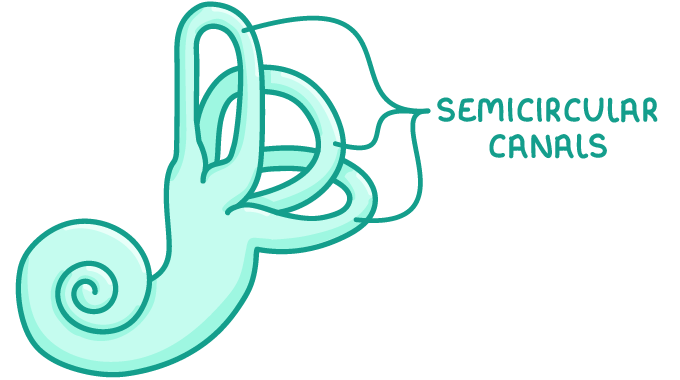
- Structures involved - The semicircular canals in the inner ear detect head movement and position, sending signals to the brain to maintain equilibrium.
- Function - This sense prevents falls by adjusting posture in response to changes in head position, like when tilting or spinning.
- Behavioral impact - Balance affects stability during walking or sports, and disruptions can lead to dizziness or motion sickness.
Kinesthetic sense (body movement)
Kinesthesis is the awareness of body position and movement, detected by receptors in muscles, tendons, and joints. This allows coordinated movement without looking at body parts, such as typing or kicking a ball. This sense is essential for motor skills and spatial awareness, influencing how we navigate and interact physically with the environment.