1.2 - Overview of the Nervous System
The central nervous system and its role
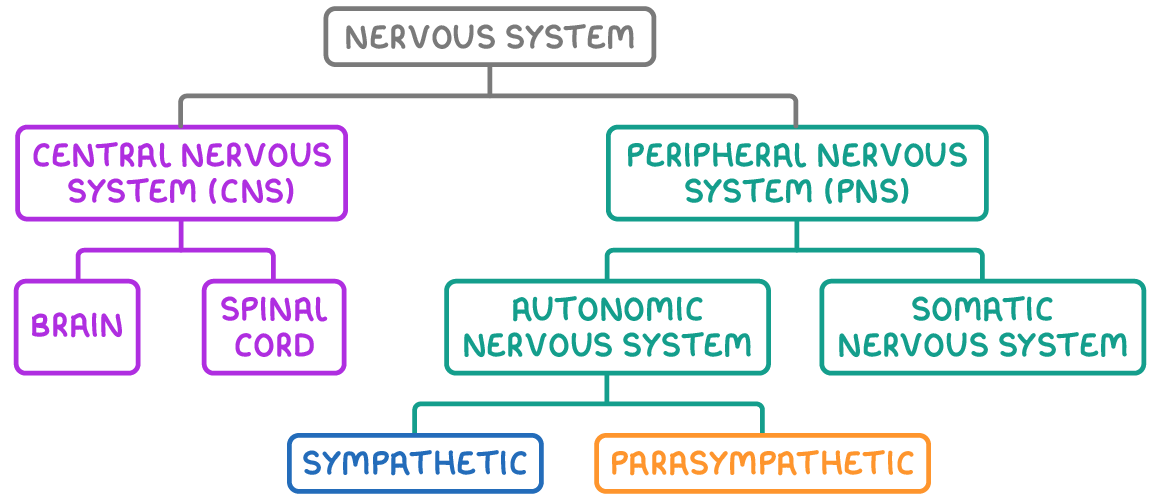
The nervous system is the body's primary communication network, responsible for processing information and coordinating responses. At its core is the central nervous system (CNS), which serves as the main control center. The CNS consists of the brain and spinal cord and is involved in nearly every process in the body.
Key components of the central nervous system
- Brain - The brain is the hub of thought, emotion, memory, and decision-making. It processes sensory input, initiates motor responses, and regulates bodily functions.
- Spinal cord - The spinal cord is a long, cylindrical structure that extends from the base of the brain down the back. It acts as a conduit, relaying messages between the brain and the rest of the body, and also controls reflex actions independently of the brain.
The CNS integrates information from various sources to ensure the body responds appropriately to internal and external changes. For instance, when you touch something hot, the CNS processes the pain signal and triggers a quick withdrawal reflex.
The peripheral nervous system and its functions
While the CNS serves as the command center, the peripheral nervous system (PNS) connects it to the rest of the body. The PNS includes all the nerves outside the brain and spinal cord, acting as a communication bridge to relay messages to and from the CNS.
Primary role of the peripheral nervous system
- Sensory input - The PNS carries sensory information (like touch, temperature, or pain) from the body to the CNS for processing.
- Motor output - It transmits commands from the CNS to muscles and glands to produce movement or other responses.
- Subdivision structure - The PNS is divided into two main subsystems: the autonomic nervous system and the somatic nervous system, each handling different types of functions.
This setup ensures that the CNS can stay informed about the body's state and environment while directing appropriate actions.
Subdivisions of the peripheral nervous system
The PNS splits into two distinct branches, each with specialized roles in managing bodily functions. These are the autonomic nervous system (ANS) and the somatic nervous system (SNS). Their differences lie in the types of processes they control.
The somatic nervous system
The somatic nervous system manages voluntary movements, meaning actions you consciously control. It connects the CNS to skeletal muscles, enabling activities like walking, writing, or throwing a ball. When you decide to raise your hand in class, the somatic nervous system sends signals from your brain to the relevant muscles to execute the movement.
This system is crucial for interacting with the external environment through deliberate physical actions.
The autonomic nervous system
The autonomic nervous system regulates involuntary processes, which are automatic and occur without conscious effort. It controls internal functions such as heart rate, digestion, respiratory rate, and glandular activity. The ANS is further divided into the sympathetic and parasympathetic nervous systems, which often have opposing effects to maintain balance in the body.
The ANS ensures that vital functions continue smoothly without requiring your attention, adjusting to the body's needs moment by moment.
The sympathetic and parasympathetic nervous systems
Within the autonomic nervous system, two subsystems work together to manage the body's response to stress and relaxation. These are the sympathetic nervous system (SNS) and the parasympathetic nervous system (PNS), and they play complementary roles in maintaining homeostasis, which is the body's state of internal balance.
The sympathetic nervous system
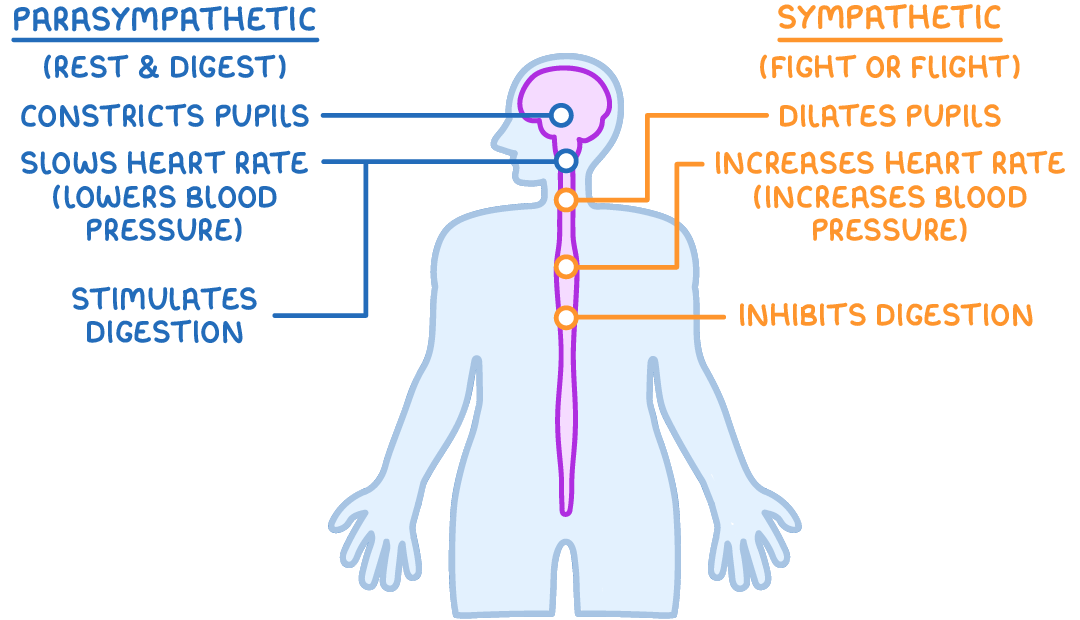
The sympathetic nervous system prepares the body for action during stressful or emergency situations, often called the "fight or flight" response.
Effects on the body:
- Increases heart rate and blood pressure to supply muscles with more oxygen.
- Dilates pupils to improve vision.
- Redirects blood flow from non-essential functions (like digestion) to muscles for quick action.
If you're startled by a loud noise, this system kicks in, making your heart race and muscles tense, ready to react. This system is essential for survival, enabling rapid responses to potential threats.
The parasympathetic nervous system
The parasympathetic nervous system promotes relaxation and recovery, often referred to as the "rest and digest" response.
Effects on the body:
- Slows heart rate and lowers blood pressure to conserve energy.
- Constricts pupils to normal size.
- Stimulates digestion and other routine maintenance activities.
After a meal, this system helps your body focus on digesting food and restoring energy reserves. This system counterbalances the sympathetic response, ensuring the body returns to a calm state after stress.
Comparison of sympathetic and parasympathetic effects
| Function | Sympathetic nervous system | Parasympathetic nervous system |
|---|---|---|
| Heart rate | Increases | Decreases |
| Blood pressure | Increases | Decreases |
| Pupil size | Dilates (enlarges) | Constricts (returns to normal) |
| Digestion | Slows down | Stimulates |
| Energy focus | Mobilizes for action | Conserves for recovery |
Interaction of nervous system subsystems
The subsystems of the nervous system do not operate in isolation; they constantly interact to regulate behavior and maintain bodily functions. This coordination ensures that the body can adapt to a wide range of situations, from immediate physical threats to long-term maintenance needs.
How the subsystems work together
- CNS and PNS collaboration - The central nervous system processes information and makes decisions, while the peripheral nervous system carries out these decisions by relaying signals to and from the body. For instance, the brain (CNS) might detect a threat via sensory input from the PNS and send a command through the PNS to increase heart rate.
- Autonomic balance - Within the PNS, the sympathetic and parasympathetic systems often work in opposition to maintain homeostasis. After a stressful event triggers a sympathetic response, the parasympathetic system helps the body recover by calming it down.
- Voluntary and involuntary integration - The somatic nervous system (voluntary) and autonomic nervous system (involuntary) can influence each other. For example, consciously deciding to take deep breaths (somatic) can slow your heart rate (autonomic) during anxiety.
This intricate interplay allows the nervous system to respond to complex scenarios, balancing immediate reactions with long-term stability.