4.4 - Psychodynamic & Humanistic Theories of Personality
Psychodynamic theory: unconscious drivers of personality
Psychodynamic theory, pioneered by Sigmund Freud, suggests that much of what shapes our personality lies beneath the surface of conscious awareness. This perspective emphasizes the role of unconscious processes, which are thoughts, feelings, and desires that we are not actively aware of but that still influence our behavior and personality.
Core ideas of psychodynamic theory
- Unconscious influence - Personality is largely driven by hidden forces in the unconscious mind, including repressed memories, desires, and conflicts. These elements shape how we think and act without us realizing it.
- Inner conflict - The theory highlights struggles between different parts of the mind, often leading to behaviors that reflect unresolved issues from early life experiences.
- Dynamic nature - Personality is seen as a result of ongoing interactions between unconscious drives and the conscious decisions we make, creating a complex and evolving sense of self.
This approach views personality as something deeply rooted in hidden psychological processes, making it unique compared to theories that focus on observable traits or conscious choices.
Ego defense mechanisms: protecting the self
In psychodynamic theory, the ego is the part of the mind that balances our inner desires with the demands of reality. When faced with stress or threats, the ego uses unconscious strategies called defense mechanisms to protect itself from anxiety and discomfort.
Common ego defense mechanisms
- Denial - Refusing to accept reality or facts to avoid dealing with painful feelings, such as ignoring a serious health diagnosis.
- Displacement - Redirecting emotions or impulses from their original target to a safer one, like yelling at a family member after a bad day at work.
- Projection - Attributing one's own unacceptable thoughts or feelings to someone else, for instance, accusing others of being hostile when feeling angry oneself.
- Rationalization - Creating logical explanations for behaviors or feelings that are actually driven by unconscious motives, such as justifying procrastination by saying it helps creativity.
- Reaction formation - Behaving in the opposite way to one's true feelings to hide them, like acting overly friendly toward someone you dislike.
- Regression - Reverting to childlike behaviors when stressed, such as throwing a tantrum during an argument.
- Repression - Pushing distressing thoughts or memories into the unconscious so they are no longer consciously accessible, often related to traumatic events.
- Sublimation - Channeling unacceptable impulses into socially acceptable activities, like turning aggressive energy into competitive sports.
These mechanisms operate without conscious control, helping individuals cope with threats to their self-image or emotional stability, though they can sometimes lead to unhealthy patterns if overused.
Assessing personality in psychodynamic theory: projective tests
Psychodynamic psychologists believe that to truly understand personality, one must access the unconscious mind. They use specialized tools called projective tests to uncover hidden thoughts and feelings that individuals might not express openly.
How projective tests work
These tests, like the Rorschach inkblot test, aim to reveal unconscious conflicts, desires, and fears by presenting ambiguous stimuli that prompt individuals to project their inner thoughts onto the material.
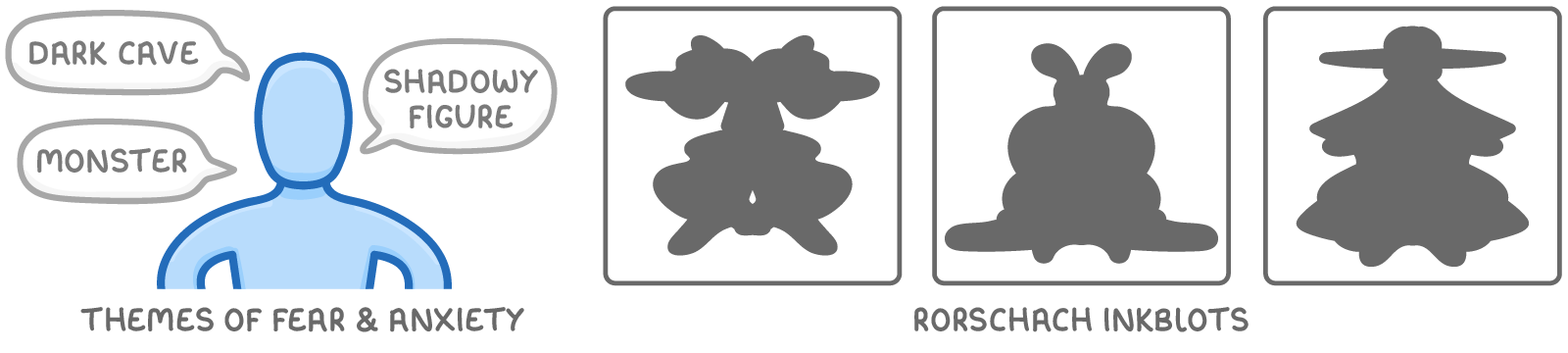
Examples of projective tests:
- Rorschach Inkblot Test - Individuals describe what they see in a series of abstract inkblot images. Their responses are analyzed for themes that might reflect unconscious concerns. For instance, seeing a dark cave, monster, and shadowy figure in various inkblots might be analyzed as a common theme of fear and anxiety.
- Thematic Apperception Test (TAT) - Participants create stories based on ambiguous pictures, which are then interpreted to uncover underlying motivations or conflicts.
Unlike straightforward questionnaires, projective tests target material just below conscious awareness (preconscious) or deeply hidden (unconscious), providing insights into personality dynamics. While these tests can offer unique perspectives on personality, their subjective nature means interpretations can vary, raising questions about their reliability and validity in some research contexts.
Humanistic theory: personality through self-actualization
Humanistic psychology offers a contrasting view of personality, focusing on personal growth and the inherent potential within each individual. This theory emphasizes conscious experiences and the drive toward becoming the best version of oneself.
Core ideas of humanistic theory
- Unconditional positive regard - This concept refers to being accepted and valued without judgment, often from significant others like family or friends. Such acceptance fosters a healthy self-image and encourages personal development.
- Self-actualizing tendency - Humanistic theory posits that every person has an innate drive to achieve their full potential, striving for growth, creativity, and fulfillment. This tendency shapes personality by motivating behaviors that align with one's true self.
- Focus on the present - Unlike psychodynamic theory, which looks to past conflicts, humanistic psychology centers on current experiences and future aspirations, viewing personality as a journey of self-discovery.
This perspective sees personality as a reflection of how individuals pursue meaning and authenticity in their lives, highlighting the importance of supportive environments for personal growth.
Comparing assessment approaches in psychodynamic and humanistic theories
Each theory not only defines personality differently but also uses distinct methods to assess it, reflecting their unique views on human nature.
Differences in assessment methods
| Aspect | Psychodynamic theory | Humanistic theory |
|---|---|---|
| Focus | Unconscious processes and hidden conflicts | Conscious experiences and personal growth |
| Assessment tools | Projective tests (e.g., Rorschach, TAT) to probe the unconscious | Self-report measures and interviews focusing on self-concept |
| Goal of assessment | Uncover repressed thoughts and unresolved issues | Understand an individual's self-perception and aspirations |
| Nature of data | Subjective interpretations of ambiguous stimuli | Direct expressions of personal feelings and goals |
These contrasting approaches highlight how psychodynamic theory seeks to dig into hidden layers of the mind, while humanistic theory prioritizes an individual's own narrative and conscious understanding of themselves.