2.7 - Forgetting & Other Memory Challenges
The concept of forgetting and the forgetting curve
Forgetting is the inability to recall or retrieve previously learned information. It is a natural part of memory processes and can occur for various reasons. One key framework for understanding forgetting is the forgetting curve, which illustrates how memory retention declines over time.
Understanding the forgetting curve
- Rapid initial decline - After learning new information, forgetting happens quickly in the first few hours or days. A significant portion of the material is lost shortly after it is learned.
- Leveling off over time - As time progresses, the rate of forgetting slows down. After the initial rapid loss, the remaining information tends to be retained for longer periods.
- Implication for learning - This curve suggests that reviewing material soon after learning can help strengthen memory and slow the forgetting process.
This pattern of memory loss highlights the importance of time as a factor in forgetting. Without reinforcement, much of what we learn can fade rapidly at first, then more gradually.
Reasons for memory failure: encoding, interference, and retrieval issues
Memory failure can occur at different stages of the memory process: during encoding, storage, or retrieval. Each stage presents unique challenges that can prevent successful recall of information.
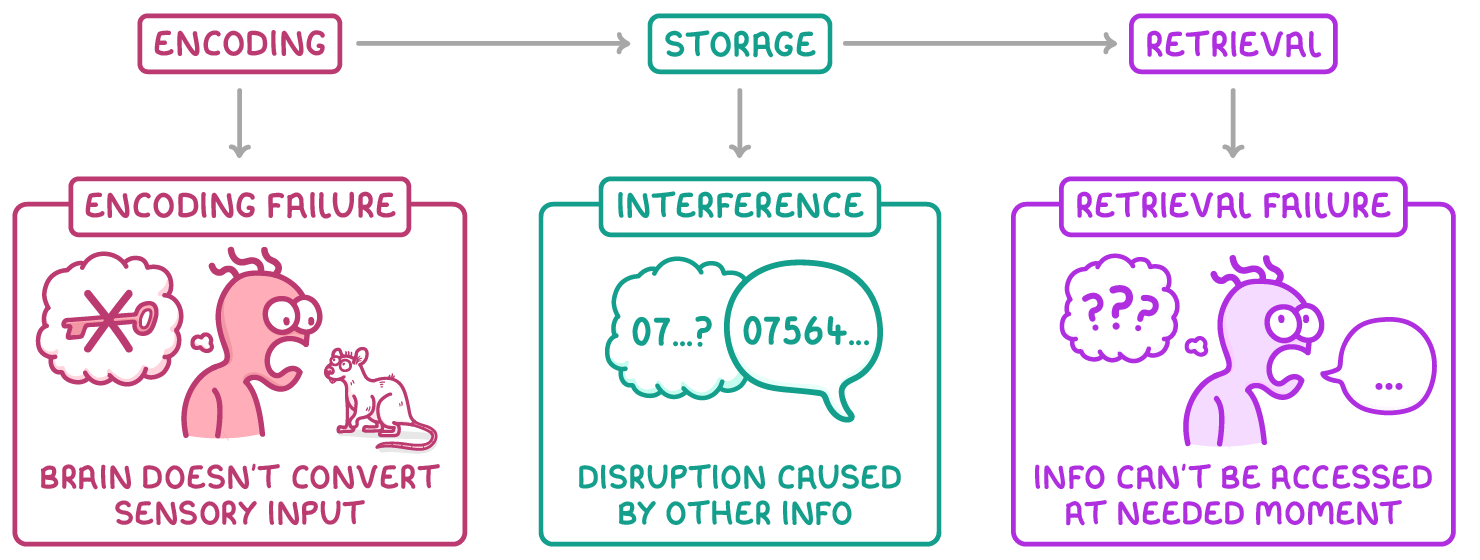
Encoding failure
Encoding failure happens when information is not properly processed or stored in memory in the first place. If the brain doesn't convert sensory input into a meaningful form, it cannot be recalled later.
This often occurs when attention is divided or when information is not deemed important at the time of exposure. For example, failing to remember where you placed your keys because you were distracted. Without proper encoding, there's no memory trace to retrieve, making recall impossible.
Interference
Interference refers to the disruption of memory recall due to the presence of other information. It can happen in two ways: proactive and retroactive interference.
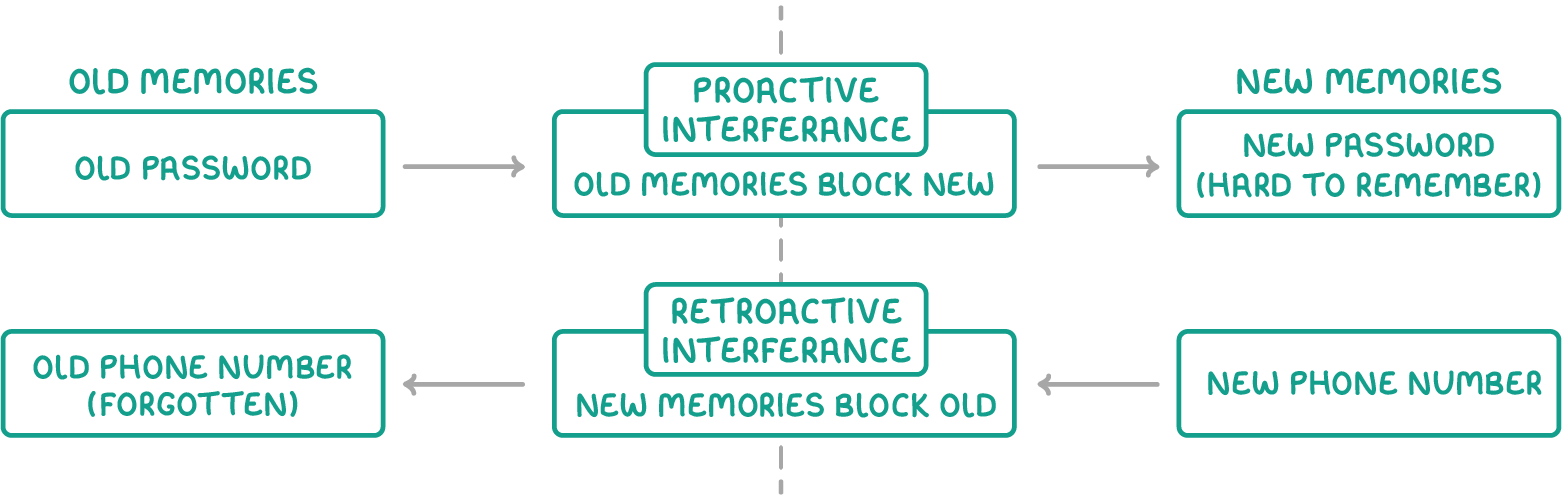
Types of interference:
- Proactive interference - Older memories interfere with the ability to learn or recall new information. For instance, if you've used one password for years, you might struggle to remember a new one because the old password keeps coming to mind.
- Retroactive interference - New information interferes with the recall of older memories. An example is learning a new phone number and then forgetting an old one because the new information overwrites it.
Interference makes it difficult to isolate the correct memory, leading to confusion or errors in recall.
Retrieval failure
Retrieval failure occurs when stored information cannot be accessed at the needed moment, even though it exists in memory. A common example is the tip-of-the-tongue phenomenon, where you know the information but can't quite recall it. For instance, struggling to remember a familiar name or word, feeling it's just out of reach.
Inadequate cues or context can prevent access to the memory. Recall is often easier when you're in the same environment or mood as when the memory was formed. This temporary inability to retrieve information can be frustrating but doesn't mean the memory is lost forever.
Psychodynamic perspective on forgetting through repression
The psychodynamic perspective, rooted in the theories of Sigmund Freud, offers a unique explanation for why some memories are forgotten. This view focuses on the role of emotional and psychological factors in memory loss.
Repression as a defense mechanism
Repression is the unconscious process of blocking distressing or traumatic memories from conscious awareness to protect the ego (the part of the mind that mediates between desires and reality). According to psychodynamic theorists, forgetting through repression serves as a defense mechanism. It shields individuals from anxiety, guilt, or pain associated with certain memories.
For example, a person might repress memories of a traumatic childhood event, making it difficult to recall details of the experience without therapeutic intervention. While repression may provide short-term relief from distress, it can lead to unresolved emotional issues that surface in other ways, such as anxiety or unexplained behaviors.
This perspective suggests that not all forgetting is due to cognitive limitations; some memory loss may be motivated by the need to protect mental well-being.
Factors affecting memory accuracy: misinformation and source amnesia
Memories are not always accurate representations of past events. Various factors can distort what we remember, leading to errors in recollection that can have significant consequences.
Misinformation effect
The misinformation effect occurs when exposure to incorrect information after an event alters the memory of that event. This can lead to recalling details that never happened.
Suggestive questioning or misleading information from others can implant false details. For example, after witnessing a car accident, being asked if you saw "the smashed cars" might lead you to recall more damage than there was. This effect is particularly concerning in legal contexts, where eyewitness testimony can be influenced by how questions are phrased, potentially leading to wrongful convictions.
Source amnesia
Source amnesia is the inability to remember where, when, or how a piece of information was acquired, even though the information itself is recalled. Over time, the context of learning fades, or multiple similar sources blend together. For instance, you might remember a fact but not whether you read it in a book, heard it in a lecture, or saw it online.
This can lead to confusion about the reliability of information, as you might attribute a memory to a credible source when it actually came from an unreliable one.
These distortions show that memory is not a perfect recording of events but a reconstructive process vulnerable to external influences.
The role of constructive memory in altering recollections
Memory is not just a passive storage system; it actively reconstructs past events, sometimes filling in gaps with imagination or later experiences. This process, known as constructive memory, can significantly alter what we believe we remember.
How constructive memory works
Constructive memory refers to the process by which memories are built or reconstructed during recall, often incorporating new information, beliefs, or imagination.
Key processes in constructive memory:
- Memory consolidation - During consolidation, memories are integrated and stabilized over time. However, each time a memory is recalled, it can be altered by current thoughts or experiences, reshaping the original event.
- Imagination inflation - Repeatedly imagining an event that didn't happen can lead to the creation of false memories. For example, vividly imagining a childhood trip that never occurred might eventually convince you it did happen.
While constructive memory helps us make sense of incomplete information, it can also lead to inaccuracies, as fabricated details become indistinguishable from real ones. This active nature of memory means that what we recall is often a blend of fact and fiction, shaped by how we interpret and revisit our past experiences.