2.8 - Intelligence & Achievement
Historical and modern theories of intelligence
Intelligence is a complex concept that has been debated and defined in various ways throughout history. Scholars and psychologists have struggled to reach a consensus on what intelligence truly is and how it should be measured, often influenced by cultural and personal biases.
Key debates in defining intelligence
- General ability vs. multiple abilities - One major debate centers on whether intelligence is a single, overarching ability, often referred to as "g" (general intelligence), which influences performance across diverse tasks, or if it consists of multiple, distinct abilities (like verbal, spatial, or logical skills) that operate independently.
- Historical challenges - Over time, definitions of intelligence have shifted, with early views often tied to specific skills or traits valued by particular societies, sometimes leading to biased interpretations that favored certain groups over others.
- Modern perspectives - Today, researchers continue to explore intelligence as a multifaceted construct, acknowledging that no single definition fully captures its complexity. This ongoing debate shapes how intelligence is studied and assessed.
Methods of measuring intelligence through testing
Intelligence is often quantified through formal assessments, providing a numerical value to represent cognitive ability. These tests have evolved over time to meet educational and societal needs.
Intelligence quotient (IQ)
IQ, or intelligence quotient, is a score derived from standardized tests designed to measure cognitive abilities relative to a population. Early IQ tests calculated a score by dividing a person's "mental age" (a measure of cognitive performance based on age norms) by their "chronological age" (actual age in years), then multiplying by 100 to get a quotient.
Currently, IQ scores are based on a comparison to a standardized norm, often with a mean of 100 and a standard deviation of 15. These scores help identify students who may need specialized educational services, such as gifted programs or additional support.
Psychometric principles behind intelligence assessments
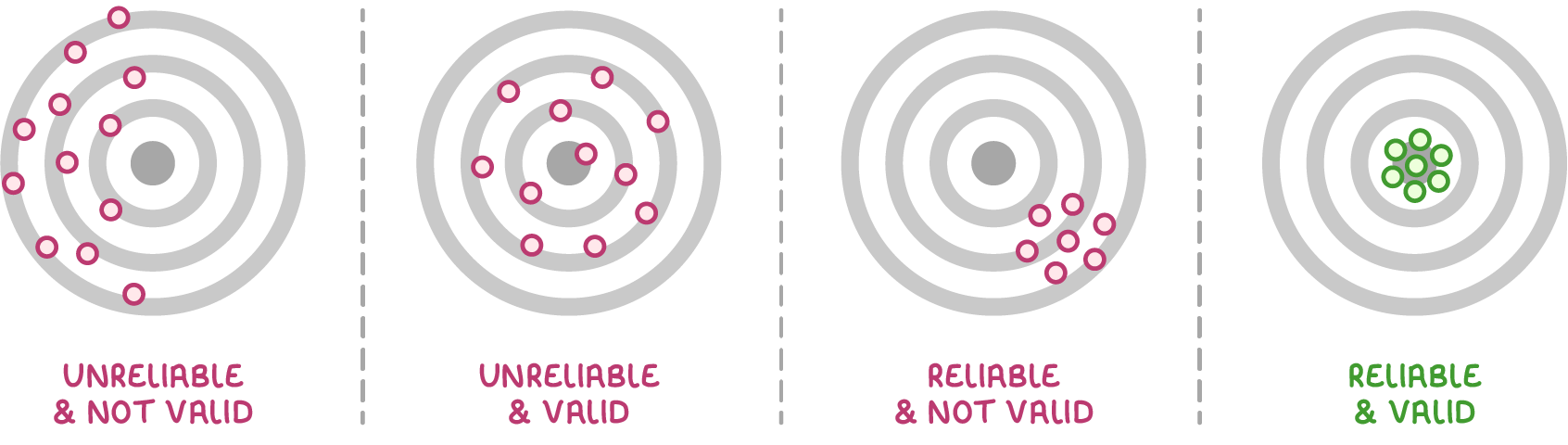
For intelligence tests to be meaningful and useful, they must adhere to specific scientific standards known as psychometric principles. These principles ensure that tests are fair, accurate, and consistent.
Essential psychometric qualities
- Standardization - This refers to the consistent administration of a test under uniform conditions, including the same instructions, environment, and scoring methods, to ensure fairness across all test-takers.
- Validity - A test is valid if it accurately measures what it is intended to assess. Key types include:
- Construct validity - Ensures the test measures the theoretical concept of intelligence as defined.
- Predictive validity - Assesses whether the test can predict future outcomes, such as academic or job performance.
- Reliability - A test is reliable if it produces consistent results over multiple administrations. Key types include:
- Test-retest reliability - Measures consistency when the same test is taken at different times.
- Split-half reliability - Evaluates consistency by comparing scores from two halves of the same test.
Socio-cultural responsiveness in testing
- Reducing bias - Researchers aim to create intelligence tests that are sensitive to socio-cultural differences, minimizing biases that could unfairly advantage or disadvantage certain groups.
- Stereotype threat - This is a psychological phenomenon where individuals perform worse on tests due to fear of confirming negative stereotypes about their group. Tests are designed to reduce this threat.
- Stereotype lift - Conversely, some individuals may perform better due to positive stereotypes about their group, which can also skew results. Efforts are made to balance these effects for equitable outcomes.
Systemic issues influencing intelligence test results and usage
Intelligence testing does not exist in a vacuum; it is deeply influenced by societal and systemic factors that can affect both scores and how they are interpreted or applied.
Societal impacts on IQ scores
- Flynn Effect - This phenomenon describes the consistent rise in average IQ scores worldwide over decades, attributed to factors like improved nutrition, better access to healthcare, and higher socioeconomic status.
- Within-group vs. between-group variation - IQ scores show greater variation within a single group (e.g., among individuals of the same ethnicity or socioeconomic background) than between different groups, challenging assumptions about inherent group differences.
- Environmental influences - Factors such as poverty, discrimination, and unequal access to education can negatively impact intelligence scores for individuals and entire communities, highlighting the role of environment over genetics in many cases.
Historical and current misuse of intelligence tests
- Restricting opportunities - In the past, and sometimes even today, IQ scores have been misused to limit access to jobs, military positions, educational institutions, and even immigration to the United States, often perpetuating systemic inequities.
- Bias in interpretation - Personal and cultural biases of test administrators or interpreters can distort how IQ scores are understood and linked to outcomes like academic or career success, further compounding inequities.
Measurement of academic achievement compared to intelligence
While intelligence tests aim to measure cognitive potential, academic achievement focuses on what a person has learned or is likely to achieve in educational settings. These two concepts are related but distinct.
Types of academic assessments
- Achievement tests - These tests measure what a person currently knows or has learned in specific areas, such as math, reading, or science. Examples include final exams or standardized state tests.
- Aptitude tests - These are designed to predict future performance in academic or other settings by assessing potential rather than current knowledge. Examples include college entrance exams like the SAT or ACT.
Comparing intelligence and achievement
| Aspect | Intelligence tests | Achievement tests |
|---|---|---|
| Purpose | Measure cognitive potential or general ability | Assess current knowledge or skills learned |
| Focus | Broad mental capabilities | Specific academic content or domains |
| Examples | IQ tests | End-of-year exams, subject-specific tests |
| Predictive nature | Often used to predict overall potential | May predict performance in specific areas |
Impact of mindset on academic performance
Beyond tests and scores, a person's beliefs about intelligence can significantly influence their academic outcomes. These beliefs shape how individuals approach learning and challenges.
Fixed vs. growth mindset
- Fixed mindset - This is the belief that intelligence is a static trait, fixed at birth and unchangeable. Individuals with this mindset may avoid challenges, fearing failure reflects poorly on their inherent ability.
- Growth mindset - This perspective holds that intelligence can be developed through effort, learning, and experience. Those with a growth mindset are more likely to embrace challenges, persist through difficulties, and view setbacks as opportunities to improve.
- Impact on achievement - Research shows that students with a growth mindset tend to achieve higher academic success because they are motivated to learn and adapt, while a fixed mindset can limit effort and resilience, hindering performance over time.