7.7 - Common Ancestry
The concept of common ancestry in eukaryotes
All living organisms on Earth share a history that traces back to a common origin. For eukaryotes, a diverse group of organisms including plants, animals, fungi, and protists, this shared history is evident through specific structural and functional characteristics. Eukaryotes are defined by having cells with a nucleus and other membrane-bound organelles, setting them apart from prokaryotes like bacteria. The concept of common ancestry suggests that all eukaryotes evolved from a single ancestral eukaryotic cell, and the evidence for this lies in shared features that have been conserved over millions of years.
This evidence not only highlights the unity of life but also supports the idea that evolutionary processes have shaped the diversity we see today among eukaryotic organisms. Let's explore the key structural and functional traits that point to this shared origin.
Structural evidence for common ancestry at the cellular level
One of the most striking pieces of evidence for the common ancestry of eukaryotes is found in their cellular structure. This evidence centers on a feature unique to eukaryotes that distinguishes them from other life forms.
Membrane-bound organelles
Membrane-bound organelles are specialized structures within eukaryotic cells, enclosed by lipid membranes, that perform specific functions. Examples include the nucleus, mitochondria, and endoplasmic reticulum.
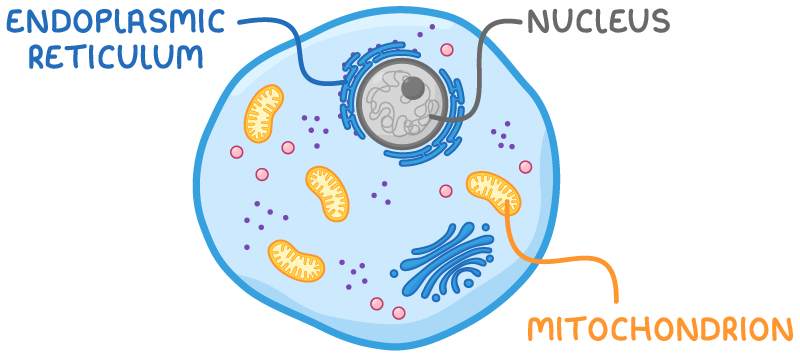
Evidence for common ancestry:
- Shared presence across eukaryotes - All eukaryotic organisms possess these organelles, regardless of whether they are single-celled protists or complex multicellular organisms like humans or plants.
- Significance for common ancestry - The presence of membrane-bound organelles suggests that all eukaryotes inherited this trait from a common ancestor. This is because the development of such complex internal compartments is unlikely to have evolved independently in multiple lineages.
- Functional implication - These organelles allow for compartmentalization, where different cellular processes can occur in separate, specialized environments, enhancing efficiency. For instance, the nucleus houses genetic material, protecting it and regulating gene expression.
This consistent structural feature across diverse eukaryotic groups points to a singular evolutionary origin, where the first eukaryotic cell developed these compartments, passing them on to all descendants.
Functional evidence for common ancestry at the molecular level
Beyond cellular structures, molecular characteristics provide compelling evidence for the common ancestry of eukaryotes. These traits relate to the organization and function of genetic material, which is remarkably consistent across eukaryotic species.
Linear chromosomes
Linear chromosomes are long, thread-like structures of DNA organized into a linear form, rather than the circular chromosomes found in most prokaryotes. They are packaged with proteins called histones to form chromatin.
Evidence for common ancestry:
- Universal in eukaryotes - All eukaryotic organisms have linear chromosomes located within the nucleus, a feature not seen in prokaryotic cells.
- Evidence of shared origin - The linear structure, along with the associated proteins, indicates a common mechanism of DNA organization that likely originated in an ancestral eukaryote. This consistency suggests that all eukaryotes evolved from a single lineage where this trait first appeared.
- Functional role - Linear chromosomes allow for complex processes like mitosis and meiosis, which ensure accurate distribution of genetic material during cell division, a necessity for the growth and reproduction of complex organisms.
Genes that contain introns
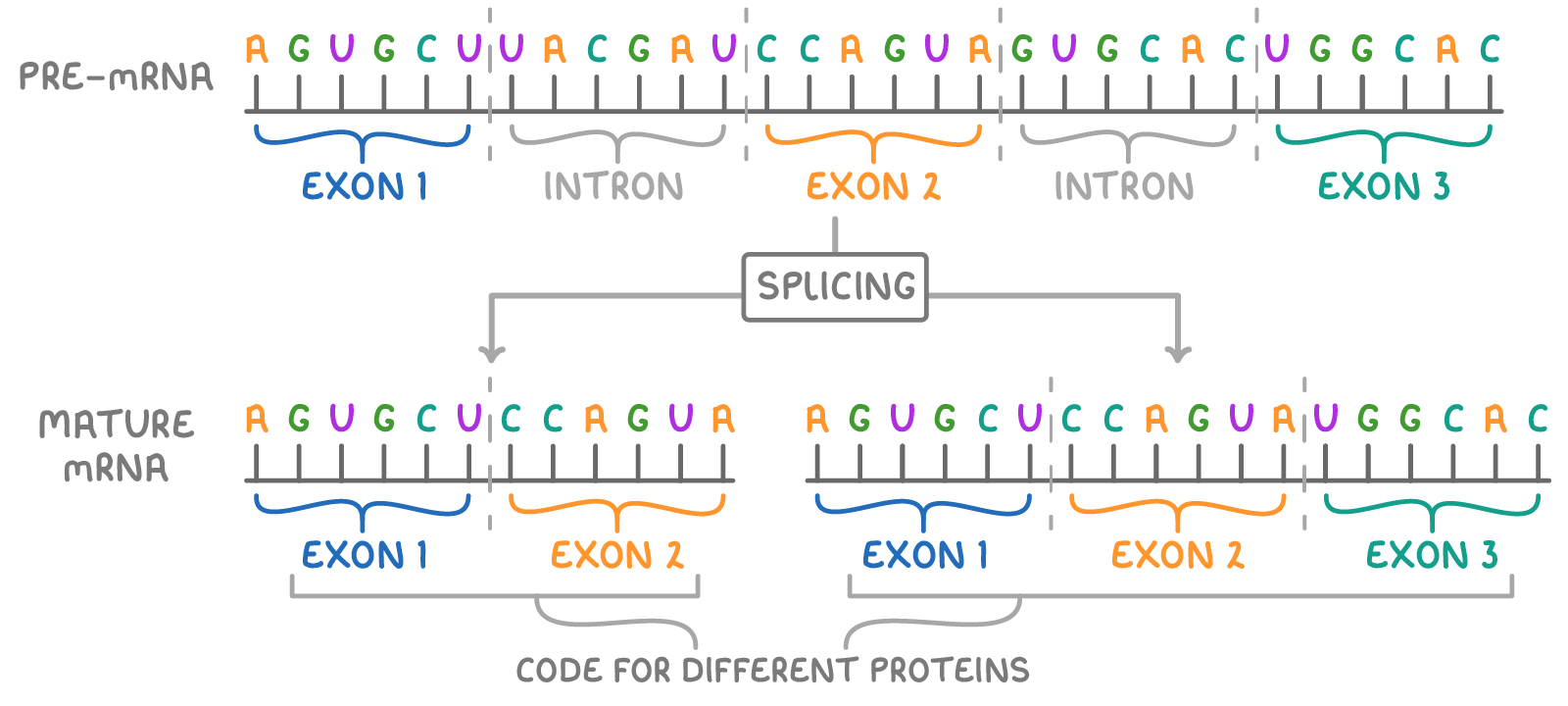
Introns are non-coding segments of DNA within genes that are transcribed into RNA but removed before the RNA is translated into protein. The remaining coding segments are called exons.
Evidence for common ancestry:
- Common across eukaryotes - Introns are a hallmark of eukaryotic genes, found in organisms ranging from yeast to humans, but are largely absent in prokaryotes.
- Support for common ancestry - The presence of introns in eukaryotic genes points to a shared evolutionary history, as it is improbable for such a specific genetic feature to arise independently across multiple groups. This suggests all eukaryotes descend from an ancestor that had genes with introns.
- Functional significance - Introns allow for alternative splicing, a process where different combinations of exons are included in the final RNA product. This leads to the production of multiple proteins from a single gene, increasing genetic diversity and adaptability.
How this evidence supports the evolutionary unity of life
The structural and functional similarities among eukaryotes provide a window into the past, revealing how life on Earth is interconnected through evolutionary processes. The presence of membrane-bound organelles, linear chromosomes, and genes with introns across all eukaryotic organisms is not a coincidence but a reflection of their descent from a common ancestor.
Connecting the evidence to evolution
- Unity through shared traits - These conserved features demonstrate that despite the vast diversity among eukaryotes - from microscopic algae to towering trees - they all share a fundamental blueprint inherited from a single origin.
- Diversity through evolutionary change - Over time, evolutionary mechanisms like natural selection and genetic drift have acted on this shared foundation, leading to the wide array of eukaryotic forms and functions we observe today.
- Reinforcement of evolutionary theory - The consistency of these traits across eukaryotes supports the broader theory of evolution, illustrating how life diversifies while maintaining traces of its unified beginning.
By examining these cellular and molecular characteristics, we gain insight into the deep evolutionary relationships that link all eukaryotic life, underscoring the power of common ancestry in shaping the biological world.