7.8 - Continuing Evolution
The concept of evolution as an ongoing process
Evolution is the process by which species change over time through mechanisms like natural selection, genetic drift, and mutation. It is not a static or completed event but an ongoing phenomenon that affects all living organisms. This continuous adaptation drives the diversity of life on Earth and ensures species can respond to changing environments.
Key principles of ongoing evolution
- Universal process - Every species, from bacteria to humans, has evolved in the past and continues to evolve today.
- Adaptation to change - Evolution allows organisms to adapt to new environmental challenges, such as shifts in climate or the introduction of new predators.
- Mechanisms of change - Genetic variations arise through mutations and recombination, and natural selection acts on these variations to favor traits that improve survival and reproduction.
- Time scale - While some evolutionary changes occur over millions of years, others can happen rapidly within a few generations under strong selective pressure.
Understanding that evolution is ongoing helps explain why species are not fixed in form or function but are constantly shaped by their surroundings.
Examples of evolution in action across species
Evolution manifests in various ways across different organisms. By examining specific examples, the dynamic nature of this process becomes clear. These examples highlight how evolution operates continuously, even in modern contexts.
Diversity of evolutionary evidence
- Genomic changes over time - Alterations in an organism's DNA sequence accumulate across generations, leading to new traits or adaptations.
- Continuous change in the fossil record - Fossils provide a historical record showing gradual transformations in species, such as the transition from land-dwelling ancestors to modern whales.
- Evolution of resistance - Organisms develop resistance to antibiotics, pesticides, herbicides, or chemotherapy drugs, demonstrating rapid evolutionary responses to human interventions.
- Pathogens and emergent diseases - Disease-causing agents evolve to overcome host defenses or treatments, resulting in new health challenges.
These examples collectively illustrate that evolution is not a distant historical event but a current and active process shaping life today.
Genomic changes and their role in evolution
Genomic changes refer to alterations in the DNA sequence of an organism, which can include mutations, gene duplications, or rearrangements. These changes are a fundamental driver of evolution because they introduce genetic variation, the raw material for natural selection to act upon.
How genomic changes drive evolution
- Source of variation - Mutations, which are random changes in DNA, can create new alleles (variants of genes) that may confer advantages or disadvantages.
- Accumulation over time - Small genetic changes build up over generations, leading to significant differences between populations or species.
- Impact on traits - Genomic changes can alter physical characteristics, behaviors, or physiological functions, enabling organisms to adapt to new conditions.
- Example of genomic evolution - In humans, the ability to digest lactose into adulthood evolved relatively recently in some populations due to a mutation in the lactase gene, allowing them to consume dairy products.
This ongoing modification of genomes ensures that species can adapt to new challenges, maintaining their survival in dynamic environments.
Evidence of continuous change in the fossil record
The fossil record is a chronological archive of life on Earth, preserved in layers of rock and sediment. It provides direct evidence of how species have changed over millions of years, demonstrating that evolution is a continuous process.
Insights from the fossil record
- Gradual transformations - Fossils show intermediate forms between ancient and modern species, such as Archaeopteryx, which exhibits both dinosaur and bird characteristics, illustrating the transition from reptiles to birds.
- Extinction and diversification - The fossil record reveals periods of mass extinction followed by rapid diversification, as surviving species evolve to fill vacant ecological niches.
- Morphological changes - Over time, structural adaptations are evident, such as the lengthening of horse limbs and reduction in toe number as they adapted from forest to grassland environments.
- Time scale evidence - By dating fossils using relative positioning and radiometric methods, scientists can map the timeline of evolutionary changes, showing they occur continuously rather than abruptly.
These historical snapshots confirm that evolution has been shaping organisms for billions of years and continues to do so.
Evolution of resistance to drugs and chemicals
One of the most observable forms of ongoing evolution is the development of resistance in organisms to human-made substances like antibiotics, pesticides, herbicides, and chemotherapy drugs. This rapid adaptation showcases how quickly natural selection can act under strong pressure.
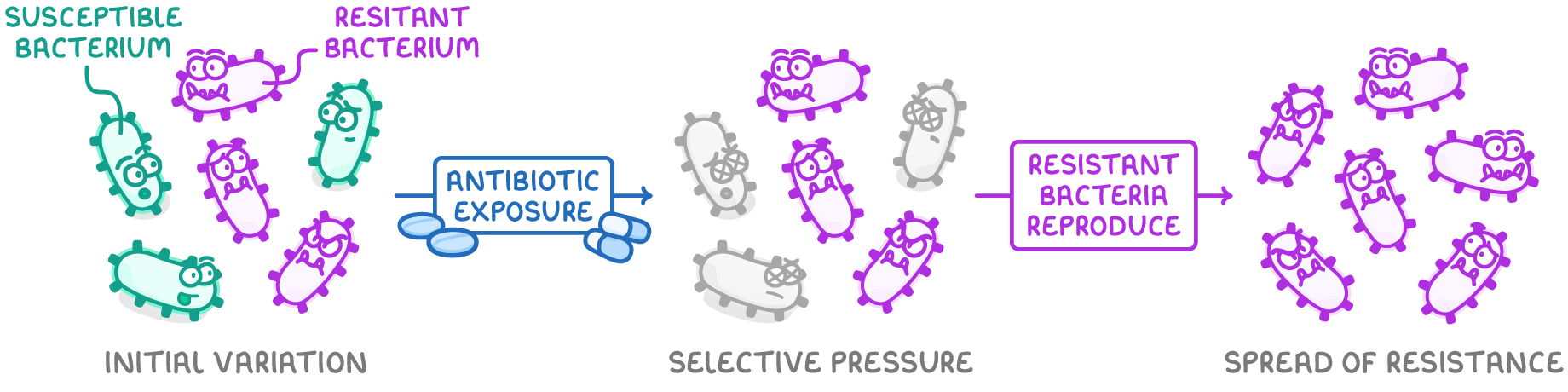
Mechanisms of resistance evolution
- Initial variation - Within a population, some individuals possess genetic traits that make them less susceptible to a drug or chemical due to random mutations.
- Selective pressure - Exposure to the substance kills off susceptible individuals, leaving resistant ones to survive and reproduce.
- Spread of resistance - Over generations, the proportion of resistant individuals increases as they pass on their advantageous genes.
- Consequence of overuse - Frequent or improper use of antibiotics or pesticides accelerates this process by intensifying selective pressure.
Examples of resistance
- Antibiotic resistance - Bacteria like Staphylococcus aureus have evolved into strains such as MRSA (methicillin-resistant Staphylococcus aureus), which are resistant to many antibiotics, complicating medical treatments.
- Pesticide resistance - Insects, such as mosquitoes, develop resistance to insecticides like DDT, requiring the development of new control methods.
- Herbicide resistance - Weeds can evolve to withstand herbicides, such as glyphosate-resistant pigweed, posing challenges to agriculture.
- Chemotherapy resistance - Cancer cells may develop mechanisms to resist chemotherapy drugs, leading to treatment failures and the need for alternative therapies.
This form of evolution is a pressing concern, as it directly impacts health, agriculture, and disease management, demonstrating evolution's active role in modern challenges.
Pathogens evolving to cause emergent diseases
Pathogens, including viruses, bacteria, and parasites, evolve over time, often leading to emergent diseases—new or re-emerging illnesses that pose significant threats to populations. This evolution occurs as pathogens adapt to new hosts, environments, or treatments.
Process of pathogen evolution
- Genetic mutations - Random changes in a pathogen's genome can alter its ability to infect hosts or evade immune responses.
- Host jumping - Pathogens may evolve to infect new species, a process called zoonosis, often due to increased contact between humans and wildlife.
- Antigenic drift and shift - Viruses like influenza undergo minor genetic changes (drift) or major reassortments (shift), leading to new strains that current vaccines or immune systems cannot recognize.
- Response to interventions - Pathogens can evolve to resist treatments or vaccines, requiring constant updates to medical strategies.
Examples of emergent diseases
- HIV/AIDS - The human immunodeficiency virus (HIV) likely originated from a simian virus in primates and evolved to infect humans, leading to the global AIDS epidemic.
- COVID-19 - The SARS-CoV-2 virus, responsible for COVID-19, emerged from a likely zoonotic source and continues to evolve into new variants, challenging global health responses.
- Ebola - Periodic outbreaks of Ebola virus disease demonstrate how pathogens can evolve and spread in new regions, often with high mortality rates.
The evolution of pathogens underscores the ongoing nature of evolutionary processes and the need for vigilance in monitoring and responding to new diseases.