7.10 - Speciation
What is speciation and how does it occur?
Speciation is the evolutionary process by which new species arise from existing populations. This process is fundamental to the diversity of life on Earth, as it leads to the formation of distinct groups of organisms that can no longer interbreed successfully. Understanding the conditions under which speciation occurs helps explain the vast array of life forms we observe today.
Conditions for speciation
- Reproductive isolation - Speciation happens when two populations become reproductively isolated from each other. This means they can no longer interbreed or exchange genetic information, leading to the development of separate evolutionary paths.
- Barriers to reproduction - Isolation can result from various factors, such as geographic separation or differences in mating behaviors, which prevent gene flow (the transfer of genetic material between populations) and allow populations to diverge over time.
This isolation is the cornerstone of speciation, as it sets the stage for genetic differences to accumulate, eventually resulting in distinct species.
The biological species concept
The biological species concept is a widely used definition for species, particularly for organisms that reproduce sexually. It provides a clear framework for identifying species based on their reproductive capabilities.
Defining a species
- Interbreeding capability - According to this concept, a species is defined as a group of individuals that can interbreed and exchange genetic information.
- Viable, fertile offspring - The interbreeding must result in offspring that are both viable (capable of surviving) and fertile (capable of reproducing themselves). If two populations cannot produce such offspring, they are considered separate species.
This concept helps biologists classify organisms based on their ability to maintain a shared gene pool, though it may not apply as easily to asexual organisms or fossils.
Rates of evolution and speciation under ecological conditions
The speed at which evolution and speciation occur can vary dramatically depending on environmental and ecological conditions. These rates influence how quickly new species form and adapt to their surroundings.
Patterns of evolutionary rate
- Punctuated equilibrium - This pattern describes evolution occurring in rapid bursts after long periods of stasis (little to no change). A sudden environmental shift or new opportunity can trigger quick speciation events.
- Gradualism - In contrast, gradualism refers to evolution happening slowly and steadily over hundreds of thousands or millions of years, with small changes accumulating over time to form new species.
Ecological influences on speciation rates
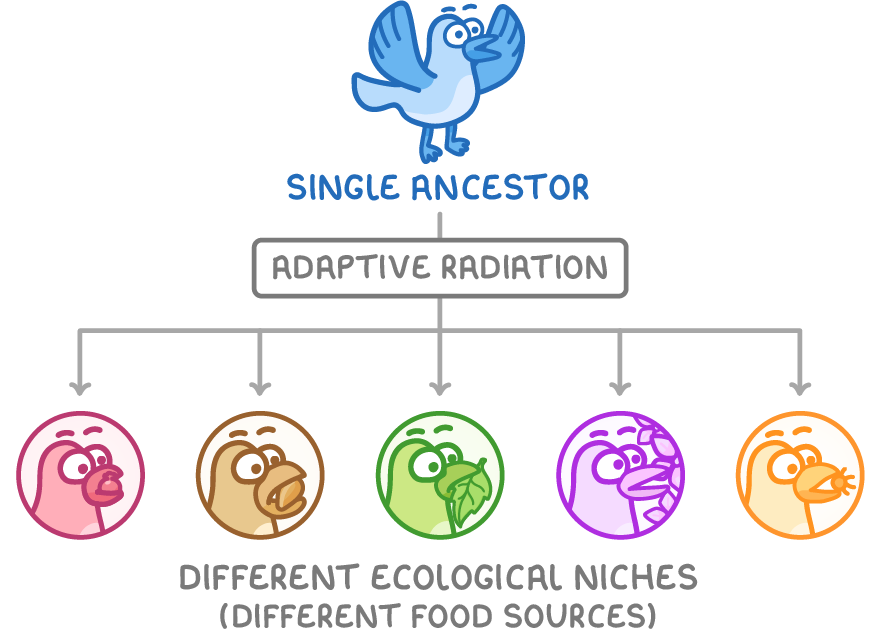
- Divergent evolution - This occurs when populations adapt to new or different habitats, leading to phenotypic diversification (differences in physical traits). As populations exploit unique niches, they may diverge into separate species.
- Adaptive radiation - Speciation rates can accelerate during adaptive radiation, where a single ancestor rapidly diversifies into multiple species to fill various ecological niches, especially when new habitats become available.
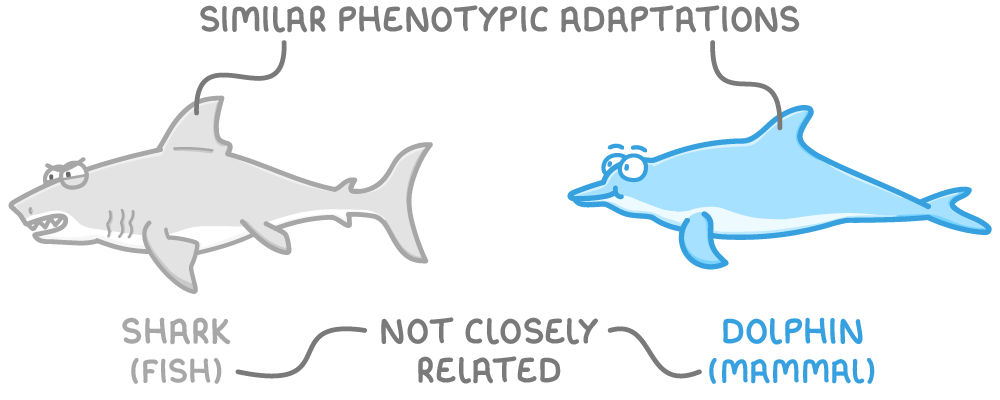
- Convergent evolution - Under similar selective pressures, unrelated populations or species may develop similar phenotypic adaptations (observable traits), even though they are not closely related. This does not always lead to speciation but shows how environment shapes evolution.
These patterns and influences demonstrate how ecological conditions can either speed up or slow down the formation of new species.
Processes driving speciation
Speciation can occur through different processes depending on the geographic relationship between populations. These processes create the conditions necessary for reproductive isolation and divergence.
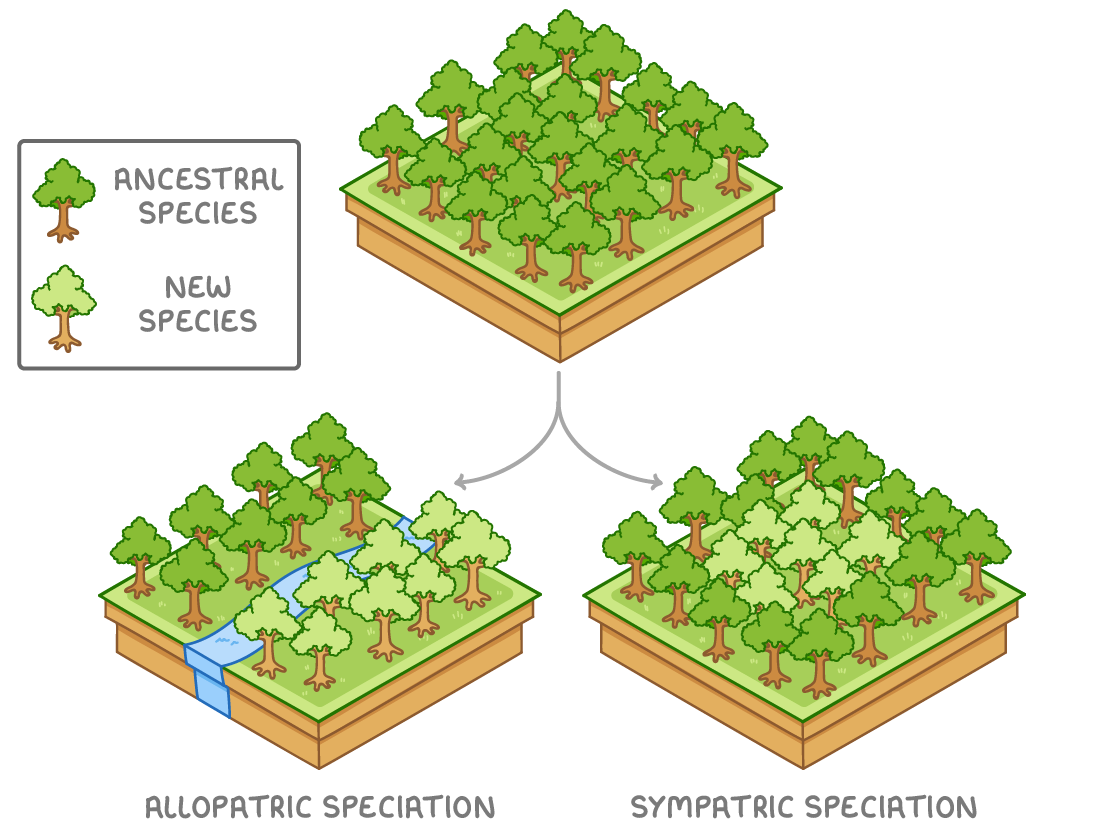
Types of speciation based on geography
- Allopatric speciation - This process occurs when populations are geographically isolated, such as by mountains, rivers, or other physical barriers. Over time, the separated populations adapt to their distinct environments, leading to genetic divergence and the formation of new species.
- Sympatric speciation - In contrast, sympatric speciation happens within populations that share the same geographic area (geographic overlap). Here, reproductive isolation develops through mechanisms like differences in mating preferences or ecological specialization, even without physical barriers.
Both processes result in speciation, but they differ in how isolation is achieved, highlighting the diverse ways evolution can unfold.
Mechanisms maintaining reproductive isolation
Once populations begin to diverge, various mechanisms ensure that they remain reproductively isolated. These mechanisms prevent gene flow, allowing differences to accumulate and solidify the separation into distinct species.
Pre-zygotic mechanisms (before fertilization)
- Habitat isolation - Populations live in different habitats within the same area, reducing the chance of mating. For example, one group may live in treetops while another resides on the ground.
- Temporal isolation - Populations breed at different times, such as different seasons or times of day, preventing successful mating.
- Behavioral isolation - Differences in mating behaviors or rituals mean that individuals from different populations do not recognize each other as potential mates.
- Mechanical isolation - Physical incompatibility of reproductive structures prevents successful mating between populations.
- Gametic isolation - Even if mating occurs, sperm and egg may not be compatible, preventing fertilization due to biochemical differences.
Post-zygotic mechanisms (after fertilization)
- Hybrid inviability - If fertilization occurs, the resulting hybrid may not survive to maturity due to genetic incompatibilities.
- Hybrid sterility - Hybrids may survive but are sterile (unable to reproduce), as seen in mules (a cross between a horse and a donkey), preventing gene flow between populations.
- Hybrid breakdown - Even if hybrids are viable and fertile, their offspring may have reduced fitness or survival rates, further isolating the parent populations.
These mechanisms, whether acting before or after fertilization, ensure that populations remain distinct by blocking successful interbreeding, thus driving speciation.
Examples of speciation in natural populations
Speciation is observable in various natural populations, providing concrete examples of how these processes and mechanisms play out in real-world scenarios.
Hawaiian Drosophila (fruit flies)
- Context - The Hawaiian Islands host a diverse array of Drosophila species, showcasing rapid speciation due to geographic isolation and adaptive radiation.
- Mechanism - Allopatric speciation occurred as flies colonized different islands, adapting to unique environments over time.
- Outcome - This resulted in hundreds of distinct species, each with specialized traits suited to their specific island habitats.
Caribbean Anolis (lizards)
- Context - Anolis lizards in the Caribbean demonstrate adaptive radiation, with different species evolving to occupy specific ecological niches on the same islands.
- Mechanism - Allopatric speciation and adaptive radiation occurred as lizard populations became geographically isolated on different islands (or in isolated areas within islands), then adapted to different ecological niches. Different ecomorphs (body types adapted to specific habitats like tree trunks, branches, or ground) evolved independently on separate islands through repeated adaptive radiation.
- Outcome - Multiple species coexist in the same geographic area today, each specialized for a unique lifestyle, showing how allopatric speciation and adaptive radiation can produce diverse species occupying different ecological niches.
Apple maggot Rhagoletis (flies)
- Context - The apple maggot fly, originally associated with hawthorn trees, began infesting apple trees after apples were introduced to North America.
- Mechanism - Sympatric speciation is evident as populations adapted to different host plants (hawthorn versus apple), leading to temporal isolation based on fruiting times and behavioral isolation due to host preference.
- Outcome - This shift created two distinct populations within the same area, on the path to becoming separate species due to reproductive isolation linked to host plant choice.
These examples illustrate the diversity of speciation processes, showing how both geographic and ecological factors contribute to the formation of new species in nature.