7.11 - Variations in Populations
What is genetic diversity in populations?
Genetic diversity refers to the total number of genetic characteristics in the genetic makeup of a species or population. It is a measure of the variety of alleles (different forms of a gene) present within a population. This diversity is crucial for the survival and adaptability of populations in changing environments.
Key aspects of genetic diversity
- Allelic variation - The presence of multiple alleles for a single gene within a population, which can result in different traits or characteristics.
- Genetic variation across individuals - Differences in the DNA sequences among individuals in a population, contributing to unique combinations of traits.
- Population resilience - A diverse gene pool provides a buffer against environmental changes, increasing the likelihood that some individuals will possess traits suited to new conditions.
Genetic diversity arises from mutations, genetic recombination during sexual reproduction, and gene flow between populations. It is the foundation for natural selection to act upon, shaping the evolution of species over time.
How genetic diversity influences responses to environmental changes
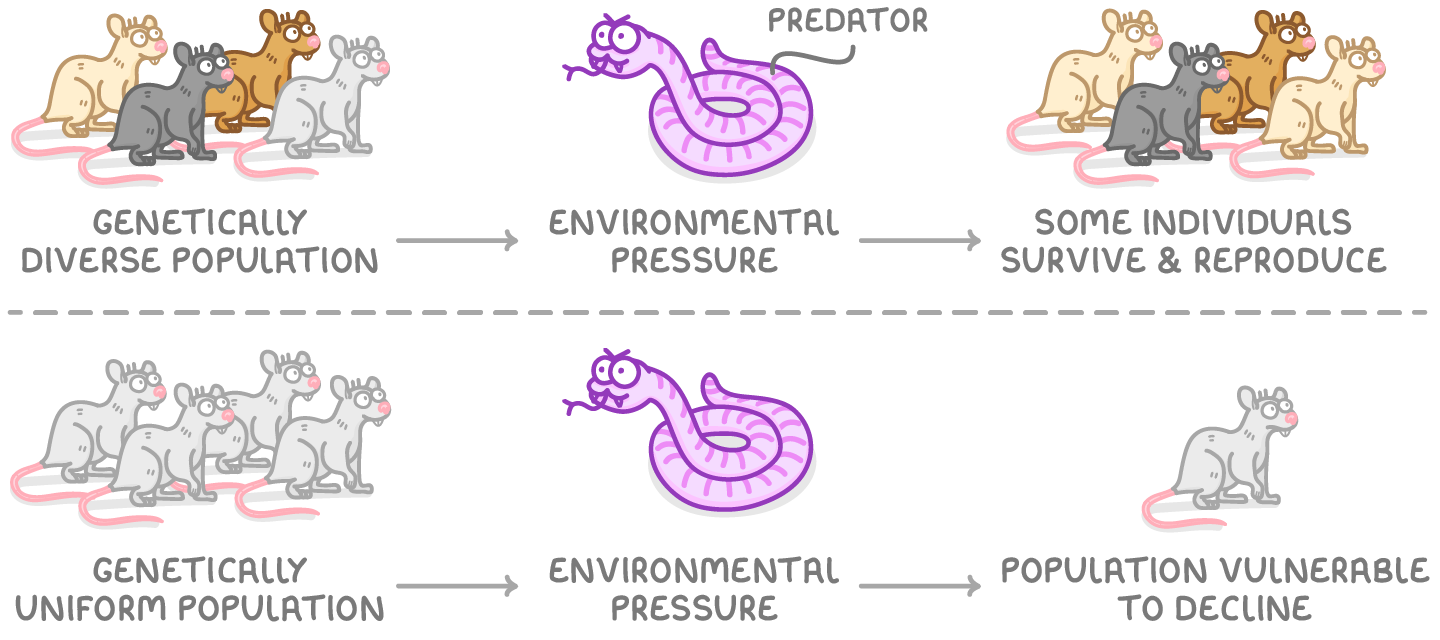
The ability of a population to adapt to environmental changes, or perturbations, is directly tied to its level of genetic diversity. When a population faces challenges such as climate shifts, habitat loss, or disease outbreaks, genetic diversity determines whether some individuals can survive and reproduce under the new conditions.
Mechanisms of adaptation through diversity
- Presence of beneficial alleles - In a genetically diverse population, there is a higher chance that some individuals carry alleles that confer resistance or adaptability to specific environmental pressures.
- Natural selection in action - Diverse populations allow natural selection to favor individuals with advantageous traits, increasing the frequency of those traits in future generations.
- Avoidance of uniform vulnerability - Unlike uniform populations, diverse ones are less likely to be entirely susceptible to a single threat, as not all individuals will respond identically to a stressor.
This resilience means that genetically diverse populations are better equipped to withstand sudden or long-term changes in their environment, ensuring their survival and continued evolution.
Risks of low genetic diversity in populations
Populations with low genetic diversity face significant risks when exposed to environmental pressures. Without a wide range of alleles, these populations lack the necessary variation to adapt to changing conditions, making them more vulnerable to decline or extinction.
Consequences of limited genetic variation
- Increased susceptibility to threats - With fewer genetic options, populations may not have individuals capable of surviving diseases, predators, or habitat changes.
- Inbreeding depression - Low diversity often leads to inbreeding, where closely related individuals mate, increasing the chances of harmful recessive traits being expressed.
- Reduced adaptability - Without variation, natural selection has little to work with, limiting the population's ability to evolve in response to new challenges.
When a population's genetic pool is narrow, even a minor environmental change can have catastrophic effects, as there may be no individuals equipped to handle the new conditions.
Selective pressures and the dual nature of alleles
Selective pressures are environmental factors that influence which individuals survive and reproduce within a population. These pressures can vary across different environments, meaning that alleles beneficial in one context may be harmful in another. This dynamic shapes the genetic composition of populations over time.
Adaptive and deleterious alleles
- Adaptive alleles - These are versions of genes that provide a survival or reproductive advantage under specific environmental conditions. For example, an allele conferring resistance to a particular disease can become more common in a population exposed to that disease.
- Deleterious alleles - These are alleles that reduce an individual's fitness in a given environment. An allele that was adaptive in one setting might become deleterious if the environment changes, such as a trait for thick fur becoming a disadvantage in a warming climate.
- Context-dependent fitness - The value of an allele depends on the specific selective pressures at play. What helps survival in one habitat might hinder it in another, driving evolutionary change as populations adapt to their surroundings.
This variability highlights the importance of genetic diversity, as it increases the likelihood that a population will have alleles suited to a wide range of selective pressures.
Real-world examples of genetic diversity and environmental pressures
Genetic diversity plays a critical role in the survival of species and populations facing environmental challenges. Several illustrative examples demonstrate how variation, or the lack thereof, impacts population dynamics under stress.
California condors and low genetic diversity
- Background - California condors, a critically endangered bird species, faced near extinction due to habitat loss, poisoning, and hunting, resulting in a severely reduced population with low genetic diversity.
- Impact - With limited genetic variation, condors are highly susceptible to diseases and environmental changes, making recovery efforts challenging.
- Conservation efforts - Captive breeding programs aim to increase population size, but the lack of diversity continues to threaten long-term survival.
Black-footed ferrets and population bottlenecks
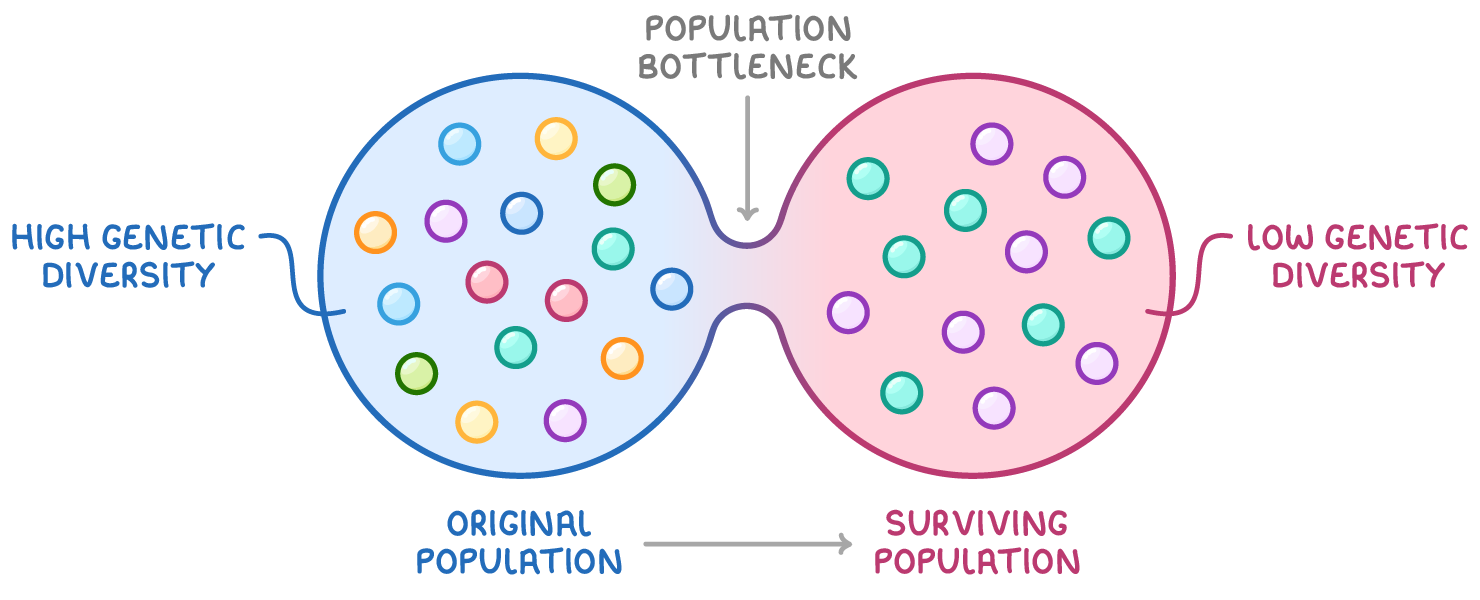
- Background - Black-footed ferrets, native to North America, experienced a population bottleneck (a sharp reduction in population size) due to habitat loss and disease, drastically reducing genetic diversity.
- Impact - This low diversity has made them vulnerable to inbreeding depression and diseases like sylvatic plague, hindering recovery.
- Conservation efforts - Reintroduction programs and genetic monitoring are in place to bolster diversity, but risks remain high.
Prairie chickens and habitat fragmentation
- Background - Prairie chickens, a North American bird, have suffered from habitat fragmentation, leading to isolated populations with reduced gene flow and lower genetic diversity.
- Impact - Small, isolated populations exhibit inbreeding and reduced fitness, increasing extinction risk as they struggle to adapt to environmental changes.
- Conservation efforts - Translocation of individuals between populations is used to increase genetic variation and improve resilience.
Potato blight and crop monocultures
- Background - Potato blight, a devastating disease, caused the Irish Potato Famine in the 1840s due to the cultivation of genetically uniform potato crops lacking diversity.
- Impact - With little genetic variation, the entire crop was susceptible to the blight, leading to widespread crop failure and famine.
- Lesson - This event underscores the danger of low genetic diversity in agricultural systems, prompting modern efforts to develop disease-resistant varieties.
Corn rust and agricultural vulnerability
- Background - Corn rust, a fungal disease, affects maize crops, particularly those with limited genetic diversity due to selective breeding for specific traits.
- Impact - Uniform corn strains are highly vulnerable to rust outbreaks, threatening food security in regions dependent on maize.
- Lesson - Breeding programs now focus on incorporating genetic diversity to create rust-resistant hybrids, reducing the risk of widespread crop loss.
Antibiotic resistance in bacteria
- Background - Bacterial populations, such as those causing infections, often exhibit high genetic diversity, leading to variations in susceptibility to antibiotics.
- Impact - In a diverse population, some bacteria may carry alleles conferring resistance to antibiotics, allowing them to survive treatment while susceptible individuals die off.
- Outcome - This selective pressure increases the frequency of resistance alleles, demonstrating how diversity enables adaptation to environmental challenges like medical interventions.
These examples illustrate the critical role of genetic diversity in determining how populations respond to environmental pressures, from natural ecosystems to agricultural systems. Populations with greater variation are more likely to endure and adapt, while those with limited diversity face heightened risks of decline or extinction.