5.5 - Environmental Effects on Phenotype
The concept of phenotypic plasticity and its importance
Phenotypic plasticity refers to the ability of a single genotype (the genetic makeup of an organism) to produce different phenotypes (observable traits) in response to varying environmental conditions. This phenomenon highlights the dynamic interaction between an organism's genes and its surroundings, allowing adaptation to diverse challenges without changes to the underlying DNA sequence.
Why phenotypic plasticity matters
- Adaptation to environment - It enables organisms to adjust their traits to better suit changing conditions, improving survival and reproduction.
- Flexibility in development - Plasticity allows for varied developmental outcomes from the same genetic blueprint, which is crucial in unpredictable environments.
- Ecological significance - This flexibility helps populations persist in diverse habitats by expressing traits that match local conditions.
Understanding phenotypic plasticity is key to grasping how biological systems interact with their environment, demonstrating that traits are not solely determined by genetics but are shaped by complex interactions.
How environmental conditions influence gene expression
Gene expression is the process by which information from a gene is used to create a functional product, like a protein, that contributes to an organism's phenotype. Environmental factors can influence which genes are turned on or off, altering the proteins produced and, consequently, the traits expressed. This regulation is a primary mechanism behind phenotypic plasticity.
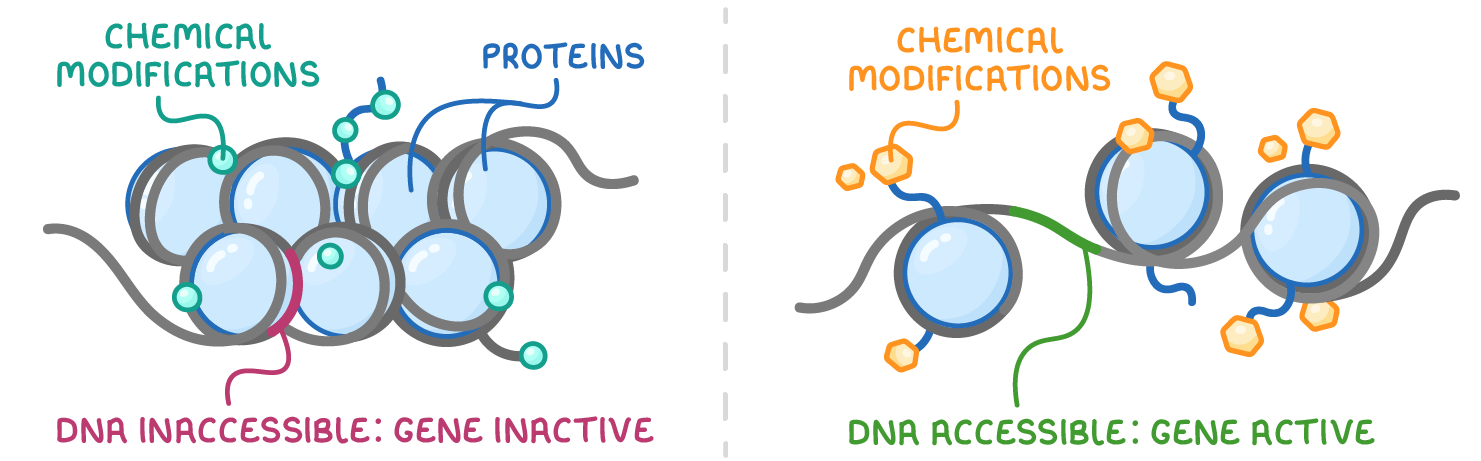
Mechanisms of environmental influence on gene expression
- Epigenetic modifications - Environmental cues can lead to chemical changes in DNA or associated proteins (without altering the DNA sequence), affecting how genes are read and expressed.
- Signal transduction pathways - External signals, such as temperature or light, can trigger cellular pathways that activate or suppress specific genes.
- Hormonal responses - Environmental stressors or resources can alter hormone levels, which in turn regulate gene expression to modify traits like growth or reproduction.
This interaction between environment and gene expression underscores the complexity of biological systems, where internal genetic factors and external conditions work together to shape an organism's characteristics.
Specific examples of environmental effects on phenotypes
Environmental conditions can lead to striking differences in phenotype even among organisms with identical genotypes. Below are several illustrative examples across different species, showing how diverse environmental factors influence observable traits.
Human height and weight
- Environmental factor - Nutrition and access to resources during growth periods.
- Phenotypic effect - Adequate nutrition can maximize genetic potential for height and healthy weight, while malnutrition can stunt growth or lead to underweight conditions, despite the same genetic makeup.
Flower color based on soil pH
- Environmental factor - The acidity or alkalinity of the soil in which a plant grows.
- Phenotypic effect - In hydrangeas, acidic soil (low pH) often results in blue flowers due to the availability of aluminum ions, while alkaline soil (high pH) produces pink flowers as aluminum becomes less available, altering pigment expression.
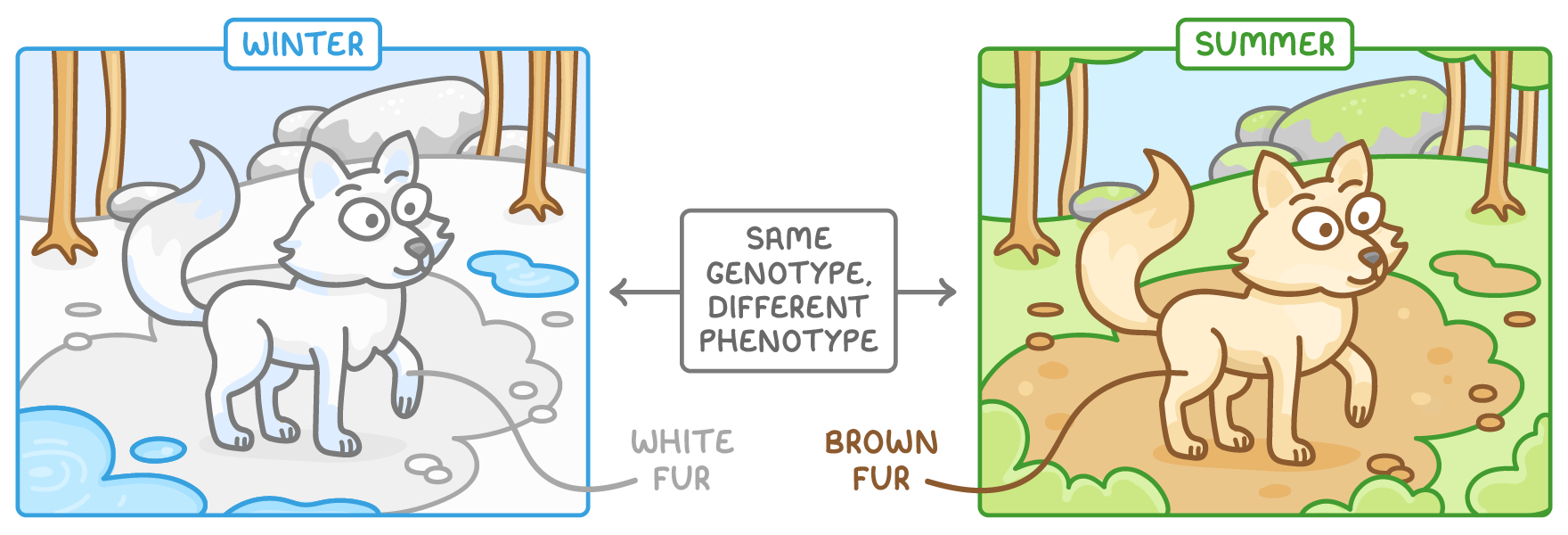
Seasonal fur color in arctic animals
- Environmental factor - Seasonal changes in temperature and daylight.
- Phenotypic effect - Arctic foxes and hares develop white fur in winter to blend with snow for camouflage, triggered by shorter days and colder temperatures, and revert to brown or gray in summer as daylight increases, despite no genetic change.
Sex determination in reptiles
- Environmental factor - Incubation temperature of eggs during a critical developmental period.
- Phenotypic effect - In many turtle species, eggs incubated at higher temperatures typically develop into females, while cooler temperatures result in males. However, in crocodilians (alligators and crocodiles), the pattern is often reversed, with higher temperatures producing males. This temperature-dependent sex determination is a process driven by temperature-sensitive gene expression rather than genetic differences.
Effect of increased UV on melanin production in animals
- Environmental factor - Exposure to ultraviolet (UV) radiation from sunlight.
- Phenotypic effect - In humans and other animals, increased UV exposure stimulates the production of melanin (a pigment responsible for skin, hair, and eye color), leading to darker skin or fur as a protective response against UV damage, even with the same genotype.
Presence of opposite mating type on pheromone production in yeast and fungi
- Environmental factor - The presence of a compatible mating type in the surrounding environment.
- Phenotypic effect - In yeast and other fungi, the detection of an opposite mating type triggers the production of pheromones (chemical signals) to initiate mating, a response regulated by environmental cues influencing gene expression for pheromone synthesis.
The role of systems interactions in shaping phenotypic outcomes
Phenotypic plasticity is a clear demonstration of systems interactions, a core concept in biology where biological systems and their environments interact to produce complex properties. The phenotype of an organism is not just a product of its genes but emerges from the interplay between genetic potential and environmental inputs.
Key aspects of systems interactions in phenotypic plasticity
- Gene-environment interplay - Genes provide the blueprint, but environmental factors determine how that blueprint is interpreted, leading to varied phenotypic expressions.
- Dynamic responses - Organisms continuously sense and respond to environmental changes through feedback mechanisms, adjusting their traits to maintain homeostasis or optimize fitness.
- Complexity of outcomes - The same genetic code can lead to multiple outcomes depending on the environmental context, illustrating the intricate and non-linear nature of biological systems.
These interactions highlight that biological traits result from a network of influences, where neither genetics nor environment acts in isolation. Understanding these relationships is essential for predicting how organisms might respond to changing conditions, such as those driven by climate change or habitat alteration.