6.1 - DNA & RNA Structure
The role of DNA and RNA in hereditary information storage and transmission
DNA (deoxyribonucleic acid) and RNA (ribonucleic acid) are nucleic acids that serve as the primary molecules for storing and passing genetic information from one generation to the next. They contain the instructions needed for building and maintaining living organisms, playing a central role in life processes.
Key functions of DNA and RNA
- Storage of genetic information - DNA holds the complete set of instructions for an organism's development, function, and reproduction, acting as a long-term repository of hereditary information.
- Transmission to subsequent generations - During reproduction, DNA is copied and passed from parent to offspring, ensuring the continuity of genetic traits.
- RNA's role in specific cases - RNA can also carry genetic information, particularly in some viruses where it serves as the hereditary material instead of DNA.
This ability to store, retrieve, and transmit information is fundamental to life, allowing organisms to maintain consistency across generations while adapting through evolutionary processes.
Structural differences between prokaryotic and eukaryotic chromosomes
Chromosomes are organized structures of DNA that carry genetic information. The structure of chromosomes varies significantly between prokaryotic and eukaryotic organisms, reflecting differences in their complexity and cellular organization.
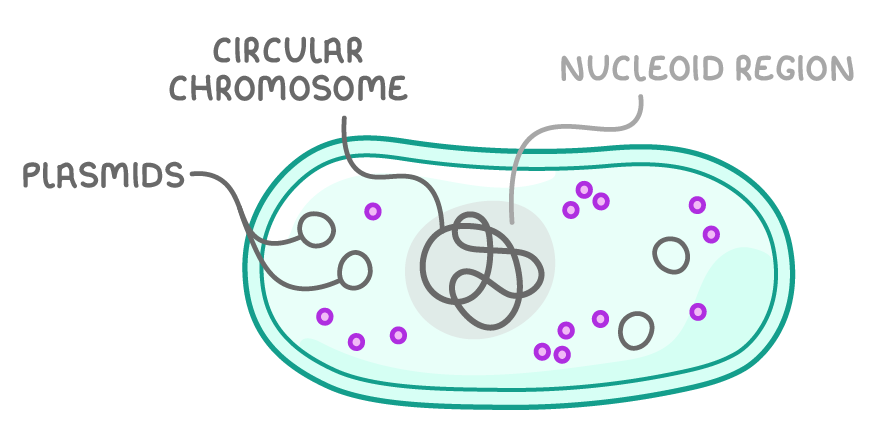
Prokaryotic chromosome structure
- Circular chromosomes - Prokaryotes, such as bacteria, typically have a single, circular chromosome, and some smaller loops of genetic material called plasmids. This structure is compact and located in the nucleoid region, which lacks a surrounding membrane.
- Simpler organization - Without a nucleus, the DNA in prokaryotes is not associated with proteins in the same way as in eukaryotes, leading to a less complex packing mechanism.
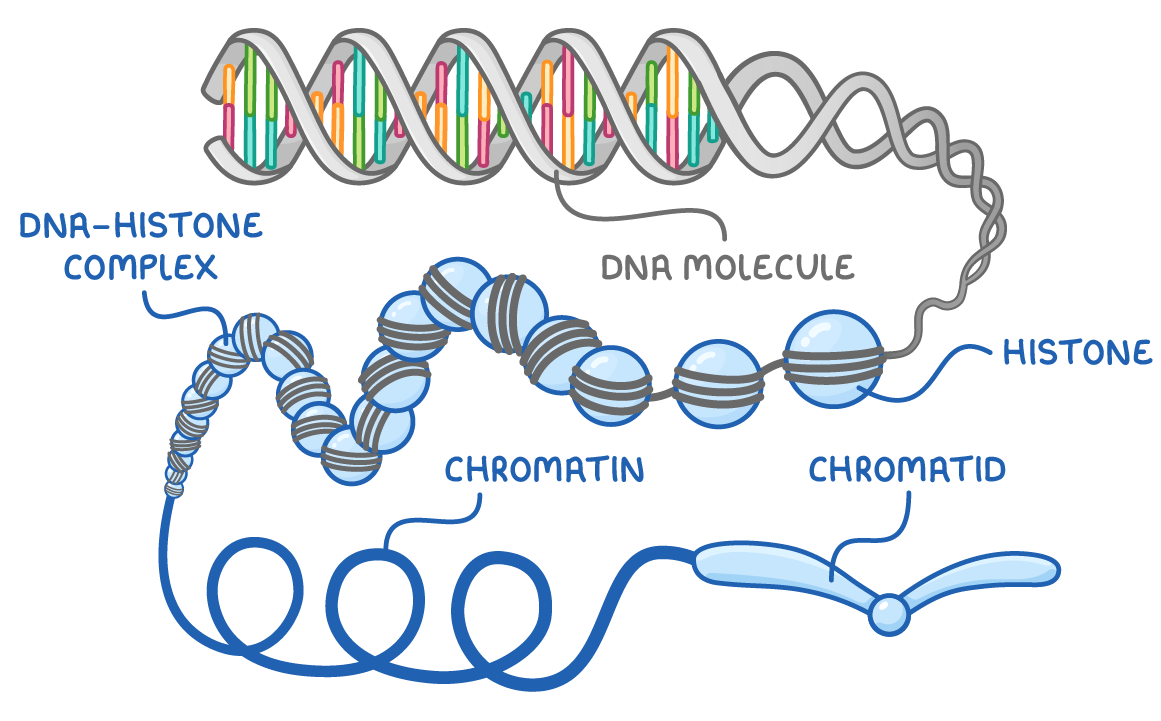
Eukaryotic chromosome structure
- Multiple linear chromosomes - Eukaryotes, including plants, animals, and fungi, have multiple linear chromosomes housed within a membrane-bound nucleus.
- Condensation with proteins - These chromosomes are condensed and packaged using histones (specialized proteins) and other associated proteins. This packaging forms a structure called chromatin, which further condenses into visible chromosomes during cell division.
These structural differences allow eukaryotes to manage larger amounts of genetic material, supporting the complexity of their cellular functions and multicellular organization.
The presence and function of plasmids in organisms
Beyond their main chromosomes, both prokaryotes and eukaryotes can contain additional DNA in the form of plasmids. These are small, extra-chromosomal molecules that can replicate independently of the main genetic material.
Characteristics and roles of plasmids
- Circular structure - Plasmids are typically circular DNA molecules, distinct from the chromosomal DNA.
- Extra-chromosomal nature - They exist outside the main chromosome(s) and are not essential for basic survival but often provide advantageous traits.
- Common in prokaryotes - In bacteria, plasmids frequently carry genes for antibiotic resistance or other survival mechanisms, allowing rapid adaptation to environmental changes.
- Present in some eukaryotes - Certain eukaryotic organisms, like yeast, can also harbor plasmids, often used in genetic engineering to introduce specific genes.
Plasmids play a significant role in genetic diversity and adaptation, especially in prokaryotes, by enabling the transfer of beneficial genes between cells.
Characteristics of DNA that make it suitable as hereditary material
DNA's unique chemical and structural properties make it an ideal molecule for storing and transmitting genetic information across generations. Its stability and ability to replicate accurately ensure the fidelity of hereditary traits.
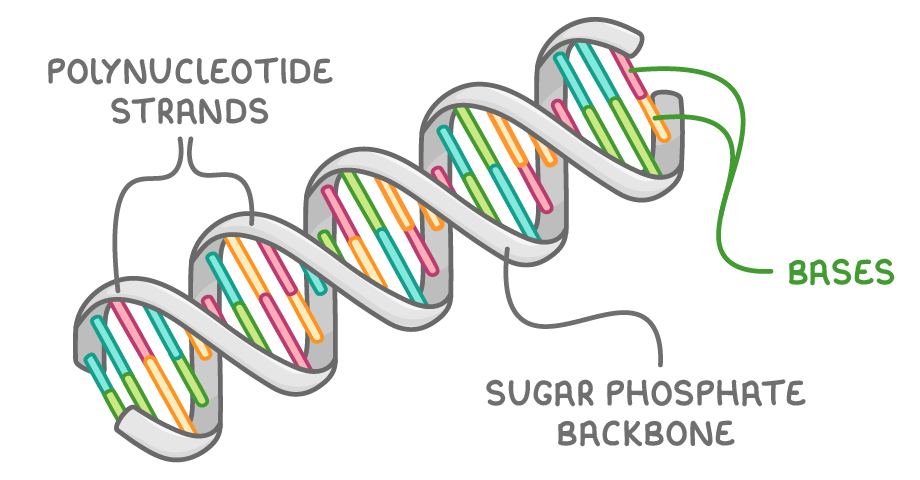
Why DNA is effective as hereditary material
- Stable chemical structure - DNA's double-helix structure, composed of two complementary strands, provides durability and protection against damage, ensuring long-term storage of genetic information.
- Accurate replication - During cell division, DNA can be copied with high fidelity, minimizing errors in the transmission of genetic information to daughter cells.
- Capacity for coding information - DNA uses a sequence of nucleotides to encode vast amounts of information, providing the blueprint for all biological functions and traits.
- Specific base pairing - The consistent pairing of nucleotide bases allows DNA to maintain genetic consistency across generations, a feature conserved through evolution.
These characteristics collectively make DNA a reliable and efficient carrier of hereditary information, capable of supporting the complexity of life.
Nucleotide base pairing rules in nucleic acids
Nucleic acids like DNA and RNA are made up of nucleotides, each containing a sugar, a phosphate group, and a nitrogenous base. The specific pairing of these bases is a fundamental property that ensures accurate storage and transmission of genetic information.
Types of nitrogenous bases
Purines:
- Adenine (A)
- Guanine (G)
These bases have a double-ring structure.
Pyrimidines:
- Cytosine (C)
- Thymine (T) - found in DNA only
- Uracil (U) - found in RNA only, replacing thymine
These bases have a single-ring structure.
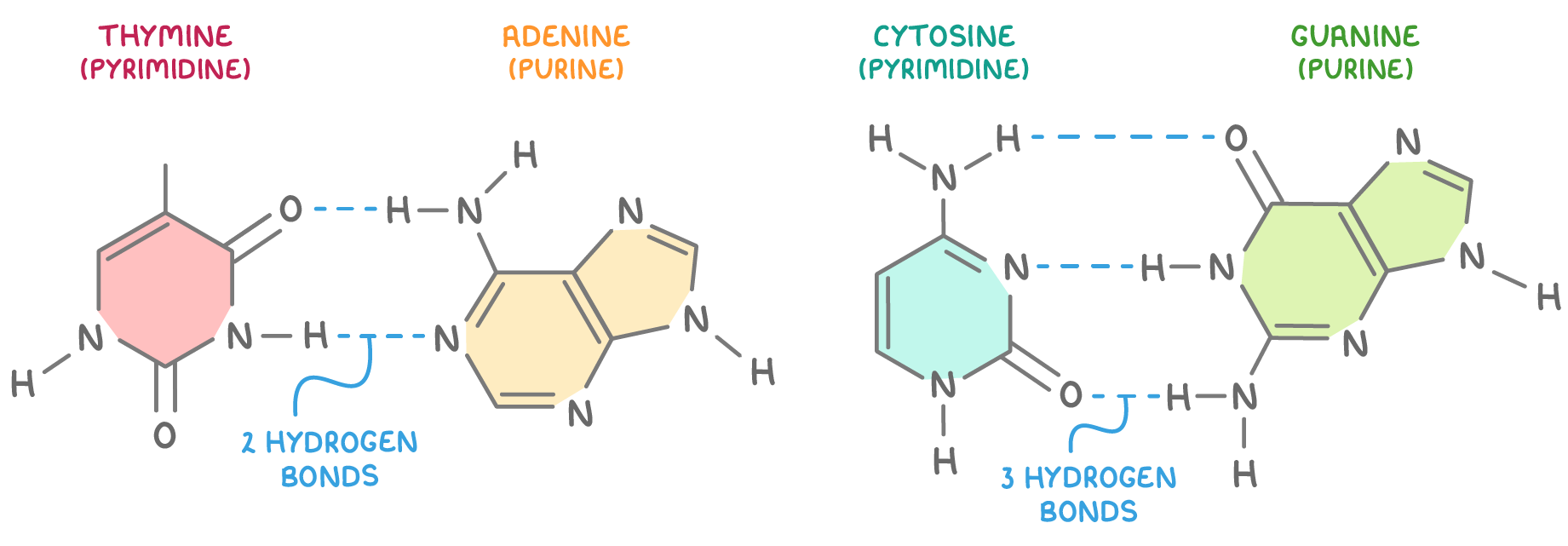
Base pairing rules
Purines always pair with pyrimidines due to their complementary structures, forming stable hydrogen bonds.
Specific pairs in DNA:
- Adenine (A) pairs with Thymine (T) via two hydrogen bonds.
- Guanine (G) pairs with Cytosine (C) via three hydrogen bonds.
Specific pairs in RNA:
- Adenine (A) pairs with Uracil (U) instead of thymine, also via two hydrogen bonds.
- Guanine (G) pairs with Cytosine (C), maintaining the three hydrogen bonds.
This conserved base pairing ensures that genetic information is accurately replicated and transcribed, maintaining consistency through evolutionary history. The complementary nature of the strands allows one strand to serve as a template for creating the other, a critical feature for DNA replication and RNA synthesis.