4.3 - Signal Transduction Pathways
Signal transduction pathways: an overview
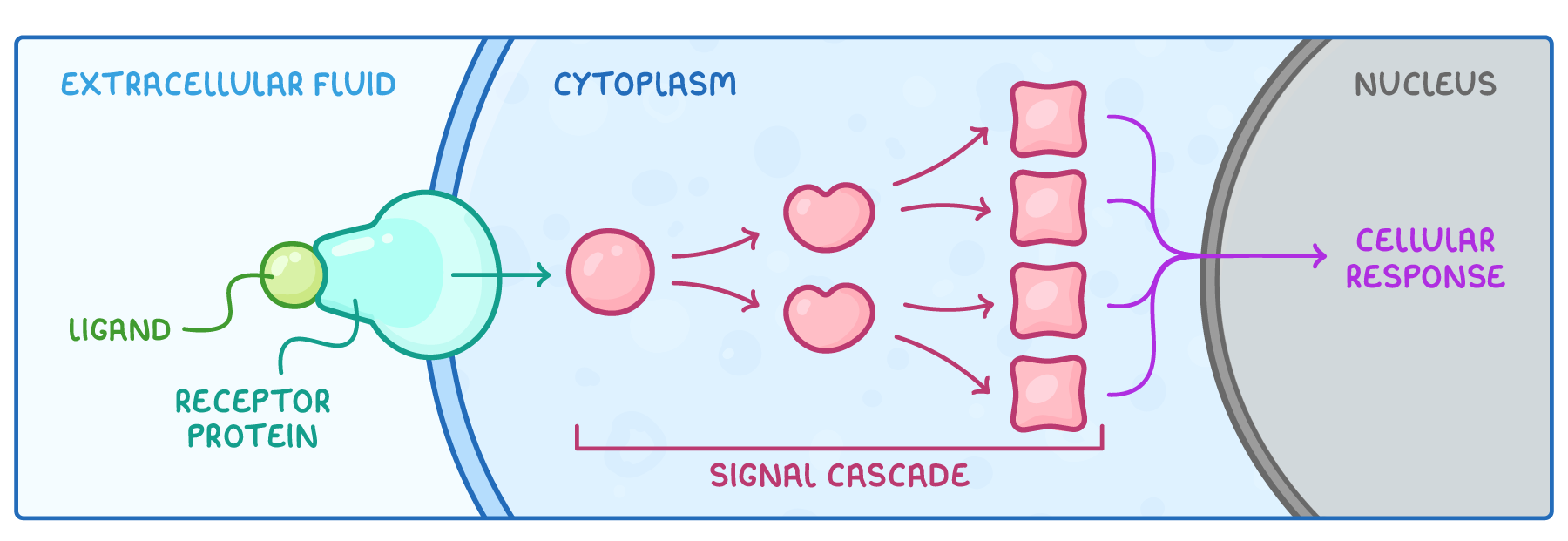
Signal transduction pathways are a series of molecular events by which a cell converts an extracellular signal into a specific cellular response. These pathways are crucial for cells to communicate and respond to their environment, ensuring that living systems can store, retrieve, transmit, and react to information essential for life processes. This process begins when a signaling molecule, often called a ligand, binds to a receptor on the cell surface, initiating a cascade of events inside the cell.
Key components of signal transduction pathways
- Ligand - A molecule that binds specifically to a receptor, acting as the initial signal. Examples include hormones, neurotransmitters, and growth factors.
- Receptor - A protein on the cell membrane or within the cell that detects the ligand and triggers the transduction process.
- Signal cascade - A series of protein activations or modifications inside the cell that amplify and transmit the signal.
- Cellular response - The final outcome of the pathway, which can vary widely based on the signal and cell type.
This structured sequence allows cells to respond appropriately to external stimuli, coordinating functions such as growth, immune responses, and metabolism.
Types of cellular responses in signal transduction
Signal transduction pathways can elicit a variety of cellular responses, depending on the nature of the signal and the type of cell receiving it. These responses are critical for maintaining homeostasis and adapting to environmental changes.
Major cellular responses triggered by signal transduction
- Changes in gene expression - The signal can activate or repress specific genes, altering the production of proteins. This often leads to changes in cell function or phenotype, which is the observable expression of an organism's genes.
- Alteration of cell function - Signals can modify existing cellular processes, such as increasing metabolic activity or changing cell shape, to meet immediate needs.
- Programmed cell death (apoptosis) - In some cases, the signal triggers apoptosis, a controlled process of cell death that eliminates damaged or unnecessary cells. This is essential for development and preventing diseases like cancer.
These responses demonstrate the versatility of signal transduction in regulating cellular behavior and ensuring organismal survival.
Effects of structural changes in signaling molecules
The efficiency and accuracy of signal transduction pathways heavily depend on the structure of the molecules involved. Any alteration in these structures can significantly impact the pathway's activity and the resulting cellular response.
How structural changes affect signaling pathways
- Mutations in receptor proteins - A mutation, which is a permanent change in the DNA sequence, in any part (or domain) of a receptor protein can disrupt its ability to bind to the ligand or transmit the signal. This can alter downstream components, meaning the subsequent steps in the pathway are affected, often leading to an incorrect or absent cellular response.
- Alterations in pathway components - Mutations in other molecules within the signal cascade, such as enzymes or secondary messengers, can similarly disrupt the flow of information. This may prevent the signal from being amplified or relayed correctly.
- Consequences of disrupted signaling - As a result, the cell may fail to respond appropriately to environmental cues, potentially causing developmental issues, immune deficiencies, or diseases.
Understanding these effects is crucial for identifying how genetic changes can lead to disorders and for developing targeted treatments.
Impact of chemicals on signaling pathways
Beyond structural changes caused by mutations, external chemicals can also interact with components of signal transduction pathways. These interactions can either activate or inhibit the pathway, influencing cellular responses.
Mechanisms of chemical interference
- Activation by chemicals - Some chemicals can mimic natural ligands or enhance receptor activity, triggering the pathway even in the absence of the usual signal. This can lead to overstimulation of cellular responses.
- Inhibition by chemicals - Other chemicals may block receptors or interfere with signal cascade molecules, preventing the pathway from functioning. This can halt critical cellular processes.
- Therapeutic and toxic effects - Chemicals that alter signaling pathways are often used in medicine to treat diseases by activating or inhibiting specific responses. However, unintended chemical interactions can also cause toxicity or side effects.
This highlights the delicate balance of signal transduction and the potential for both beneficial and harmful interventions.
Examples of signal transduction pathways
Signal transduction operates across various organisms and contexts, demonstrating its universal importance in biological systems. Below are specific examples that showcase the diversity of responses and mechanisms involved.
Quorum sensing in microbes
Quorum sensing is a process by which bacteria communicate using chemical messengers to coordinate behaviors based on population density. Bacteria release signaling molecules that bind to receptors on nearby cells, triggering pathways that regulate gene expression. This can lead to behaviors like biofilm formation or virulence factor production, allowing microbes to act collectively.
Epinephrine stimulation in mammals
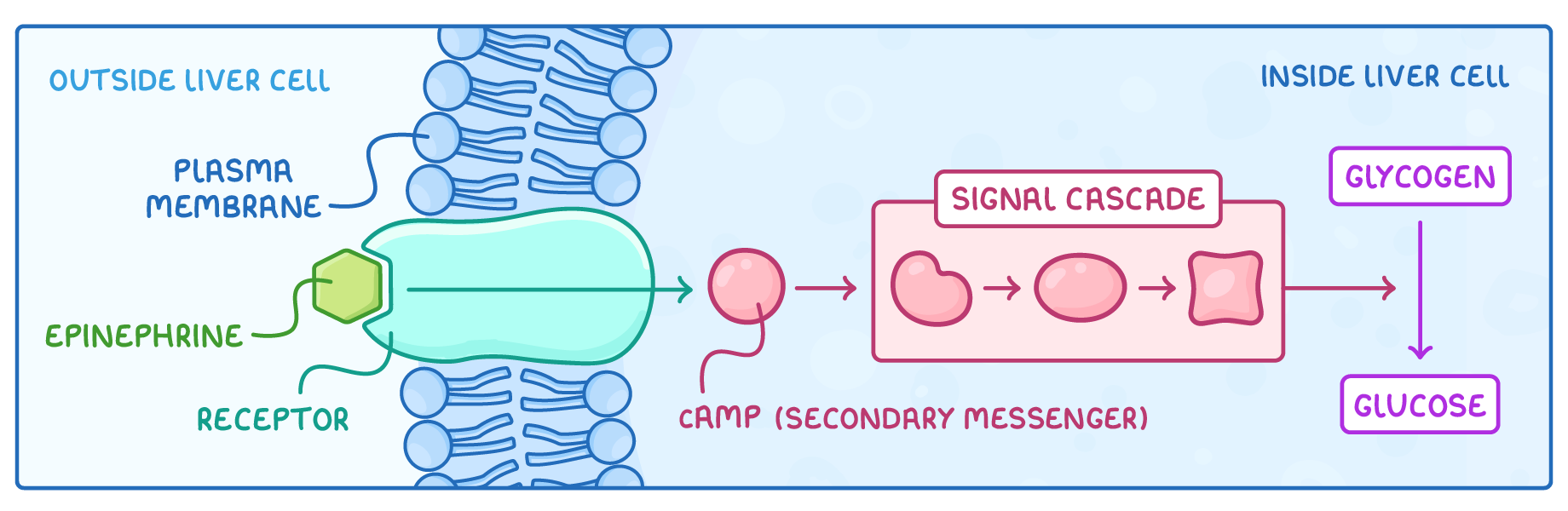
Epinephrine, also known as adrenaline, is a hormone released during stress or danger in mammals. It binds to receptors on muscle or liver cells, activating a signal cascade involving secondary messengers like cyclic AMP (cAMP). This results in the breakdown of glycogen into glucose, providing quick energy for a "fight or flight" response.
Cytokines and cell division
Cytokines are small proteins crucial for cell signaling during immune responses. They bind to specific receptors on target cells, initiating pathways that influence gene expression. This regulates cell replication and division, aiding in immune defense and tissue repair.
Mating pheromones in yeast
Yeast cells use pheromones, chemical signals, to initiate mating. Pheromones bind to receptors, triggering a cascade that alters gene expression. This prepares the cells for mating by expressing genes necessary for fusion and reproduction.
Ethylene in fruit ripening
Ethylene is a plant hormone involved in fruit ripening. It binds to receptors in plant cells, activating pathways that change enzyme production. This leads to the breakdown of cell walls and starch, softening and sweetening the fruit.
HOX genes in animal development
HOX genes are a group of related genes that control body plan development in animals during embryonic stages. Signals regulate the expression of HOX genes through transduction pathways. This determines the arrangement of body segments and structures, shaping the organism's form.
These examples illustrate how signal transduction pathways are tailored to specific functions across different species, yet all rely on the same fundamental principles of signal reception, transduction, and response.