4.4 - Feedback
Homeostasis and its role in biological systems
Homeostasis is the process by which organisms maintain a stable internal environment despite changes in external or internal conditions. This balance is crucial for the survival and proper functioning of biological systems, ensuring that variables like temperature, blood sugar, and pH remain within optimal ranges. Feedback mechanisms play a central role in achieving this stability by responding to deviations and initiating corrective actions.
Why homeostasis matters
- Optimal functioning - Cells and organs operate best within specific conditions, and deviations can impair biological processes.
- Response to change - Feedback mechanisms allow organisms to adapt to internal shifts (like hormone levels) and external factors (like temperature changes).
- Energy efficiency - By maintaining balance, organisms conserve energy and resources, focusing on growth, reproduction, and other vital activities.
Feedback mechanisms are broadly categorized into negative and positive feedback, each serving distinct purposes in maintaining or altering the internal environment.
Negative feedback mechanisms: Restoring balance
Negative feedback mechanisms are the primary way organisms maintain homeostasis by counteracting changes and returning a system to its target set point. When a physiological variable deviates from its normal range, negative feedback detects the change and triggers a response to reduce or reverse the initial stimulus. This process is essential for stability and operates at molecular, cellular, and organismal levels.
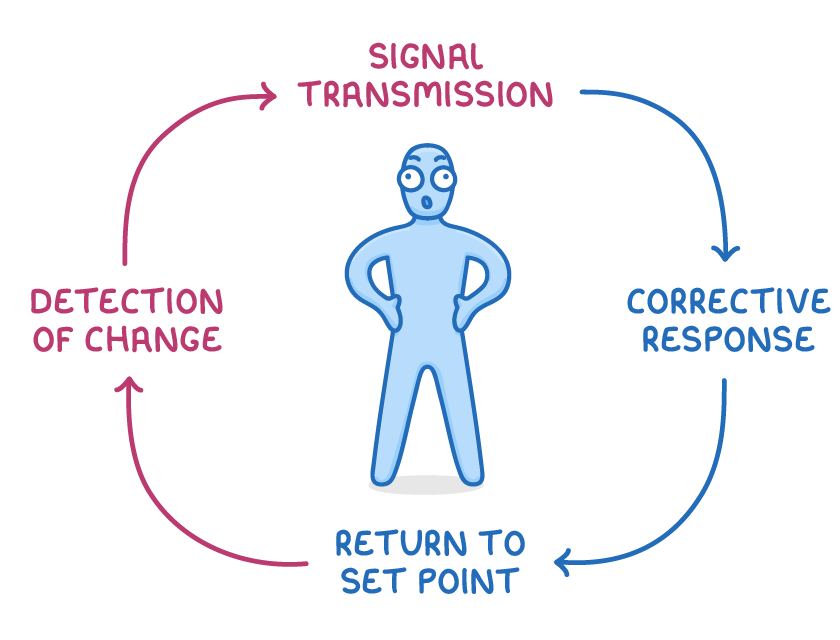
How negative feedback works
- Detection of change - Receptors or sensors detect a deviation from the normal range of a variable (e.g., a rise in blood sugar).
- Signal transmission - The information is relayed to a control center, often the brain or endocrine system, which processes the input.
- Corrective response - Effectors, such as muscles or glands, are activated to produce a response that opposes the initial change (e.g., releasing insulin to lower blood sugar).
- Return to set point - The variable is brought back to its optimal level, and the feedback loop reduces the stimulus until balance is restored.
Blood sugar regulation
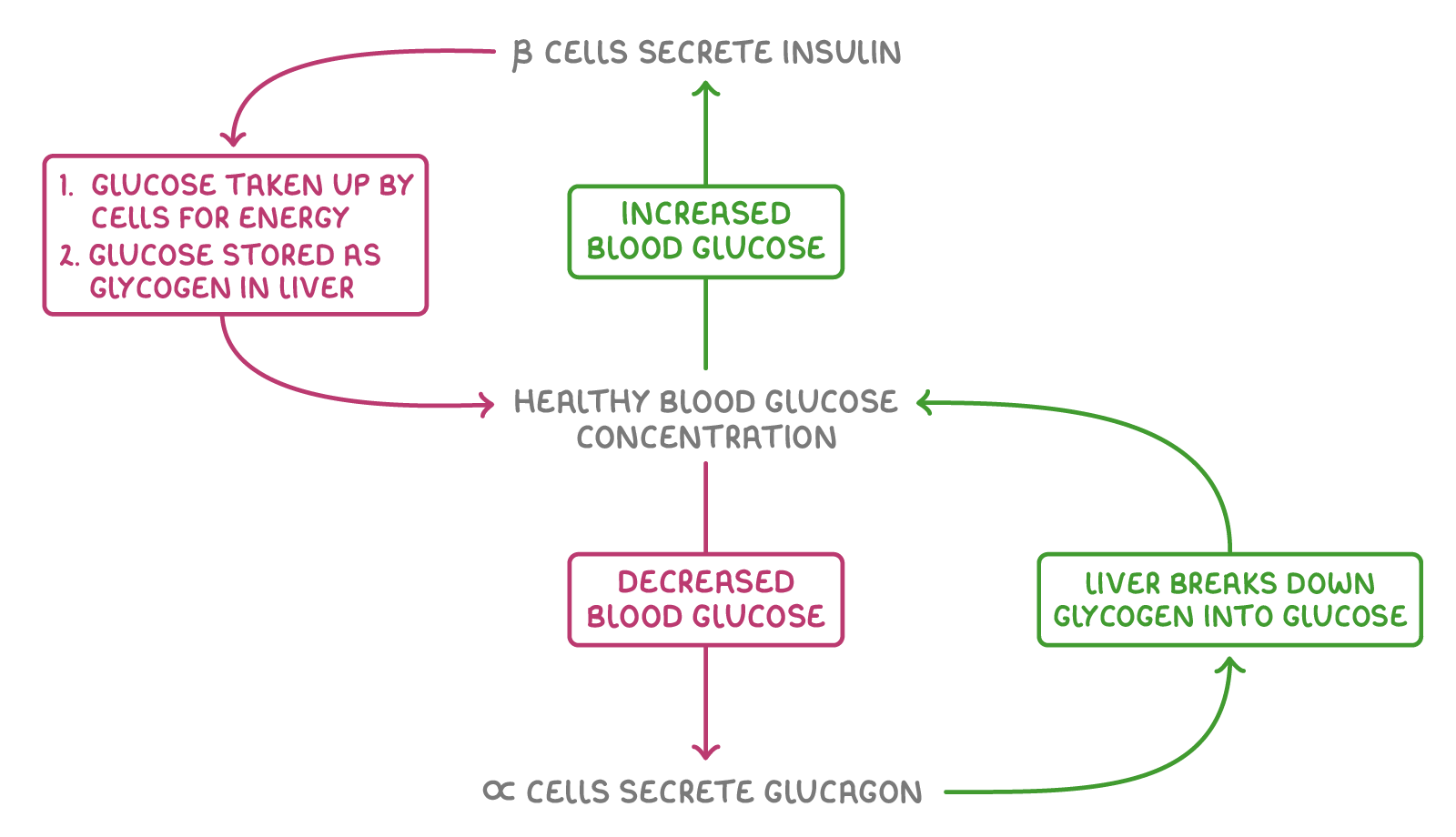
A classic example of negative feedback is the regulation of blood glucose levels by the hormones insulin and glucagon, produced by the pancreas.
How blood sugar regulation works:
- Rising blood sugar - After a meal, blood glucose levels increase. Beta cells (β cells) in the pancreas detect this rise and stimulate the release of insulin.
- Insulin's action - Insulin facilitates the uptake of glucose by cells for energy or storage as glycogen in the liver, reducing blood sugar levels.
- Falling blood sugar - If blood glucose drops too low (e.g., during fasting), alpha cells or (α cells) trigger the release of glucagon. This hormone stimulates the liver to break down glycogen into glucose, raising blood sugar back to normal.
- Balance achieved - The interplay of insulin and glucagon ensures blood glucose remains within a narrow range, preventing conditions like hyperglycemia (high blood sugar) or hypoglycemia (low blood sugar).
This mechanism demonstrates how negative feedback corrects deviations to maintain a stable internal environment, protecting the body from metabolic imbalances.
Positive feedback mechanisms: Amplifying responses
Unlike negative feedback, positive feedback mechanisms amplify a stimulus, moving a system further away from its initial set point. This process intensifies the original change, often leading to a rapid and significant outcome. Positive feedback is less common in maintaining homeostasis but is critical in specific biological contexts where amplification is necessary.
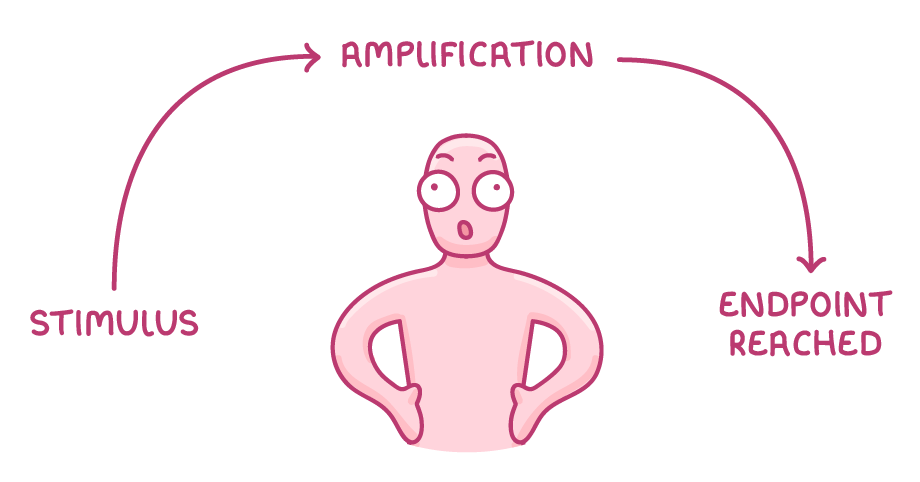
How positive feedback works
- Initiation of stimulus - A change or event triggers a response in the system (e.g., a hormone release or physical sensation).
- Amplification loop - The response intensifies the initial stimulus, creating a cascade of effects that build upon each other.
- System change - The process continues until a specific endpoint is reached, often a dramatic physiological event, after which the loop is terminated.
Positive feedback does not aim for stability but drives processes to completion, often in situations requiring quick or irreversible changes.
Examples of positive feedback in biological systems
- Lactation in mammals - When a baby suckles, it stimulates nerve endings in the nipple, signaling the brain to release oxytocin. This hormone causes milk ejection and further stimulates suckling, amplifying the response until feeding is complete.
- Onset of labor in childbirth - As contractions begin, the pressure of the baby's head against the cervix triggers oxytocin release, which intensifies contractions. Stronger contractions increase pressure, further increasing oxytocin, until delivery occurs.
- Ripening of fruit - In plants, the release of ethylene gas by a ripening fruit triggers nearby fruits to ripen as well. This gas amplifies the ripening process by stimulating more ethylene production, leading to a coordinated ripening event.
These examples show how positive feedback drives processes forward, creating significant changes rather than maintaining a steady state.
Comparing negative and positive feedback mechanisms
While both types of feedback are essential for biological systems, they serve opposite purposes and operate under different principles. Understanding their differences helps clarify their roles in homeostasis and other processes.
Key differences between feedback types
| Aspect | Negative feedback | Positive feedback |
|---|---|---|
| Purpose | Maintains stability by returning to set point | Amplifies change, moving away from set point |
| Effect on stimulus | Reduces or opposes the initial change | Intensifies the initial change |
| Outcome | Restores balance and homeostasis | Drives a process to completion or major change |
| Examples | Blood sugar regulation, temperature control | Childbirth, lactation, fruit ripening |
This comparison highlights how negative feedback acts as a stabilizing force, while positive feedback serves as an accelerator for specific events.
Predicting disruptions to feedback systems
Feedback mechanisms are vital for maintaining homeostasis, but disruptions to these systems can have significant consequences. Predicting the causes or effects of such changes helps in understanding how biological systems adapt or fail under stress.
Potential disruptions and their impacts
- Failure of negative feedback - If sensors fail to detect a change (e.g., in blood sugar regulation due to diabetes), the system cannot correct deviations. This can lead to chronic imbalances, such as persistently high glucose levels damaging tissues.
- Overactive positive feedback - Uncontrolled positive feedback can escalate a process beyond normal limits. For instance, excessive oxytocin during labor could cause dangerously strong contractions, risking injury to the mother or baby.
- External interference - Environmental factors or drugs can disrupt feedback loops. For example, certain medications might interfere with insulin signaling, altering blood sugar control.
- Molecular or cellular damage - Damage to cells or molecules involved in feedback, such as pancreatic beta cells that produce insulin, can impair the system's ability to respond appropriately.
By analyzing these disruptions, it becomes possible to anticipate the cascading effects on an organism's health and devise interventions to restore balance or mitigate damage.