1.4 - Carbohydrates
What are carbohydrates and why are they important?
Carbohydrates are a major class of organic molecules made up of carbon, hydrogen, and oxygen atoms, typically in the ratio of 1:2:1. They serve as a primary source of energy for living organisms and play critical roles in structural support and energy storage. As one of the essential macromolecules, carbohydrates are vital for the functioning of biological systems.
Key characteristics of carbohydrates
- Composition - Composed of carbon, hydrogen, and oxygen, forming the building blocks for energy and structure in cells.
- Energy source - Provide quick energy through breakdown processes in cells, fueling metabolic activities.
- Structural role - Contribute to the formation of cell walls and other supportive structures in plants and some other organisms.
- Storage function - Store energy for later use in the form of complex molecules, ensuring organisms have reserves during times of need.
Structure of carbohydrates: from monomers to polymers
Carbohydrates are categorized based on their molecular structure, ranging from simple units to complex chains. Understanding their structural hierarchy helps explain how they function in biological systems.
Monosaccharides: the building blocks
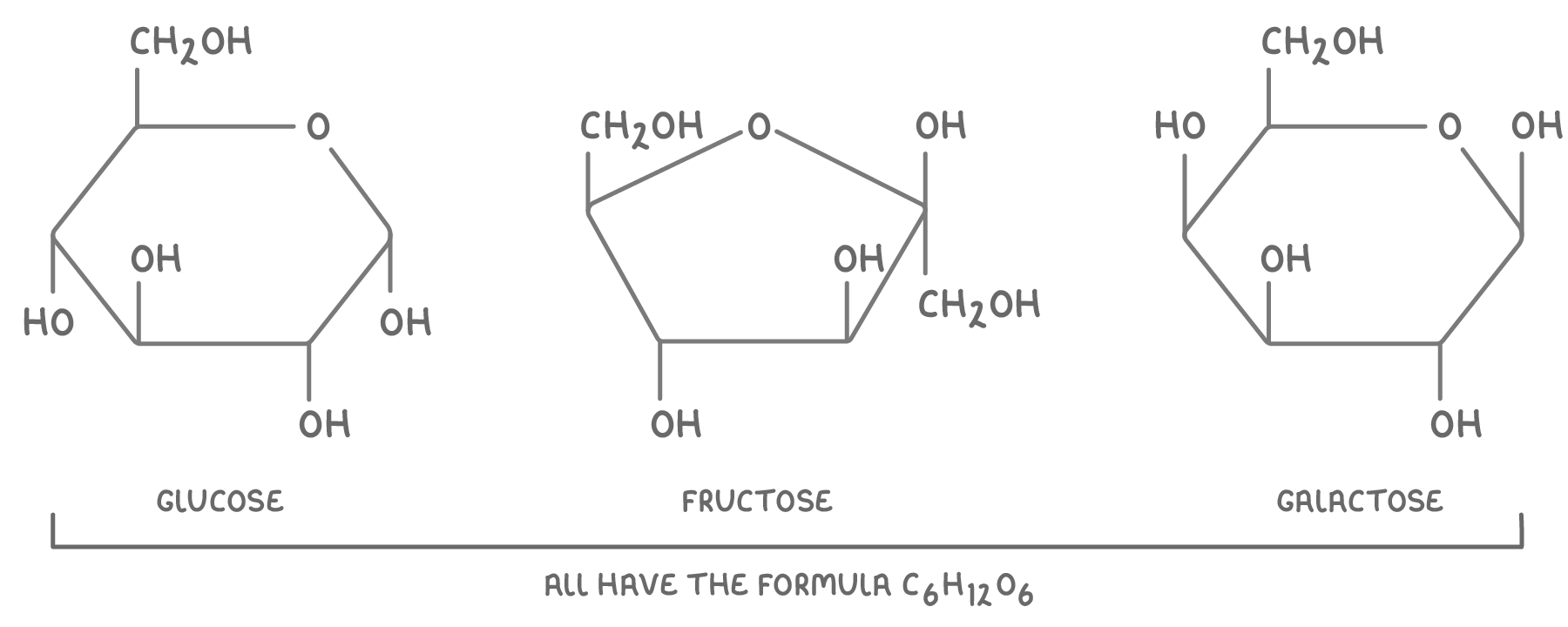
Monosaccharides, often called simple sugars, are the smallest units of carbohydrates, consisting of single sugar molecules. Glucose, fructose, and galactose are common monosaccharides, each with the chemical formula C6H12O6 but differing in structural arrangement. These molecules are water-soluble and provide immediate energy when metabolized by cells.
Monosaccharides serve as the monomers, or basic units, that link together to form larger carbohydrate structures through chemical reactions.
Polysaccharides: complex carbohydrates
Polysaccharides, also known as complex carbohydrates, are polymers formed by linking many monosaccharide units together via covalent bonds. These polymers can be linear (a straight chain of monomers) or branched (having side chains extending from the main structure). Monosaccharides are joined by dehydration synthesis, a reaction where a water molecule is removed to form a bond between sugar units.
This structural variability allows polysaccharides to serve diverse functions, from energy storage to providing structural integrity in organisms.
Functions of carbohydrates in biological systems
Carbohydrates perform several essential functions, depending on their structure and complexity. These roles highlight their importance in maintaining life processes across different organisms.
Energy provision and storage
- Immediate energy - Monosaccharides like glucose are rapidly broken down during cellular respiration to release energy for cellular activities.
- Long-term storage - Polysaccharides store energy for future use, ensuring organisms can access energy during periods of scarcity or high demand.
Structural support
- Cell wall formation - In plants, certain polysaccharides form rigid structures that protect and support cells.
- Protective barriers - Carbohydrates contribute to protective layers in other organisms, maintaining cellular integrity.
These functions demonstrate how carbohydrates interact within biological systems to support both immediate needs and long-term survival.
Examples of polysaccharides and their specific roles
Polysaccharides vary in structure and function depending on the organism and its needs. Below are key examples that illustrate their diverse applications in nature.
Common polysaccharides and their functions
- Cellulose - A linear polysaccharide found in plant cell walls, providing structural support and rigidity to maintain plant shape and protect against external damage.
- Starch - A branched or linear polysaccharide in plants, serving as an energy storage molecule that can be broken down into glucose when energy is needed.
- Glycogen - A highly branched polysaccharide in animals, acting as the primary form of energy storage, particularly in liver and muscle cells, for quick energy release during activity.
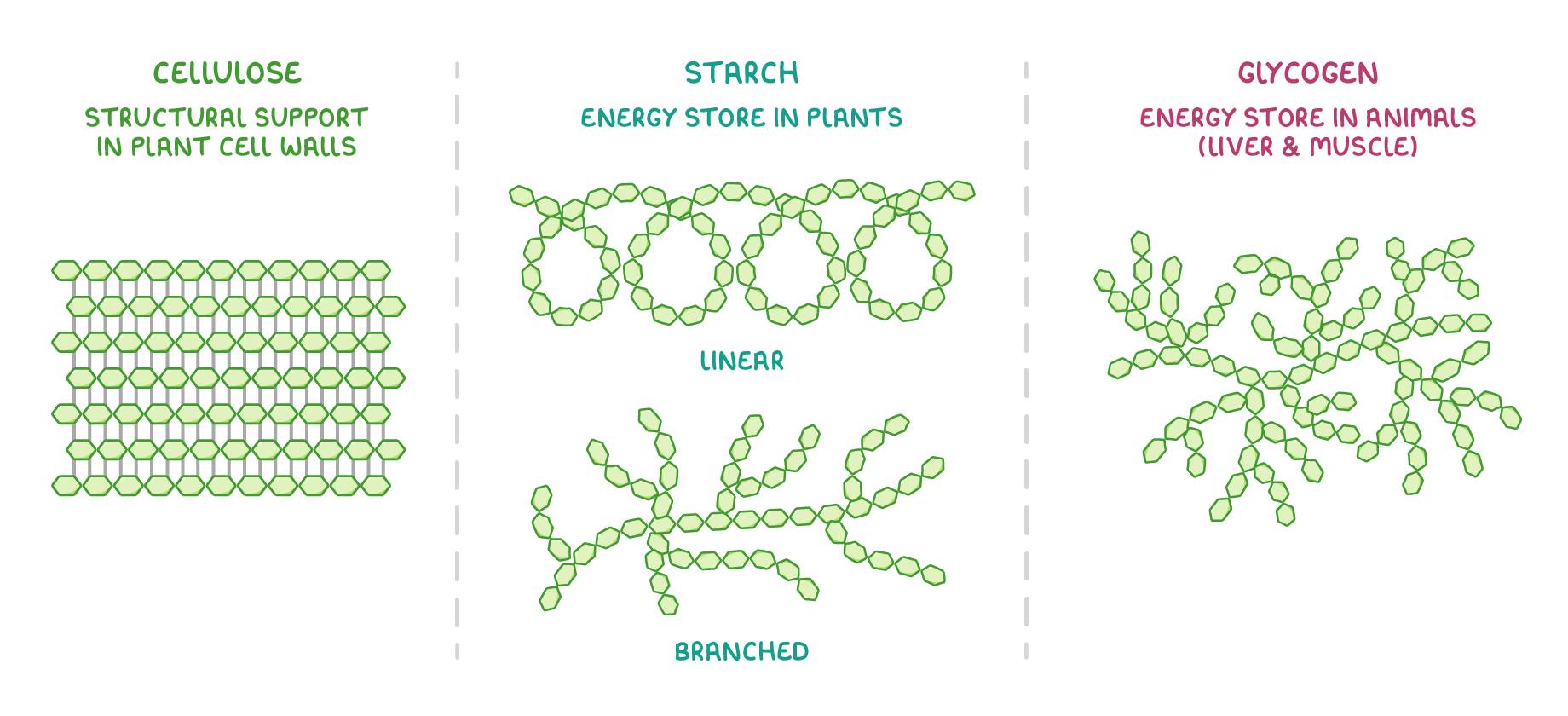
These examples show how polysaccharides, though built from similar monosaccharide units, are adapted through structural differences to fulfill specific roles in biological systems. Their interactions with other cellular components ensure organisms can grow, store energy, and respond to environmental challenges effectively.