1.5 - Lipids
The general structure and properties of lipids
Lipids are a crucial class of biological molecules that play diverse roles in living organisms. They are typically nonpolar, meaning they do not mix with water, and are hydrophobic, repelling water molecules. This property arises from their molecular structure, which is primarily composed of carbon and hydrogen atoms arranged in ways that minimize interaction with polar substances like water.
Key properties of lipids
- Nonpolar nature - Due to their structure, lipids do not dissolve in water, making them ideal for forming barriers and storing energy.
- Hydrophobic behavior - This "water-fearing" characteristic is essential for their role in cell membranes, where they separate aqueous environments inside and outside cells.
- Structural diversity - The specific assembly of their subcomponents leads to varied forms and functions, which we will explore in later sections.
Understanding these properties helps explain why lipids are fundamental to many biological processes, from energy storage to maintaining cell integrity.
The characteristics of fatty acids in lipids
Fatty acids are key building blocks of many lipids, and their structure significantly influences the properties of the lipids they form. These long chains of carbon and hydrogen can vary based on the types of bonds between carbon atoms, affecting the lipid's physical state and function.
Types of fatty acids
- Saturated fatty acids - These contain only single bonds between carbon atoms, resulting in straight chains that pack tightly together. This tight packing makes saturated lipids more solid at room temperature, as seen in butter or animal fat.
- Unsaturated fatty acids - These have at least one double bond between carbon atoms, creating a kink in the chain. This kink prevents tight packing, making unsaturated lipids more liquid at room temperature, like vegetable oils.
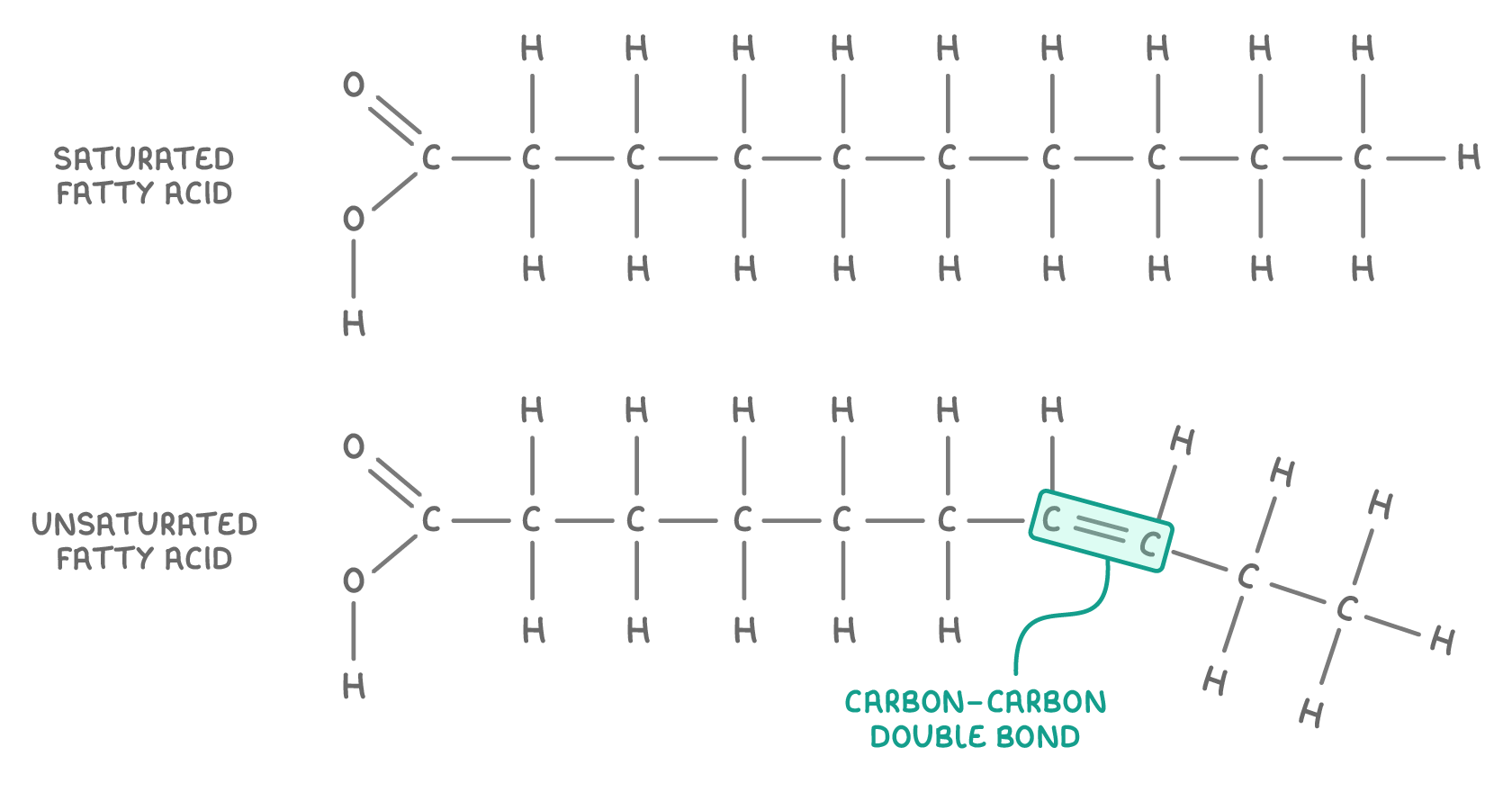
The more double bonds present in the fatty acid tails, the more unsaturated the lipid becomes. This increased unsaturation correlates with a more fluid consistency, which is critical for certain biological functions.
These differences in structure directly impact how lipids behave in organisms, influencing everything from energy storage to membrane fluidity.
The diverse functions of lipids in living organisms
Lipids serve multiple essential functions in biological systems, supporting life at both the cellular and organismal levels. Their roles are varied, reflecting the diversity in their structures.
Major functions of lipids
- Energy storage (fats) - Fats store energy efficiently due to their high concentration of carbon-hydrogen bonds. This stored energy can be released when needed, supporting cell function and overall metabolism.
- Insulation (fats) - In mammals, fats also provide insulation, helping to maintain body temperature by reducing heat loss. This is especially important in cold environments.
- Hormonal roles (steroids) - Steroids act as hormones that regulate critical physiological processes. These include growth, development, energy metabolism, and maintaining homeostasis (the body's internal balance).
- Structural stability (cholesterol) - Cholesterol is vital for providing structural stability to animal cell membranes. It helps maintain membrane fluidity and integrity under varying conditions.
These functions highlight how lipids contribute to the survival and efficiency of living organisms, interacting with other systems to support life.
The importance of lipids in cellular structures
One of the most critical roles of lipids is in forming the structural components of cells. They create barriers that define cellular boundaries and compartments, which are essential for cellular function.
Role of phospholipids and cholesterol in membranes
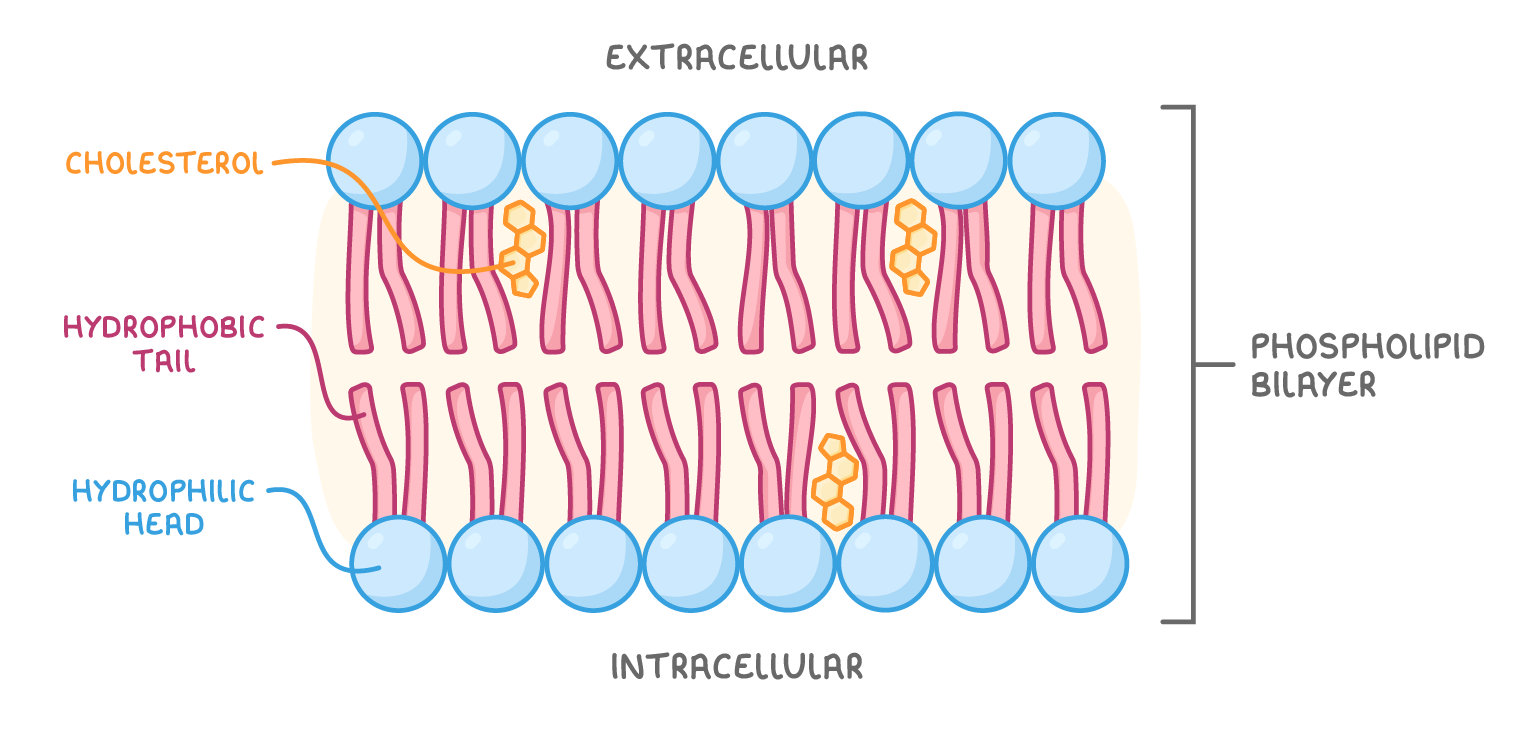
- Phospholipids are the primary components of plasma membranes (the outer boundary of cells) and internal cell membranes.
- They arrange themselves into a bilayer, with their hydrophobic tails facing inward (to the intracellular space) and hydrophilic heads facing outward (to the extracellular space), interacting with the watery environments inside and outside the cell.
- This phospholipid bilayer structure acts as a selective barrier, controlling the movement of substances in and out of the cell. It ensures that essential molecules are retained while waste or harmful substances are kept out.
- Cholesterol molecules are embedded within the lipid bilayer of animal cells, enhancing stability and fluidity. This prevents the membrane from becoming too rigid or too fluid, adapting to environmental changes.
This structural role of lipids is fundamental to cellular integrity, allowing cells to maintain distinct internal environments and communicate with their surroundings.
How lipid properties impact biological systems
The properties of lipids, such as their degree of saturation and hydrophobic nature, have significant effects on biological systems. Changes or disruptions in lipid composition can alter how these systems function, demonstrating the complex interactions within organisms.
Effects of lipid composition changes
- Membrane fluidity - The proportion of saturated versus unsaturated fatty acids in phospholipids affects membrane fluidity. A higher proportion of unsaturated lipids keeps membranes more fluid, which is crucial for proper cell function, especially in colder temperatures where membranes might otherwise stiffen.
- Energy balance - Disruptions in fat storage or metabolism can lead to energy imbalances, affecting an organism's ability to perform necessary functions. For instance, insufficient fat storage can impair insulation in mammals, leading to hypothermia (dangerously low body temperature).
- Hormonal regulation - Alterations in steroid hormone production can disrupt growth, metabolism, or homeostasis. This shows how lipid-based hormones are integral to coordinating body-wide responses.
- Structural integrity - A reduction in cholesterol within cell membranes can compromise their stability, potentially leading to cell damage or dysfunction. This illustrates the importance of lipids in maintaining cellular health.
These examples demonstrate how lipids interact with other biological components, influencing the overall health and adaptability of organisms through their unique properties and functions.