2.5 - Membrane Transport
The role of selective permeability in maintaining solute and water balance
Cell membranes are vital barriers that control what enters and leaves a cell, ensuring the internal environment remains stable despite external changes. This property, known as selective permeability, allows only certain molecules to pass through while blocking others. Selective permeability is crucial for maintaining solute and water balance, a process called homeostasis.
How selective permeability works
- Barrier function - The plasma membrane, made of a phospholipid bilayer, acts as a barrier that restricts the free movement of most substances.
- Concentration gradients - Selective permeability creates differences in solute concentrations across the membrane, known as concentration gradients, where solutes are more concentrated on one side than the other.
- Regulation of balance - By controlling which molecules cross the membrane, cells can regulate internal levels of water and solutes, preventing harmful imbalances.
This ability to form concentration gradients sets the stage for various transport mechanisms that move substances in and out of cells to maintain dynamic homeostasis - the process of keeping internal conditions stable despite external fluctuations.
Mechanisms of passive transport across membranes
Passive transport is a method by which molecules move across the cell membrane without the cell expending energy. This process relies on the natural movement of substances from areas of high concentration to areas of low concentration, following the concentration gradient.
Key features of passive transport
- No energy input - Passive transport does not require metabolic energy from the cell, as it depends on the inherent kinetic energy of molecules.
- Direction of movement - Molecules naturally spread out until equilibrium is reached, where concentrations are equal on both sides of the membrane.
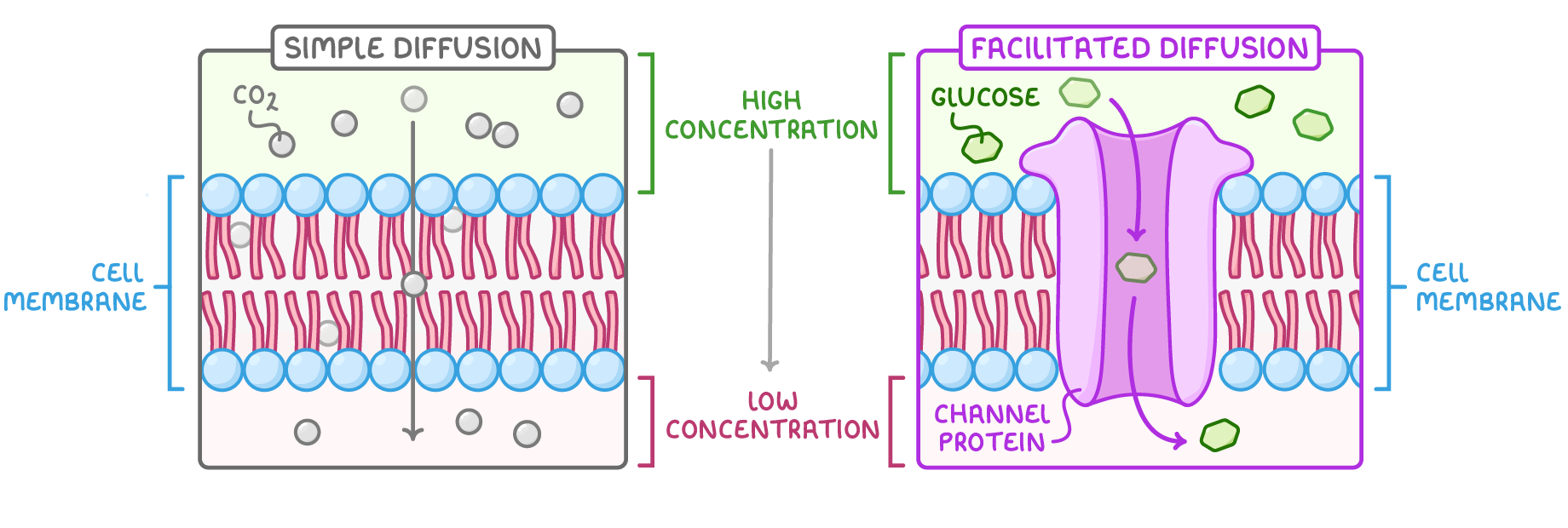
Types of passive transport
- Simple diffusion - Small, nonpolar molecules like oxygen (O2) and carbon dioxide (CO2) pass directly through the lipid bilayer.
- Facilitated diffusion - Larger or polar molecules, such as glucose, move through specific protein channels or carriers embedded in the membrane.
Passive transport is essential for the exchange of vital substances like gases and nutrients, ensuring cells can function without expending energy for every movement.
Mechanisms of active transport and their energy requirements
Unlike passive transport, active transport moves molecules against their concentration gradient, from areas of low concentration to areas of high concentration. This process requires energy because it opposes the natural tendency of molecules to spread out.
Key features of active transport
- Energy requirement - Active transport uses metabolic energy, often in the form of adenosine triphosphate (ATP), a molecule that stores and transfers energy in cells.
- Protein pumps - Specialized proteins in the membrane, called pumps, facilitate this transport by changing shape to move molecules across.
- Purpose - Active transport allows cells to accumulate necessary substances, like nutrients, or remove waste, even when external concentrations are unfavorable.
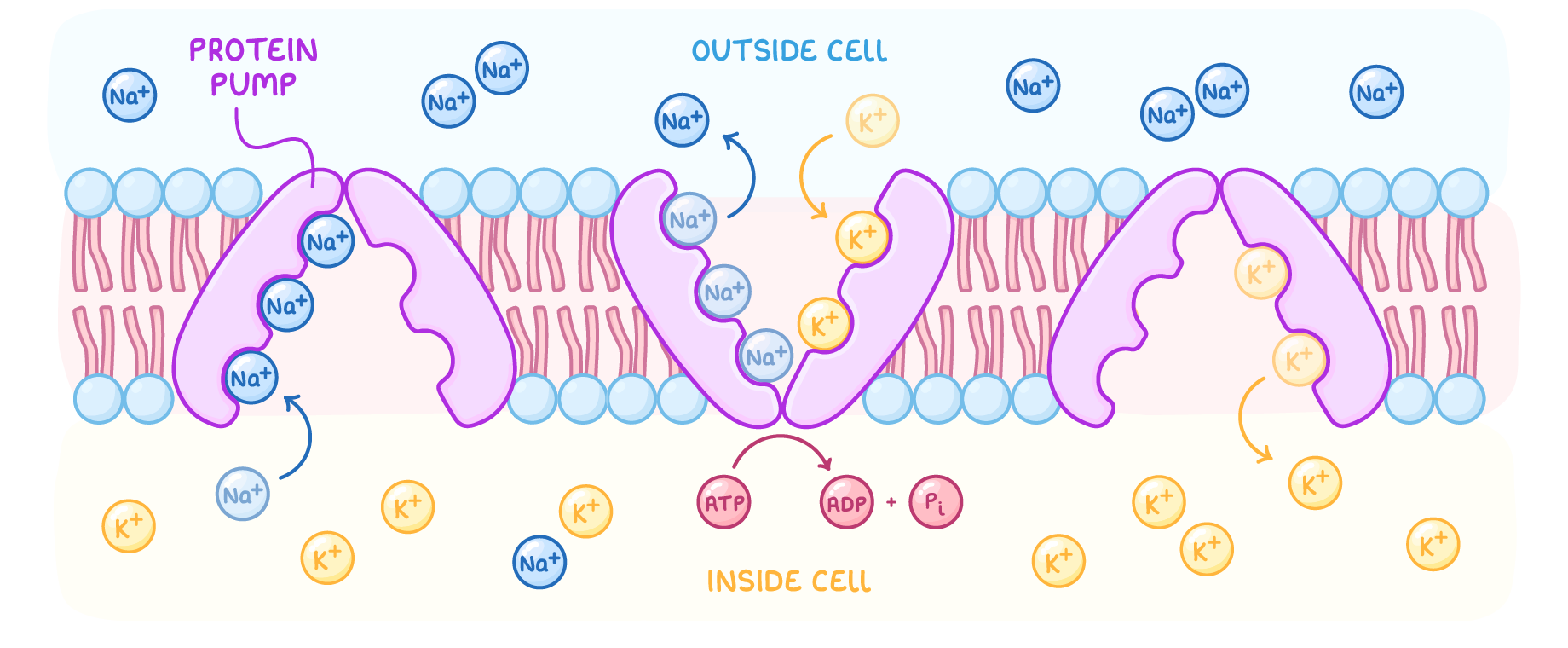
Examples of active transport
- Sodium-potassium pump - Moves sodium ions (Na+) out of the cell and potassium ions (K+) into the cell, crucial for nerve cell function.
- Proton pumps - Move hydrogen ions (H+) to create gradients used in energy production.
This energy-dependent process ensures cells can maintain specific internal conditions critical for survival and function, even against natural diffusion forces.
Transport of large molecules via endocytosis and exocytosis
When molecules are too large to pass through the membrane via diffusion or pumps, cells use specialized processes called endocytosis and exocytosis. Both mechanisms involve the plasma membrane folding or fusing to move significant amounts of material or large substances, and both require energy input.
Endocytosis: Bringing large substances into the cell
Endocytosis is the process by which cells take in large molecules, particulate matter, or even other cells by engulfing them with the plasma membrane.
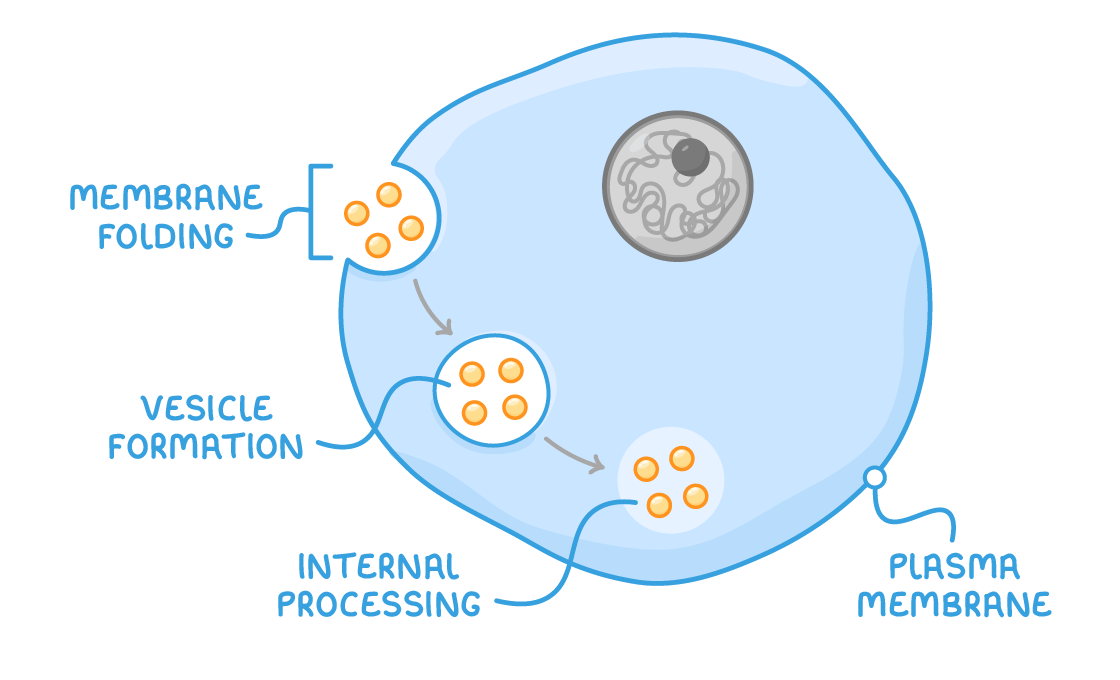
Steps of endocytosis:
- Membrane folding - The plasma membrane folds inward around the external material.
- Vesicle formation - The folded membrane pinches off, forming a small sac called a vesicle that encloses the material inside the cell.
- Internal processing - The vesicle moves within the cell, often fusing with other structures like lysosomes (organelles containing digestive enzymes) to break down the contents.
Types of endocytosis:
- Phagocytosis - Engulfs large particles or cells, often used by immune cells to consume pathogens (disease-causing agents).
- Pinocytosis - Takes in small amounts of extracellular fluid and dissolved substances, often for nutrient uptake.
- Receptor-mediated endocytosis - Targets specific molecules by using receptors on the membrane to bind them before engulfing.
This energy-requiring process allows cells to acquire materials that cannot pass through the membrane directly, playing a key role in nutrition and defense.
Exocytosis: Releasing large substances from the cell
Exocytosis is the process by which cells expel large molecules or waste materials by fusing internal vesicles with the plasma membrane.
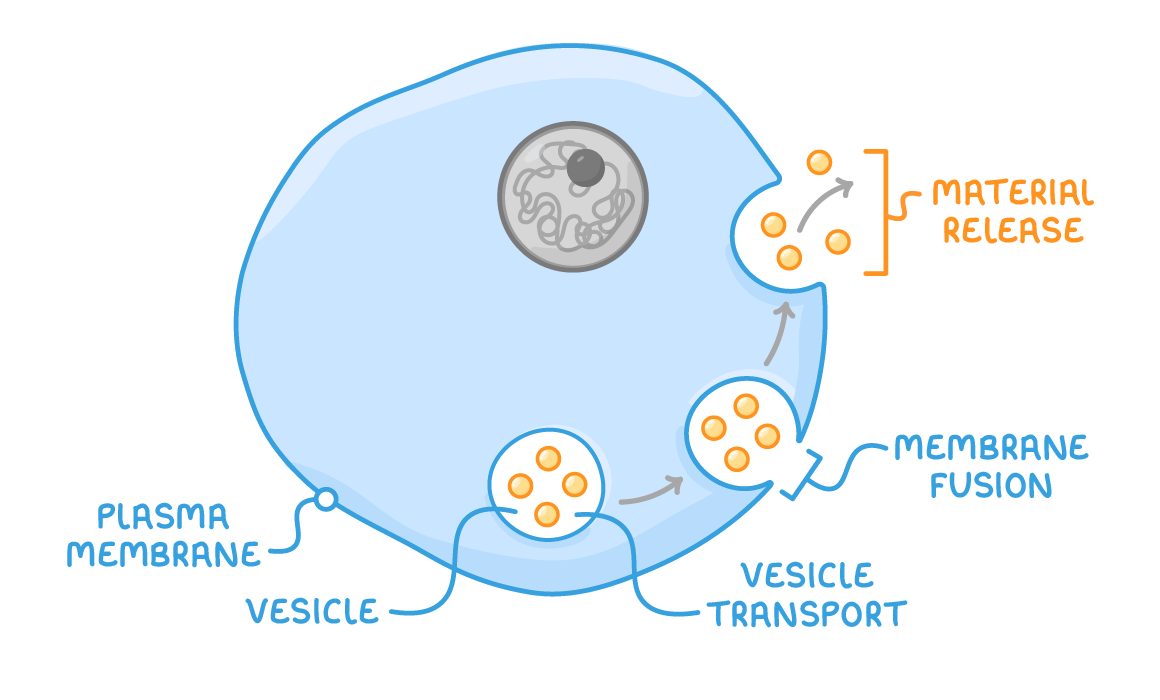
Steps of exocytosis:
- Vesicle transport - A vesicle containing the material to be released moves toward the plasma membrane.
- Membrane fusion - The vesicle membrane fuses with the plasma membrane, opening to the outside.
- Material release - The contents of the vesicle are secreted into the extracellular environment.
Functions of exocytosis:
- Hormone secretion - Cells release signaling molecules like insulin into the bloodstream.
- Waste removal - Cells expel unnecessary or harmful substances.
- Membrane protein insertion - New proteins or lipids are added to the plasma membrane during the fusion process.
Like endocytosis, exocytosis requires energy due to the active movement and fusion of membranes. It is essential for communication between cells and maintaining the cell's external environment.
These mechanisms of membrane transport - passive, active, endocytosis, and exocytosis - work together to ensure cells can maintain homeostasis, acquire necessary resources, and communicate effectively with their surroundings.