2.6 - Facilitated Diffusion
What is facilitated diffusion and why is it important?
Facilitated diffusion is a type of passive transport that allows specific molecules or ions to cross the plasma membrane without the input of energy. The plasma membrane, which surrounds cells, is a selectively permeable barrier made of a phospholipid bilayer that restricts the movement of many substances. Facilitated diffusion is crucial because it enables cells to take in necessary materials or expel waste, maintaining dynamic homeostasis - a state of balance within the cell's internal environment.
Key characteristics of facilitated diffusion
- Passive process - No energy is required; substances move naturally from an area of higher concentration to lower concentration, following the concentration gradient.
- Selective transport - Only specific molecules or ions can pass through, depending on the proteins embedded in the membrane.
- Essential for homeostasis - Helps cells regulate internal conditions by controlling the movement of vital substances like ions and nutrients.
This process is vital for biological systems to grow, reproduce, and maintain stability, as it ensures that essential materials cross the membrane efficiently.
The role of transport and channel proteins in ion movement
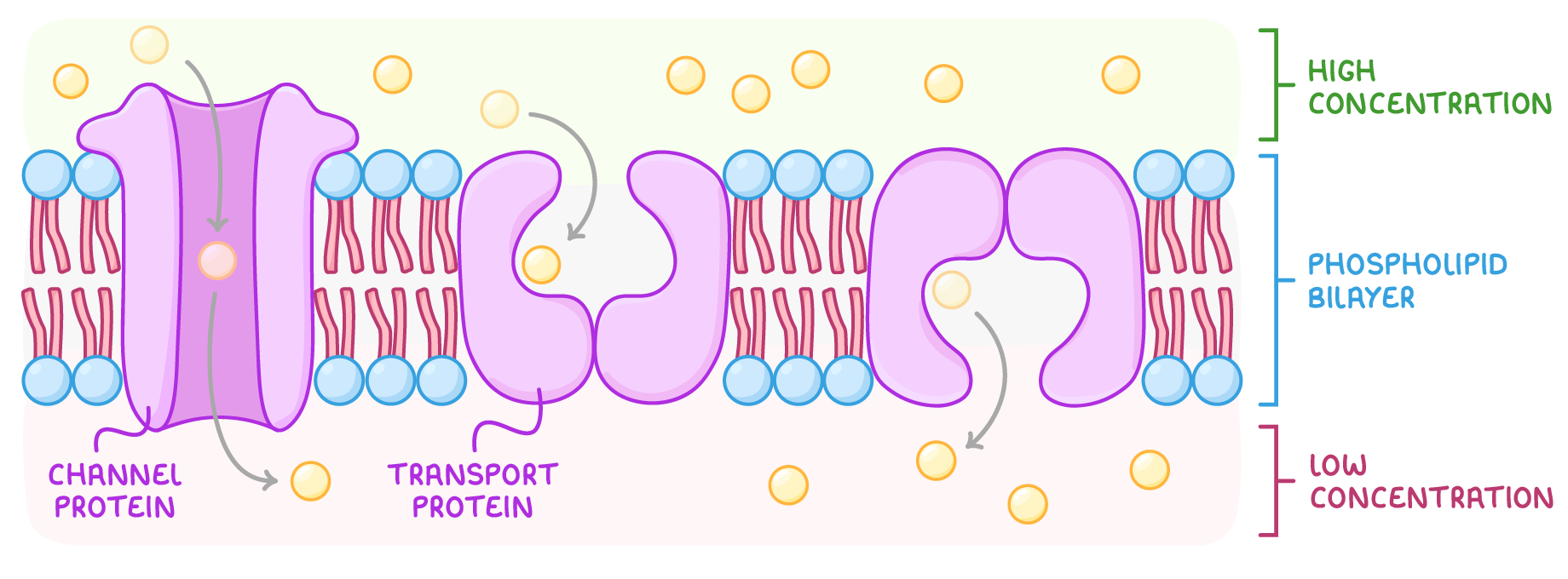
Charged ions, such as sodium (Na+) and potassium (K+), cannot pass through the hydrophobic (water-repelling) core of the phospholipid bilayer due to their charge. Facilitated diffusion overcomes this barrier by using specialized proteins embedded in the membrane to assist their movement.
How transport and channel proteins work
- Channel proteins - These form narrow, water-filled pores in the membrane that allow specific ions to pass through. Each channel is selective, meaning it only permits certain ions based on size and charge.
- Transport proteins - Also called carrier proteins, these bind to specific ions or molecules on one side of the membrane, change shape, and release them on the other side.
- No energy required - Both types of proteins facilitate movement down the concentration gradient, so the process remains passive.
Importance of ion movement
- Membrane polarization - The movement of ions across the membrane can create a difference in electrical charge on either side, known as polarization. This is critical for functions like nerve signal transmission.
- Cellular functions - Ions like Na+ and K+ are essential for processes such as muscle contraction and maintaining cell volume.
Without these proteins, charged ions would be unable to cross the membrane, disrupting key cellular activities.
Facilitated diffusion of large polar molecules
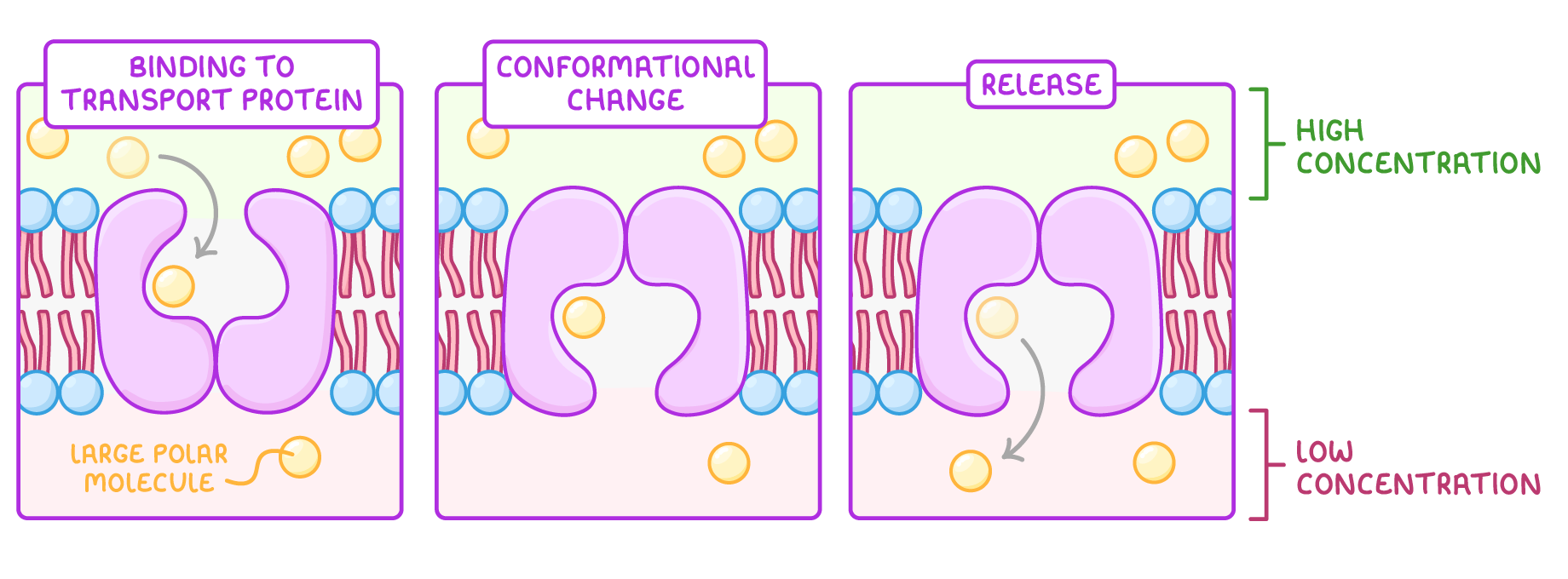
Large polar molecules, which have an uneven distribution of charge, also struggle to cross the hydrophobic core of the plasma membrane. Facilitated diffusion allows these molecules to move across without energy input, using specific transport proteins.
Mechanism for large polar molecules
- Binding to transport proteins - A large polar molecule binds to a specific site on a carrier protein on one side of the membrane.
- Conformational change - The protein changes shape, shuttling the molecule to the other side of the membrane.
- Release down the gradient - The molecule is released into the area of lower concentration, ensuring the process remains passive.
Examples and significance
- Glucose transport - Glucose, a large polar sugar molecule, enters cells through facilitated diffusion using specific glucose transporters. This is vital for energy production.
- Cellular uptake - This mechanism ensures cells can absorb necessary nutrients that would otherwise be blocked by the membrane's structure.
This process is critical for providing cells with the building blocks needed for growth and energy without expending cellular resources.
The role of aquaporins in water transport
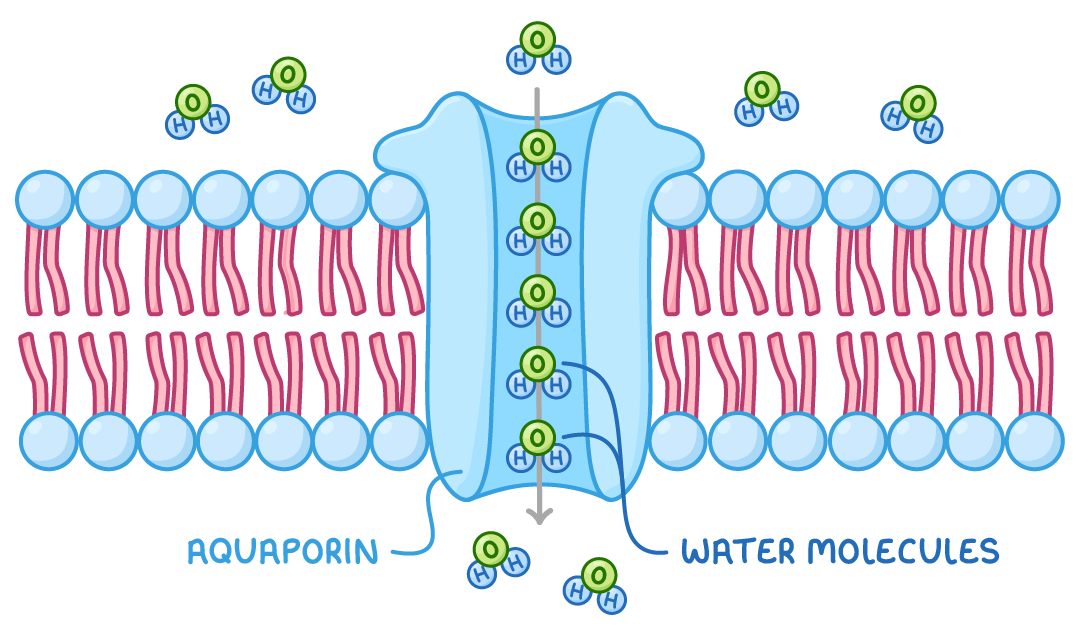
Water molecules, though small, are polar and face some resistance when crossing the hydrophobic membrane core. Aquaporins are specialized channel proteins that facilitate the rapid movement of water across membranes.
How aquaporins function
- Selective channels - Aquaporins form narrow pores that allow water molecules to pass through in single file, excluding other small molecules or ions.
- High efficiency - These proteins enable large quantities of water to move quickly, much faster than through simple diffusion alone.
- Passive movement - Water moves down its concentration gradient, from areas of higher water concentration (lower solute concentration) to lower water concentration (higher solute concentration), without energy input.
Biological importance of aquaporins
- Maintaining water balance - Aquaporins are essential in cells that need to regulate water content, such as kidney cells during urine formation.
- Preventing dehydration or swelling - They help cells avoid excessive water loss or gain, which could disrupt cellular function.
Without aquaporins, water transport would be too slow to meet the demands of many biological processes.
How molecular structure affects membrane permeability
The ability of a molecule to pass through the plasma membrane is directly influenced by its structure, including its size, charge, and polarity. Facilitated diffusion addresses the limitations imposed by the membrane's selective nature.
Factors determining permeability
- Size - Smaller molecules can sometimes diffuse directly through the membrane, but larger molecules require transport proteins for facilitated diffusion.
- Charge - Charged ions like Na+ and K+ are repelled by the hydrophobic core and need channel or transport proteins to cross.
- Polarity - Polar molecules, such as water and glucose, struggle to pass through the nonpolar lipid bilayer and rely on specific proteins like aquaporins or glucose transporters.
- Hydrophobicity - Nonpolar, hydrophobic molecules can often pass through the membrane via simple diffusion, without assistance.
Consequences of structural barriers
- Selective permeability - The membrane's structure ensures that only certain substances enter or leave the cell, protecting internal conditions.
- Need for facilitated diffusion - For molecules that cannot cross unassisted, facilitated diffusion provides a pathway, ensuring cells can maintain homeostasis by acquiring necessary materials.
Understanding how molecular structure influences transport helps predict how changes in membrane components or protein function might disrupt cellular balance, affecting overall organism health.