7.3 - Artificial Selection
The concept of artificial selection and its role in evolution
Artificial selection, also known as selective breeding, is a process by which humans intentionally choose specific traits in plants or animals to promote in future generations. Unlike natural selection, where environmental pressures determine which traits are advantageous, artificial selection is driven by human preference or need. This process plays a significant role in shaping the diversity of domesticated species and is a key mechanism in the broader context of evolution, demonstrating how selective pressures can alter populations over time.
Key characteristics of artificial selection
- Human intervention - Humans decide which individuals with desirable traits will reproduce, controlling the genetic makeup of future generations.
- Targeted traits - Specific characteristics, such as size, color, or behavior, are selected based on human goals, like increasing crop yield or enhancing pet aesthetics.
- Accelerated change - Artificial selection often produces noticeable changes in a population much faster than natural selection due to deliberate and focused breeding practices.
This process shows how evolution, the change in the genetic composition of a population over generations, can be influenced by factors other than nature alone.
How humans influence variation in species through artificial selection
Humans have been practicing artificial selection for thousands of years, affecting the variation within populations of plants, animals, and even microorganisms. By choosing which individuals reproduce, humans can increase the frequency of desired traits while reducing the prevalence of undesired ones, leading to significant changes in a species' characteristics over time.
Mechanisms of human influence on variation
- Selective mating - Humans pair individuals with specific traits to ensure those traits are passed on, such as breeding only the largest cattle for meat production.
- Controlled environments - By managing conditions like food availability or habitat, humans can favor the survival of individuals with preferred traits.
- Elimination of undesired traits - Individuals lacking the desired characteristics may be prevented from breeding, gradually removing those traits from the population.
As a result, artificial selection can dramatically alter the genetic diversity within a species, often creating populations that are highly specialized for human purposes but may lack the variability needed to adapt to changing natural conditions.
Examples of artificial selection in plants and animals
Artificial selection has led to the development of numerous varieties of domesticated species, each tailored to meet specific human needs. These examples illustrate the power of human-driven evolution in shaping biodiversity.
Notable examples of artificial selection
| Species | Selected trait | Purpose/outcome |
|---|---|---|
| Dogs (Canis lupus familiaris) | Size, temperament, coat type | Breeds like Chihuahuas for companionship and German Shepherds for work or protection |
| Wheat (Triticum spp.) | Higher grain yield, disease resistance | Increased food production with varieties suited to different climates |
| Dairy Cattle (Bos taurus) | High milk production | Development of breeds like Holstein, known for exceptional milk yields |
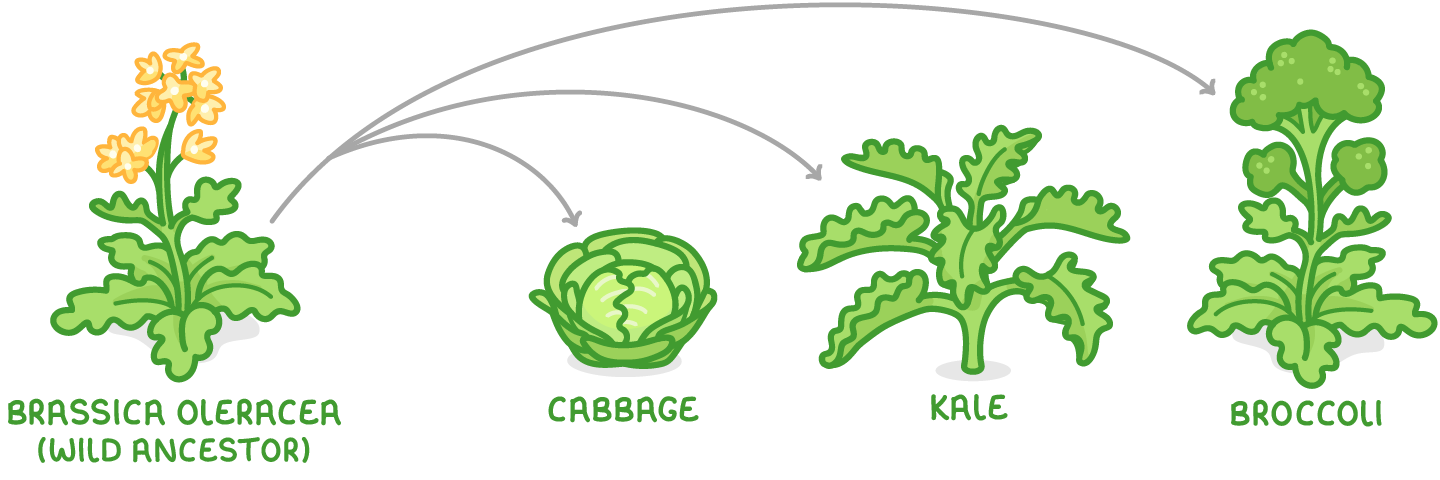
| Brassica oleracea | Varied morphology (leaves, stems, buds) | Domestication into diverse crops like cabbage, broccoli, and kale from a single wild ancestor |
These examples show how artificial selection can create significant variation within a species, tailoring organisms for specific human uses while demonstrating the underlying principles of evolutionary change.
The impact of artificial selection on genetic diversity
While artificial selection can produce highly desirable traits, it often comes at the cost of reduced genetic diversity within a population. Genetic diversity refers to the variety of genetic information within a species, which is crucial for adaptability and resilience to environmental changes. This reduction can have long-term consequences for the survival of domesticated species.
Effects on genetic diversity
- Narrow gene pool - Focusing on a limited set of traits often means breeding from a small group of individuals, decreasing overall genetic variation.
- Increased vulnerability - Populations with low genetic diversity are more susceptible to diseases, pests, or environmental shifts, as they lack the genetic resources to adapt.
- Loss of original traits - Traits not selected for may disappear from the population, potentially eliminating beneficial characteristics that could be useful in the future.
This trade-off highlights the importance of balancing the benefits of artificial selection with the need to maintain genetic diversity to ensure species can withstand unforeseen challenges.
Comparing artificial selection to natural selection
Understanding the differences and similarities between artificial selection and natural selection provides insight into how evolutionary processes work under different pressures. Both mechanisms drive changes in populations over time, but their driving forces and outcomes can vary significantly.
Key differences and similarities
| Aspect | Artificial selection | Natural selection |
|---|---|---|
| Driving force | Human choice based on desired traits | Environmental pressures and survival advantages |
| Speed of change | Often rapid due to deliberate breeding | Generally slower, occurring over many generations |
| Outcome | Traits beneficial to humans, not always to survival | Traits that enhance survival and reproduction in nature |
| Genetic diversity | Often reduced due to selective breeding | Can increase or decrease depending on environmental challenges |
Both processes rely on the same fundamental principles of heredity and variation, where traits are passed from one generation to the next, and certain traits become more common based on selection pressures. However, while natural selection favors traits that improve survival in the wild, artificial selection prioritizes traits that serve human interests, sometimes at the expense of the organism's adaptability to natural conditions.