7.4 - Population Genetics
The concept of population genetics and its role in evolution
Population genetics is the study of how genetic variation is distributed within and between populations and how it changes over time. This field provides critical insights into the mechanisms of evolution, showing how random processes and natural selection shape the genetic makeup of populations. By understanding these changes, we can trace the evolutionary history and predict future adaptations in species.
Key terms in population genetics
- Population - A group of individuals of the same species living in the same area and capable of interbreeding.
- Genetic variation - The diversity of genetic material within a population, which serves as the raw material for evolution.
- Allele - One of two or more alternative forms of a gene that can occupy the same locus on a chromosome.
- Allele frequency - The proportion of a specific allele in the total pool of alleles for a gene within a population.
Evolution occurs when allele frequencies change over generations, driven by both random events and selective pressures. This change in genetic makeup is a fundamental indicator of evolutionary processes at work.
How random processes affect genetic variation
Random processes play a significant role in evolution by introducing or altering genetic variation within populations. These events are not driven by environmental pressures or natural selection but occur by chance, often with profound effects on small populations.
Mutation as a source of new genetic variation
Mutation is a random change in the DNA sequence of an organism, which can create new alleles. These new alleles add to the genetic diversity of a population, providing new traits or phenotypes (observable characteristics) that natural selection can act upon.
Characteristics of mutations:
- Mutations occur unpredictably, without regard to whether the changes are beneficial or harmful.
- Over time, beneficial mutations may increase in frequency if they confer a survival or reproductive advantage, while harmful ones may be lost.
- This randomness ensures a constant influx of genetic material for evolution to work with, even if many mutations have no immediate effect.
Genetic drift and chance changes in allele frequencies
Genetic drift is a random fluctuation in allele frequencies in a population, caused by chance events rather than natural selection. Unlike mutation, genetic drift does not introduce new alleles but changes the frequency of existing ones purely by chance.
Effects of genetic drift:
- It is most pronounced in small populations where random events can have a larger impact on the overall genetic makeup.
- Over time, genetic drift can lead to the loss of some alleles or the fixation of others, reducing genetic diversity within a population.
- This process highlights how evolution is not always a directed process but can result from unpredictable events.
The bottleneck effect and founder effect as types of genetic drift
Genetic drift manifests in specific scenarios that drastically alter allele frequencies due to sudden reductions in population size or the establishment of new populations. These events are known as the bottleneck effect and the founder effect, each with distinct causes and consequences.
The bottleneck effect
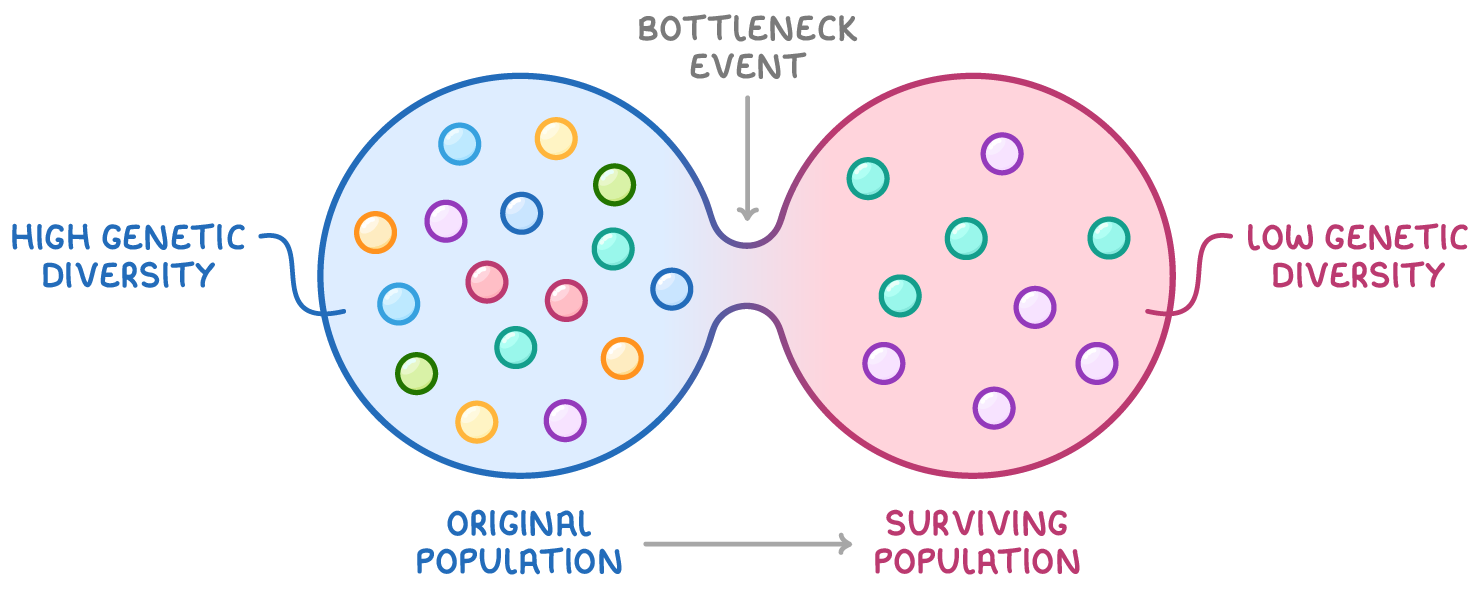
The bottleneck effect occurs when a population undergoes a sudden reduction in size due to a catastrophic event, such as a natural disaster or disease outbreak. The surviving individuals represent only a small, random sample of the original population's genetic diversity.
Consequences of the bottleneck effect:
- Many alleles may be lost entirely, leading to a decrease in genetic variation.
- The reduced genetic diversity can limit the population's ability to adapt to future environmental changes, potentially increasing the risk of extinction.
- For example, if a flood wipes out most of a population of plants, the surviving individuals may not carry all the alleles present in the original group, resulting in a less diverse gene pool.
The founder effect
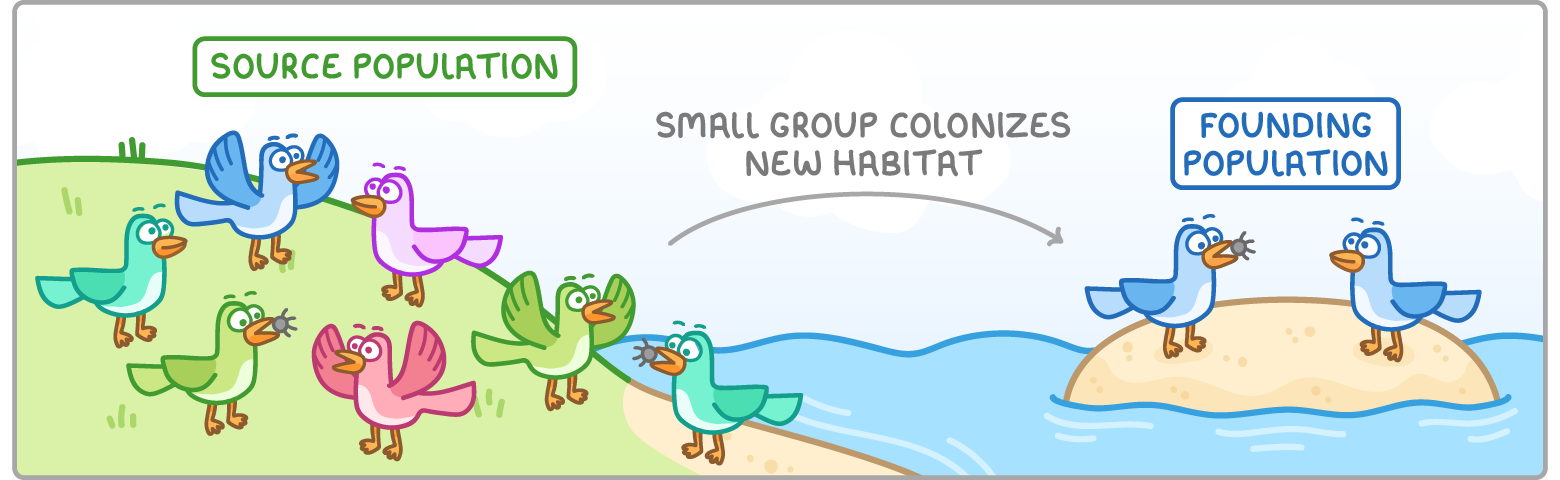
The founder effect happens when a small group of individuals from a larger population colonizes a new habitat, establishing a new population. The founding group is unlikely to carry the same allele frequencies as the original population due to its small size and random sampling of individuals.
Consequences of the founder effect:
- The new population may have significantly different genetic characteristics from the source population, often with reduced genetic variation.
- This can lead to rapid divergence from the original population, sometimes contributing to the formation of new species over time.
- An example is when a few birds from a mainland population are blown to a remote island by a storm. The allele frequencies in this small founding group might differ markedly from the mainland population, leading to unique evolutionary paths.
The impact of migration and gene flow on population genetics
Migration introduces another layer of complexity to population genetics by facilitating the movement of alleles between populations. This process, known as gene flow, can counteract the isolating effects of genetic drift and mutation.
Gene flow
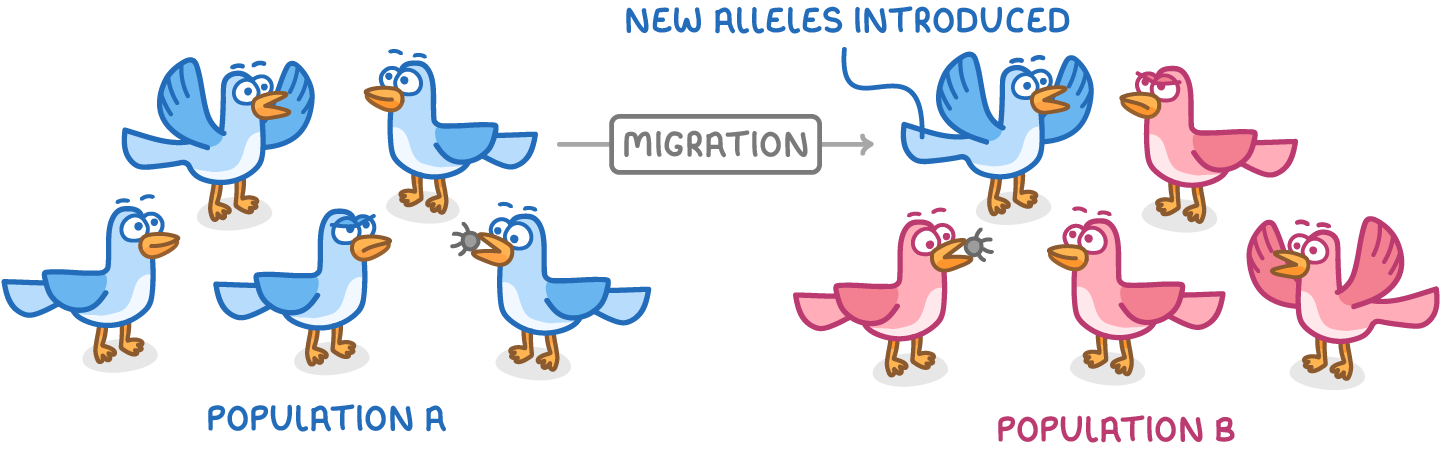
Gene flow is the transfer of alleles from one population to another through the movement and interbreeding of individuals. This occurs through migration of individuals between populations, such as animals moving to new territories or pollen carried by wind between plant populations.
Effects of gene flow:
- Gene flow can introduce new alleles or change the frequency of existing ones, increasing genetic diversity within a population.
- It prevents populations from diverging into separate species by maintaining genetic similarity between them.
- For instance, if a group of wolves from one forest migrates to another and breeds with the local population, the allele frequencies in the receiving population may shift, blending genetic traits from both groups.
Changes in allele frequencies as evidence of evolution
The core of evolutionary theory in population genetics is the observation that allele frequencies change over time within populations. These changes provide direct evidence of evolution, reflecting the combined effects of random processes and natural selection.
Tracking evolutionary change through allele frequencies
At the genetic level, evolution is defined as a change in the frequency of alleles in a population over generations. By comparing allele frequencies across generations, scientists can quantify evolutionary change and identify the factors driving it.
Significance of allele frequency changes:
- Mutations, genetic drift, and gene flow all contribute to these changes, often in unpredictable ways.
- Even small shifts in allele frequencies can indicate that a population is evolving, whether through random chance or selective pressures.
- This evidence is crucial for understanding how populations adapt to their environments or diverge into new species.
- For example, a population of insects might show an increase in the frequency of an allele for pesticide resistance over generations, demonstrating evolutionary change in response to human activity.