2.3 - Plasma Membrane
The role of the plasma membrane in maintaining the cell's internal environment
The plasma membrane, often called the cell membrane, is a thin, flexible barrier that surrounds all cells. It plays a critical role in maintaining the internal environment of the cell by regulating what enters and leaves. This selective barrier helps cells maintain dynamic homeostasis - a state of balance despite changing external conditions - by controlling the movement of substances necessary for growth, reproduction, and energy use.
Key functions of the plasma membrane
- Selective permeability - Allows specific molecules to pass through while blocking others, ensuring the cell maintains optimal internal conditions
- Protection - Shields the cell's internal components from external threats and maintains structural integrity
- Communication - Facilitates interactions with the external environment through proteins and other molecules embedded in the membrane
- Compartmentalization - Separates the cell's interior from the outside, creating a distinct internal environment (cytosol) where biochemical reactions occur
This membrane is vital for isolating the cell's contents from the external surroundings while still allowing essential exchanges of materials and signals.
The structure and properties of phospholipids in the membrane
The foundation of the plasma membrane is formed by phospholipids, a type of lipid molecule with unique properties that enable the membrane's structure. A phospholipid has parts that are attracted to water and parts that repel it, allowing the formation of a stable barrier in an aqueous environment.
Phospholipid structure

Phospholipids are made up of two main parts:
- Hydrophilic head - The "head" of the phospholipid contains a phosphate group, which is polar and attracted to water (hydrophilic means "water-loving"). This part orients toward the watery external environment or the internal cytosol of the cell.
- Hydrophobic tails - The "tails" are made of fatty acid chains, which are nonpolar and repel water (hydrophobic means "water-fearing"). These tails face inward, away from water, and interact with each other in the membrane's interior.
Phospholipid bilayer formation
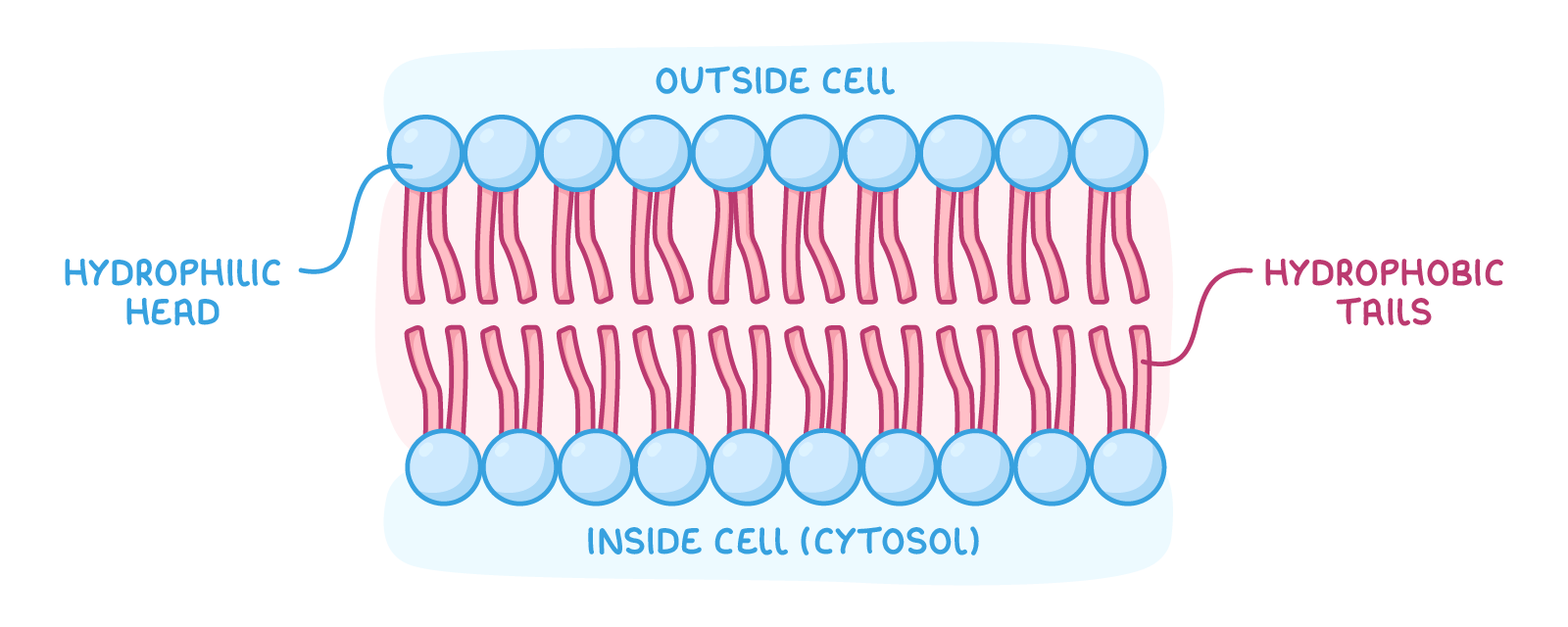
Phospholipids arrange themselves into a double layer, or bilayer, with hydrophilic heads on the outside and hydrophobic tails sandwiched in the middle. This arrangement creates a barrier that separates the cytosol inside the cell from the outside. This phospholipid bilayer forms the structural backbone of the plasma membrane, creating a boundary that is impermeable to most water-soluble substances, thus controlling the cell's internal environment.
The function of embedded proteins within the membrane
While phospholipids provide the basic structure, proteins embedded in the membrane add functionality. These proteins are crucial for transport, communication, and other processes that maintain the cell's internal conditions. Like phospholipids, proteins have regions with specific properties that determine their position and role in the membrane.
Properties of membrane proteins
- Hydrophilic regions - These parts of the protein contain charged or polar side groups that interact with water. They are exposed to the cytosol (the fluid inside the cell) or the external environment.
- Hydrophobic regions - These parts have nonpolar side groups that avoid water. They form the protein's surface that interacts with the hydrophobic fatty acid tails in the interior of the phospholipid bilayer.
Roles of membrane proteins
Depending on their structure, membrane proteins serve various roles:
- Transport - Help move substances across the membrane that cannot pass through the lipid bilayer on their own
- Signaling - Act as receptors to detect and transmit signals from the external environment to the cell's interior
- Enzymatic activity - Catalyze specific reactions at the membrane's surface
- Attachment - Anchor the cell to other cells or structures, providing stability and shape
The combination of hydrophilic and hydrophobic regions allows proteins to integrate into the membrane while performing essential tasks that support the cell's internal environment.
The fluid mosaic model of cell membranes
The plasma membrane is not a rigid or static structure. Instead, it is described by the fluid mosaic model, a concept that highlights the dynamic and diverse nature of the membrane's composition. This model explains how the membrane functions as both a flexible barrier and a platform for various molecular interactions.
Components of the fluid mosaic model
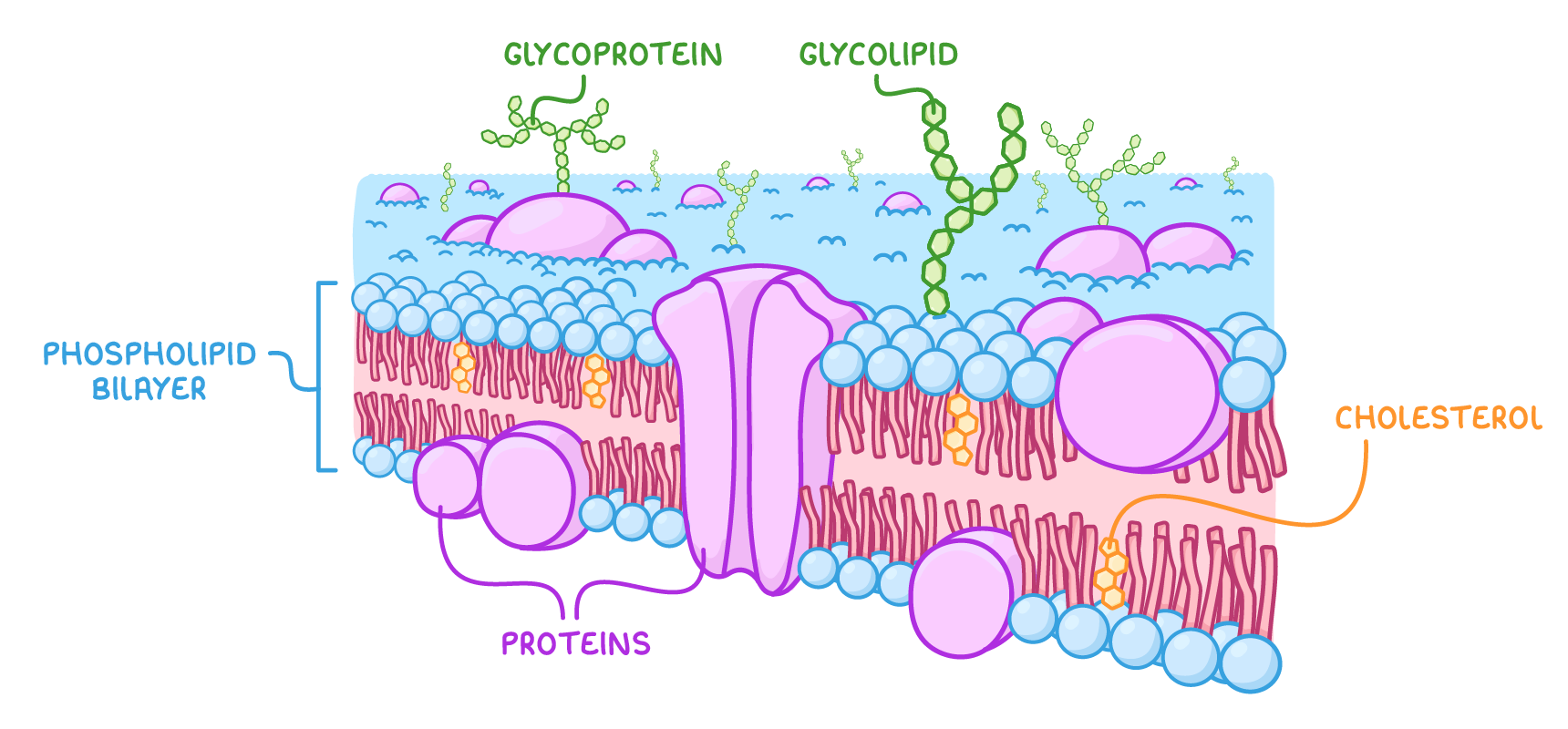
- Phospholipid framework - The membrane is primarily composed of a fluid bilayer of phospholipid molecules that can move laterally within the layer, giving the membrane its flexibility.
- Embedded components - Various molecules are embedded within or attached to the phospholipid bilayer, contributing to the "mosaic" appearance:
- Proteins - Scattered throughout the membrane, either embedded or on the surface, performing diverse functions
- Steroids - Molecules like cholesterol (in animal cells) help stabilize the membrane by regulating its fluidity
- Glycoproteins - Proteins with attached carbohydrate (sugar) chains, often involved in cell recognition and signaling
- Glycolipids - Lipids with attached carbohydrate chains, contributing to cell recognition and protection
- Dynamic arrangement - All these components can move within the plane of the membrane, allowing it to adapt to changing conditions and facilitating interactions between molecules.
This model illustrates the plasma membrane as a complex, ever-changing structure where fluidity and diversity enable it to meet the cell's needs.
The dynamic nature of membrane components
The fluid mosaic model emphasizes that the plasma membrane is not static but a dynamic system. The ability of its components to move and interact is essential for the membrane's role in maintaining the cell's internal environment.
Importance of membrane fluidity
- Phospholipids and proteins can slide past one another within the plane of the membrane, allowing the membrane to remain flexible and self-repair if damaged.
- Fluidity lets the membrane change shape, form vesicles (small membrane-bound sacs for transport), and accommodate the insertion or removal of proteins as needed.
- The movement of glycoproteins and glycolipids on the membrane surface facilitates cell-to-cell recognition and communication, which are vital for coordinating activities in multicellular organisms.
The role of cholesterol in membrane fluidity
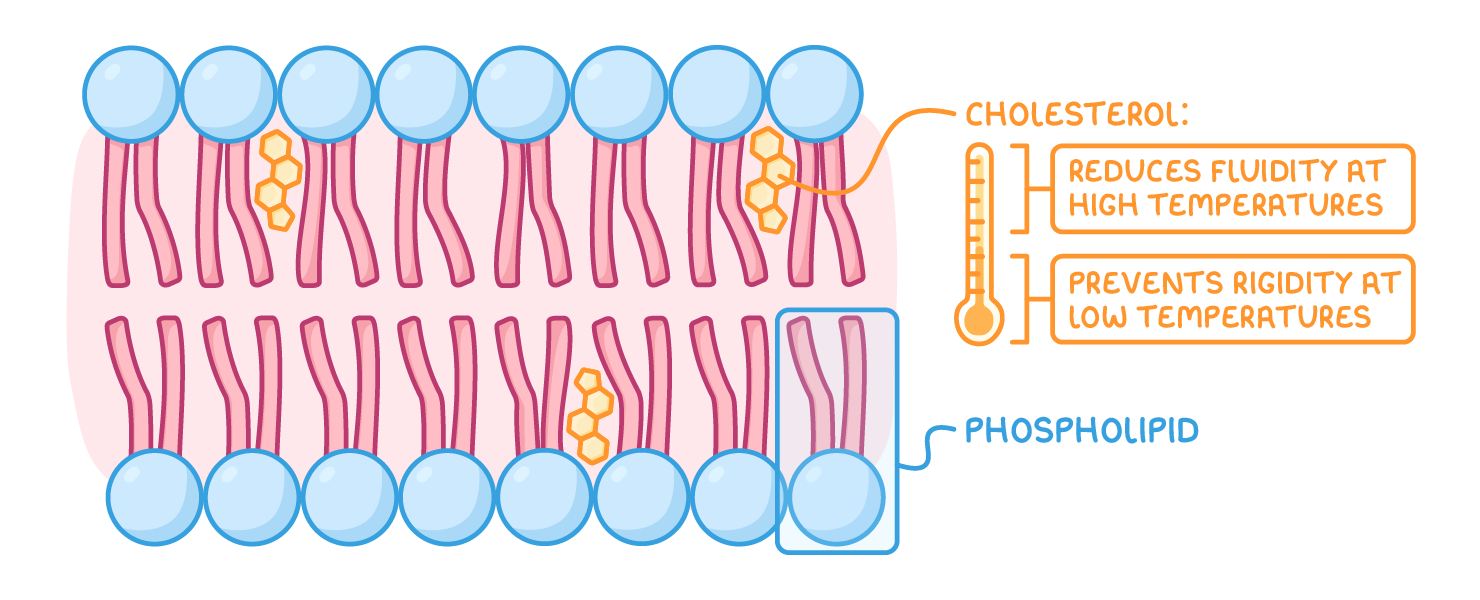
In animal cells, cholesterol molecules within the membrane adjust fluidity.
Cholesterol has different effects depending on the temperature:
- At higher temperatures, cholesterol prevents the membrane from becoming too fluid.
- At lower temperatures, it prevents the membrane from becoming too rigid.
This dynamic nature ensures that the plasma membrane can respond to the cell's changing needs, maintaining homeostasis by balancing stability and flexibility.