2.4 - Membrane Permeability
The structure of biological membranes and selective permeability
Biological membranes, particularly the plasma membrane, are critical structures in cells, acting as barriers that separate the internal environment of the cell from the external surroundings. The plasma membrane's ability to control what enters and leaves the cell is known as selective permeability. This property ensures that essential substances are retained or acquired while harmful or unneeded materials are kept out, maintaining the cell's dynamic homeostasis.
Selective permeability
Selective permeability refers to the membrane's capacity to allow certain substances to pass through while restricting others, based on size, charge, and polarity. The plasma membrane is composed of a phospholipid bilayer, which has a hydrophobic (water-repelling) interior sandwiched between hydrophilic (water-attracting) outer layers.
The hydrophobic interior of the membrane is the key to its selective nature, as it naturally repels charged and polar molecules while allowing nonpolar molecules to pass more easily. This selective barrier helps regulate the internal cellular environment, ensuring the right balance of nutrients, ions, and waste products for cellular function.
The role of phospholipid structure in membrane permeability
Phospholipids are the primary structural components of the plasma membrane, forming a bilayer that dictates the membrane's permeability characteristics. Each phospholipid molecule has a hydrophilic head and two hydrophobic tails, creating a unique arrangement that influences how substances interact with the membrane.
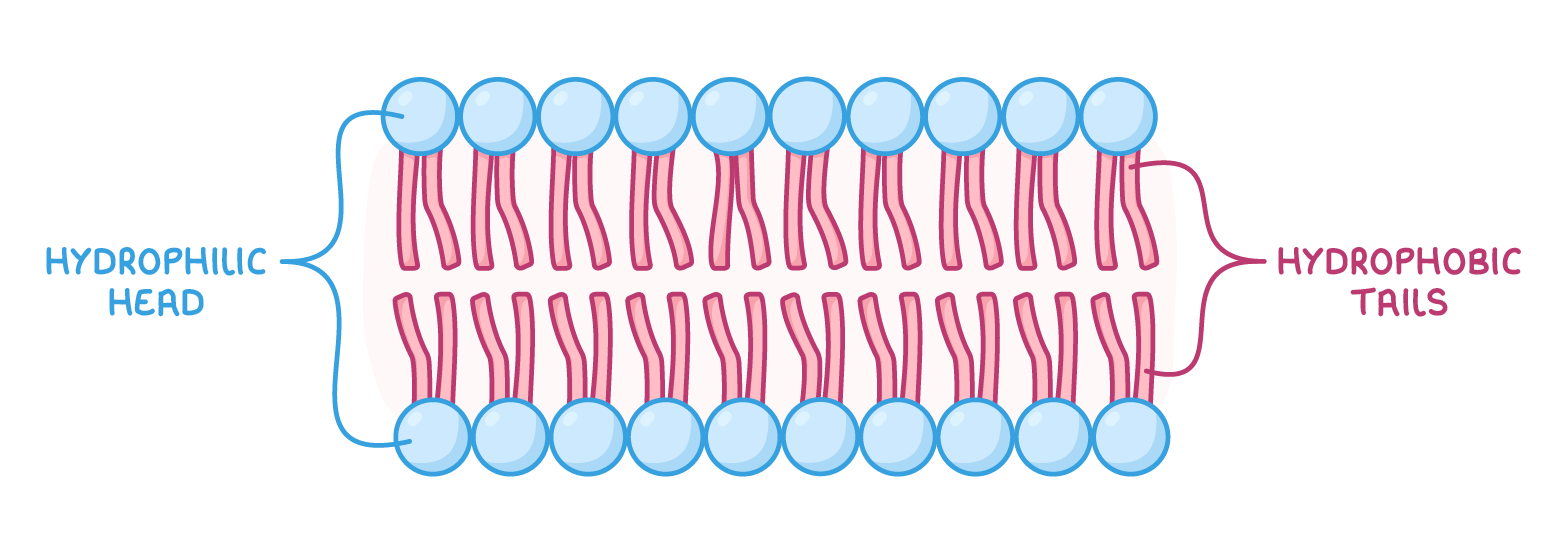
Key features of phospholipid bilayer structure
- Hydrophilic heads - These are composed of phosphate groups and face outward, interacting with the watery environments inside and outside the cell.
- Hydrophobic tails - Made of nonpolar hydrocarbon chains, these tails face inward, forming a water-repelling core that acts as a barrier to many substances.
- Barrier effect - The hydrophobic interior prevents the passage of ions (charged particles) and large polar molecules, which cannot easily dissolve through the nonpolar region.
This structure is the foundation of selective permeability, determining which molecules can cross the membrane without assistance and which require specialized transport mechanisms.
How different molecules cross the plasma membrane
The ability of molecules to pass through the plasma membrane depends on their size, polarity, and charge. The membrane's structure allows some substances to move freely while others need help from embedded proteins or channels.
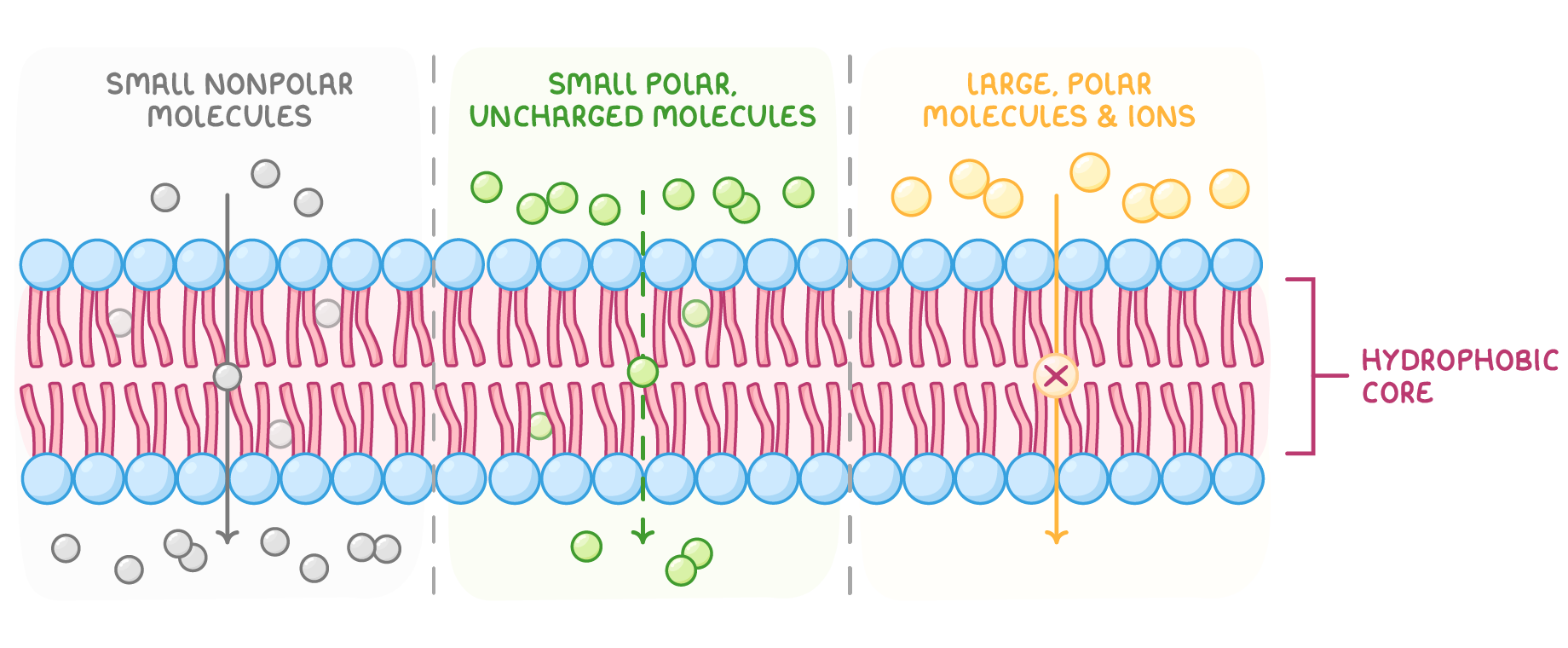
Categories of molecule permeability
- Small nonpolar molecules - Substances like oxygen (O2), nitrogen (N2), and carbon dioxide (CO2) can diffuse directly through the hydrophobic interior of the membrane due to their nonpolar nature and small size.
- Small polar, uncharged molecules - Molecules such as water (H2O) and ammonia (NH3) can pass through the membrane in small amounts, despite being polar, because of their small size. However, their movement is limited compared to nonpolar molecules.
- Large polar molecules and ions - These substances, including glucose and charged particles like sodium (Na+) or chloride (Cl-), cannot pass through the hydrophobic core. Instead, they rely on specialized transport proteins or embedded channels to facilitate their movement across the membrane.
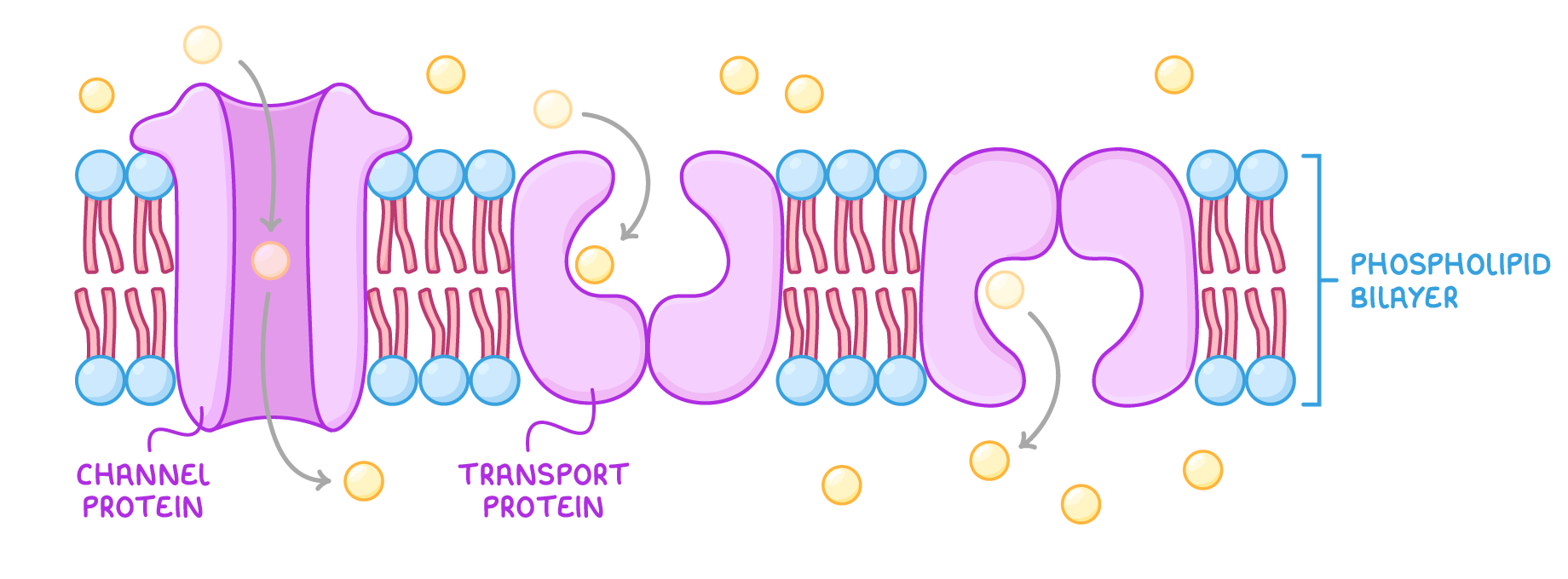
Mechanisms of transport for restricted molecules
- Channel proteins - These form pores in the membrane that allow specific ions or small polar molecules to pass through, often driven by concentration gradients.
- Transport proteins - These bind to specific molecules on one side of the membrane, undergo a conformational change, and release the molecule on the other side. This can be passive (facilitated diffusion) or active (requiring energy).
This selective movement ensures that the cell maintains control over its internal composition, allowing essential nutrients in and waste products out while preventing harmful substances from entering.
The function of cell walls in maintaining structure and permeability
In addition to the plasma membrane, many organisms have a cell wall, a rigid structure outside the membrane that provides additional protection and support. Cell walls are found in Bacteria, Archaea, Fungi, and plants, contributing to both structural integrity and selective permeability.
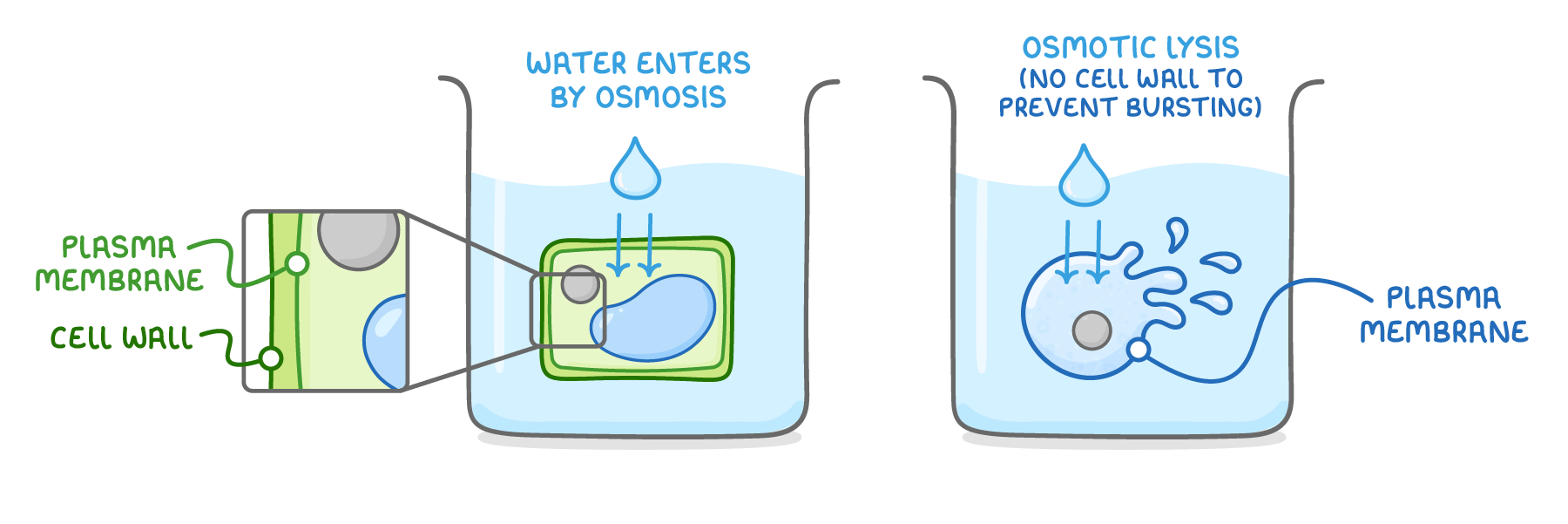
Key roles of the cell wall
- Structural boundary - The cell wall provides a strong framework that helps maintain the cell's shape and prevents it from collapsing or deforming under external pressures.
- Permeability barrier - It acts as an additional filter, controlling the movement of certain substances into and out of the cell, complementing the selective permeability of the plasma membrane.
- Protection from osmotic lysis - Osmotic lysis occurs when a cell bursts due to excessive water intake during osmosis (the movement of water across a membrane from an area of lower solute concentration to higher solute concentration). The cell wall resists this swelling, protecting the cell in environments with varying solute concentrations.
Variations in cell wall composition
| Organism type | Cell wall composition | Specific functions |
|---|---|---|
| Bacteria | Peptidoglycan (a polymer of sugars and amino acids) | Provides strength and shape; some have an outer membrane for added protection |
| Archaea | Pseudomurein or other unique polysaccharides | Offers structural support in extreme environments |
| Fungi | Chitin (a tough polysaccharide) | Provides rigidity and protection against environmental stress |
| Plants | Cellulose (a complex carbohydrate) | Supports cell shape and contributes to overall plant structure |
The cell wall's composition varies across different organisms, but its core functions of structural support and permeability regulation remain consistent, working alongside the plasma membrane to protect and sustain the cell.
The importance of selective permeability in cellular homeostasis
Selective permeability is a cornerstone of cellular homeostasis, the process by which cells maintain a stable internal environment despite external changes. By controlling the flow of substances, the plasma membrane and cell wall ensure that cells can function optimally.
How selective permeability supports homeostasis
- Nutrient uptake - Essential molecules like oxygen and glucose are allowed entry through appropriate mechanisms, providing the raw materials for energy production and growth.
- Waste removal - Waste products, such as carbon dioxide, are expelled to prevent toxic buildup inside the cell.
- Ion balance - The membrane regulates ion concentrations (like Na+ and K+), which are critical for processes like nerve signaling and muscle contraction in animal cells, or turgor pressure in plant cells.
- Environmental adaptation - In fluctuating external conditions, selective barriers help cells adjust by controlling water and solute movement, preventing damage from osmotic stress.
This precise regulation, enabled by the structure of biological membranes and cell walls, allows cells to grow, reproduce, and respond to their environment, fulfilling the energetic and functional needs of the organism as a whole.