4.5 - Cell Cycle
The structure and importance of the cell cycle in eukaryotic cells
The cell cycle is a highly regulated sequence of events that controls the growth and reproduction of eukaryotic cells, which are cells with a defined nucleus and membrane-bound organelles. This cycle is crucial for ensuring that cells divide properly, allowing organisms to grow, repair tissues, and, in some cases, reproduce asexually. The cell cycle consists of distinct phases that prepare the cell for division and ensure that genetic material is accurately distributed to daughter cells.
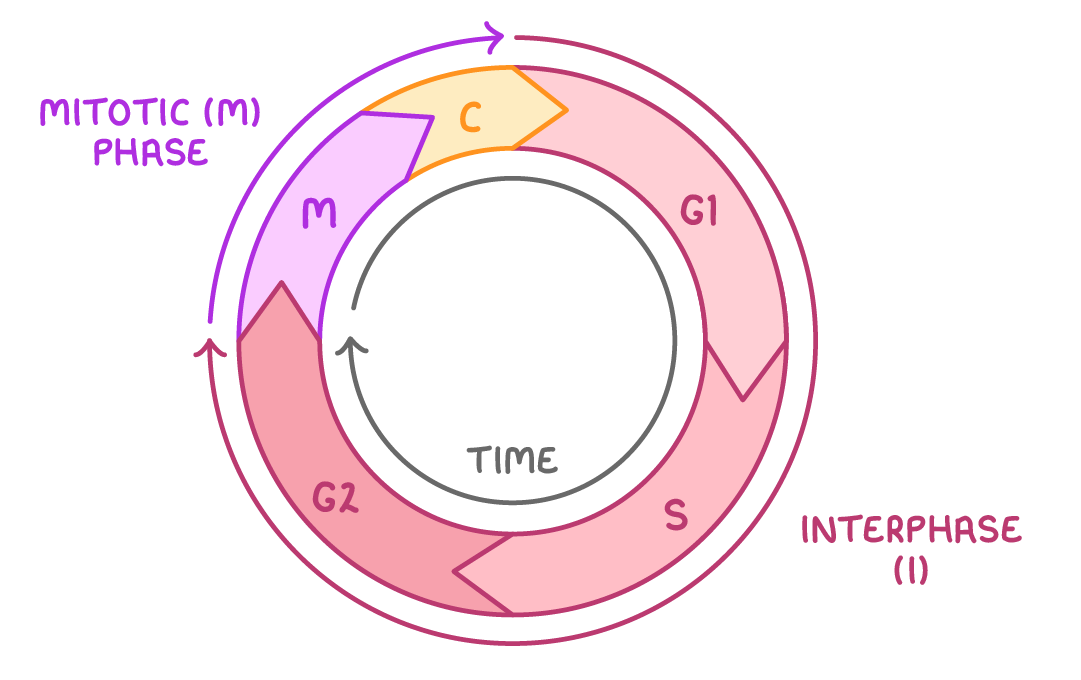
Key components of the cell cycle
- Interphase - A preparation period where the cell grows, replicates its DNA, and synthesizes necessary components for division
- Mitotic (M) phase - The stage where the cell undergoes division, including mitosis (nuclear division) and cytokinesis (cytoplasmic division)
- Regulation - The cycle is tightly controlled by molecular signals to prevent errors, ensuring cells divide only when conditions are appropriate
This structured process is essential for maintaining the integrity of genetic information and supporting life processes in multicellular organisms.
The stages of interphase and their roles in cell preparation
Interphase is the longest part of the cell cycle, during which the cell prepares for division. It is divided into three distinct phases, each with specific functions that ensure the cell is ready to divide. Understanding these stages is critical because they set the foundation for successful cell division.
Phases of interphase
- Gap 1 (G1) phase - The cell grows in size and is metabolically active:
- Organelles and cytosolic components (the fluid part of the cytoplasm) are duplicated
- The cell performs its normal functions while increasing its mass to support division
- A checkpoint ensures the cell is ready to proceed to DNA replication
- Synthesis (S) phase - DNA replication occurs to prepare for division:
- DNA exists as chromatin, a less condensed form of genetic material, during this phase
- Each chromosome is replicated, forming two identical sister chromatids joined at a region called the centromere (a constricted area of the chromosome where spindle fibers attach during division)
- This ensures that each daughter cell will receive a complete set of genetic information
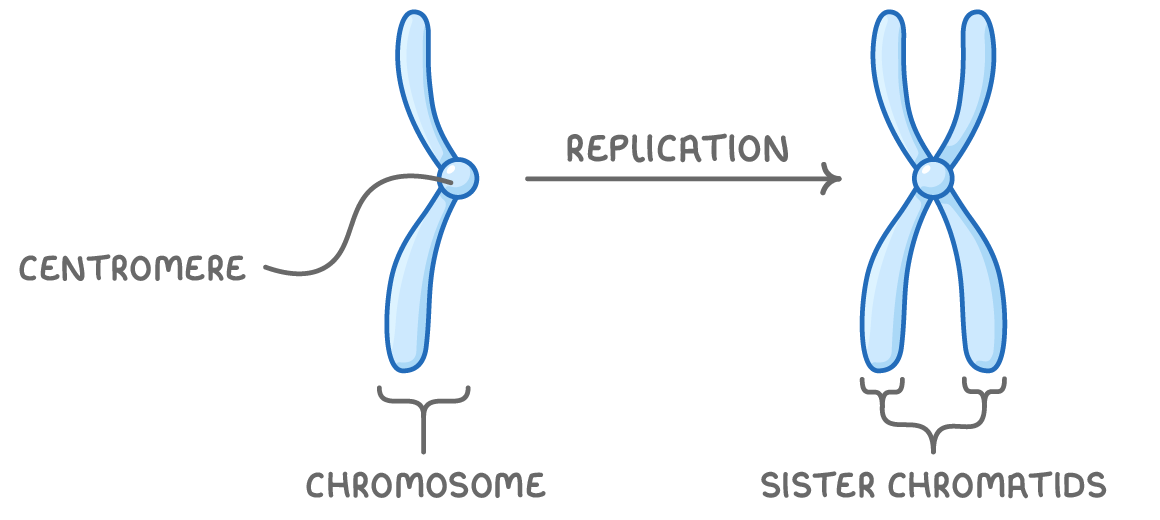
- Gap 2 (G2) phase - Final preparations are made for cell division:
- The cell continues to grow and synthesizes proteins needed for mitosis
- Large quantities of ATP (adenosine triphosphate, the cell's energy currency) are produced to power the division process
- Centrosomes, structures that organize the mitotic spindle, continue to mature and begin to separate as they prepare to move to opposite poles of the cell
- A checkpoint verifies that DNA replication is complete and damage-free before division begins
Interphase ensures the cell is fully equipped with the necessary resources and genetic material before entering the mitotic phase.
The process of mitosis and its stages for cell division
Mitosis is the process of nuclear division in eukaryotic cells that results in two genetically identical daughter nuclei. It plays a vital role in growth, tissue repair, and asexual reproduction by ensuring that each new cell receives an exact copy of the parent cell's genome. Mitosis occurs in four distinct stages, each characterized by specific events that orchestrate the separation of genetic material.
Stages of mitosis
-
Prophase - The cell prepares its genetic material for division:
- Sister chromatids condense, becoming shorter and thicker, which makes them visible under a microscope
- The mitotic spindle, a structure made of protein fibers, begins to form to help separate chromatids
- Centrosomes move to opposite poles of the cell, establishing the framework for spindle attachment
- The nuclear envelope, which encloses the nucleus, breaks down, allowing access to the chromosomes
-
Metaphase - Chromosomes align for equal distribution:
- Spindle fibers attach to the centromeres of each chromosome
- Chromosomes are aligned along the cell's equator (the middle plane), ensuring that each daughter cell will receive one chromatid from each pair
- This precise alignment is critical to prevent genetic imbalances in the daughter cells
-
Anaphase - Sister chromatids are separated:
- The centromeres split, allowing the sister chromatids to become individual chromosomes
- Spindle fibers contract, pulling the separated chromosomes toward opposite poles of the cell
- This ensures that each pole receives an identical set of chromosomes
-
Telophase - Nuclear division is completed:
- Chromosomes arrive at opposite poles and begin to uncoil, returning to a less condensed chromatin form
- A new nuclear envelope forms around each set of chromosomes, creating two distinct nuclei
- The mitotic spindle breaks down as its role in chromosome separation is complete
Mitosis ensures that the genetic material is evenly distributed, maintaining genetic continuity between the parent cell and its daughter cells.
The role of cytokinesis in completing cell division
Cytokinesis is the final step of the cell cycle, where the cytoplasm divides to form two separate daughter cells. This process occurs after mitosis and is essential for physically separating the two nuclei into distinct cells. The mechanism of cytokinesis differs between animal and plant cells due to structural differences.
Cytokinesis in animal and plant cells
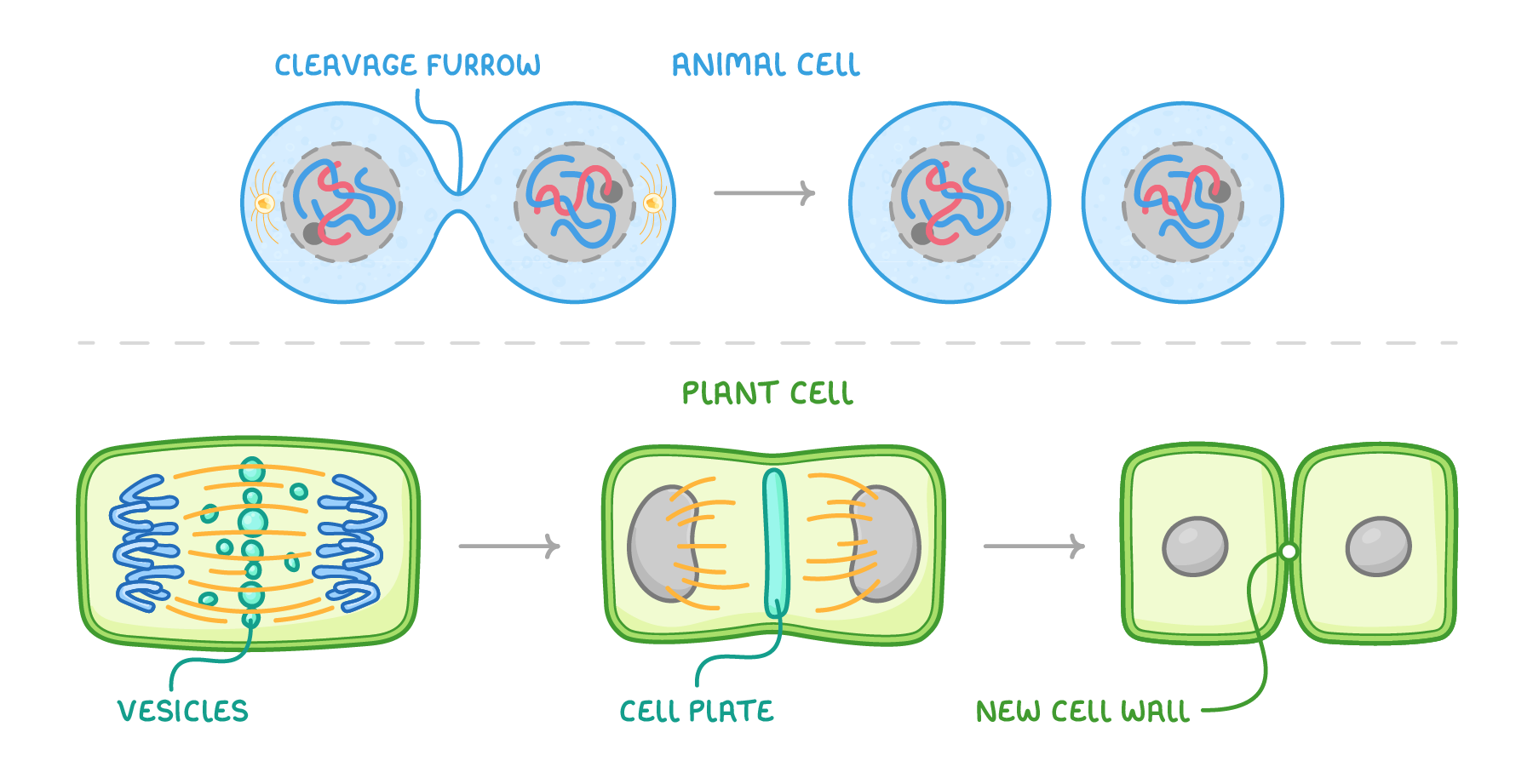
Animal cells:
- A cleavage furrow forms
- A ring of contractile proteins pinches the cell membrane inward at the equator
- This furrow deepens until the cell is split into two daughter cells, each with its own nucleus
Plant cells:
- Vesicles from the Golgi apparatus (an organelle involved in packaging and transport) accumulate at the cell's equator
- These vesicles fuse to form a cell plate, which develops into a new cell wall separating the daughter cells
- This process accommodates the rigid cell wall present in plant cells
Cytokinesis completes the cell cycle, resulting in two genetically identical daughter cells ready to enter interphase or remain in a non-dividing state.
How mitosis ensures genetic continuity across cell generations
Mitosis is critical for the transmission of chromosomes from one generation of cells to the next. By carefully replicating and distributing genetic material, mitosis ensures that each daughter cell inherits a complete and identical set of chromosomes from the parent cell. This process underpins the stability and functionality of multicellular organisms.
Mechanisms ensuring genetic continuity
- DNA replication in S phase - Before mitosis begins, each chromosome is duplicated, producing two sister chromatids with identical genetic information
- Precise chromosome alignment - During metaphase, chromosomes line up at the cell's equator, ensuring equal distribution to each pole during anaphase
- Equal distribution in anaphase - The separation of sister chromatids guarantees that each daughter cell receives one copy of every chromosome
- Formation of identical nuclei - Telophase and cytokinesis result in two daughter cells, each with a nucleus containing the same genetic blueprint as the parent cell
This meticulous process ensures that genetic information is preserved across cell divisions, supporting consistent cellular function and organismal growth.
The significance of cell cycle regulation and the G0 phase
The cell cycle is tightly regulated to ensure that cells divide only when necessary and under the right conditions. Regulation prevents errors such as uncontrolled division, which can lead to issues like tumor formation. One important aspect of this regulation is the G0 phase, a state where cells can exit the active cell cycle.
The G0 phase
The G0 phase is a resting or quiescent state where cells no longer divide. Cells in G0 may exit the cell cycle temporarily or permanently, depending on the cell type and environmental cues.
Examples of cells in G0:
- Some cells, like neurons (nerve cells responsible for transmitting signals), remain in G0 permanently after maturation
- Other cells can reenter the cell cycle from G0 in response to appropriate signals, such as growth factors or injury requiring tissue repair
Cell cycle regulation
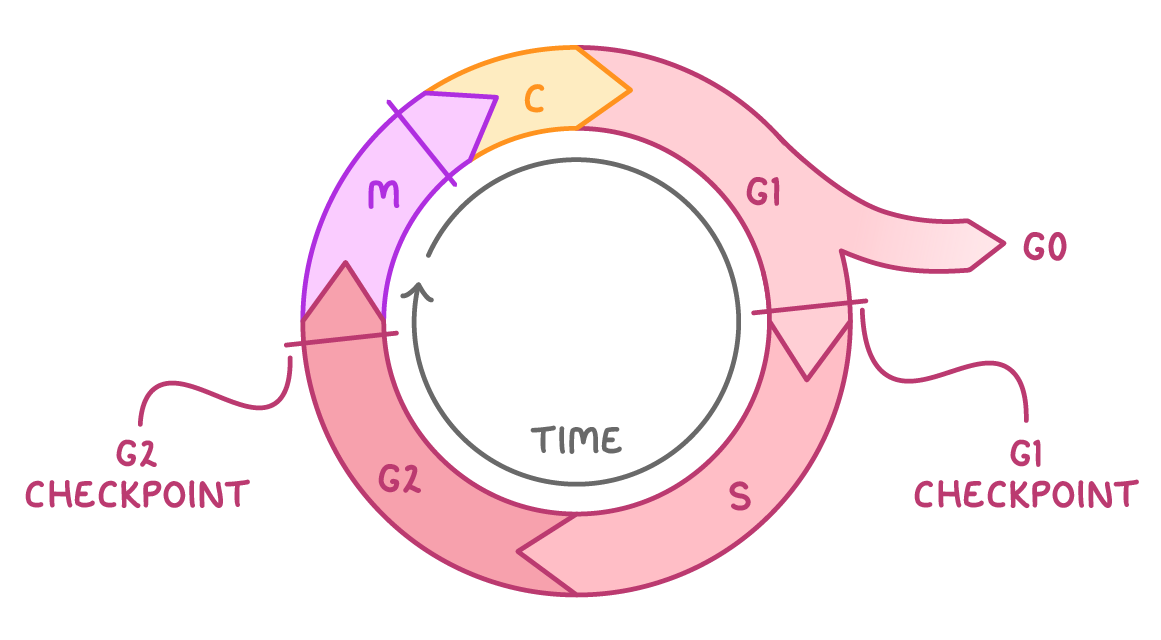
Regulatory checkpoints:
- Specific points in the cell cycle (especially in G1 and G2) monitor conditions
- Checkpoints ensure DNA is undamaged, replication is complete, and the cell is ready to proceed to the next phase
- If conditions are not met, the cell may be held at a particular stage or directed to enter G0
Proper control prevents errors in division, maintains tissue homeostasis (balance), and ensures cells respond appropriately to the organism's needs. The G0 phase and regulatory mechanisms highlight the cell cycle's adaptability, allowing cells to balance division with the organism's overall requirements.