2.1 - Cell Structure & Function
The role of subcellular components and organelles in cell function
Cells are the fundamental units of life, and their ability to perform specific tasks depends on the coordinated functions of subcellular components and organelles. These structures are specialized to carry out distinct roles, contributing to the overall operation and survival of the cell. Understanding how each component works and interacts with others is key to grasping how cells maintain life processes.
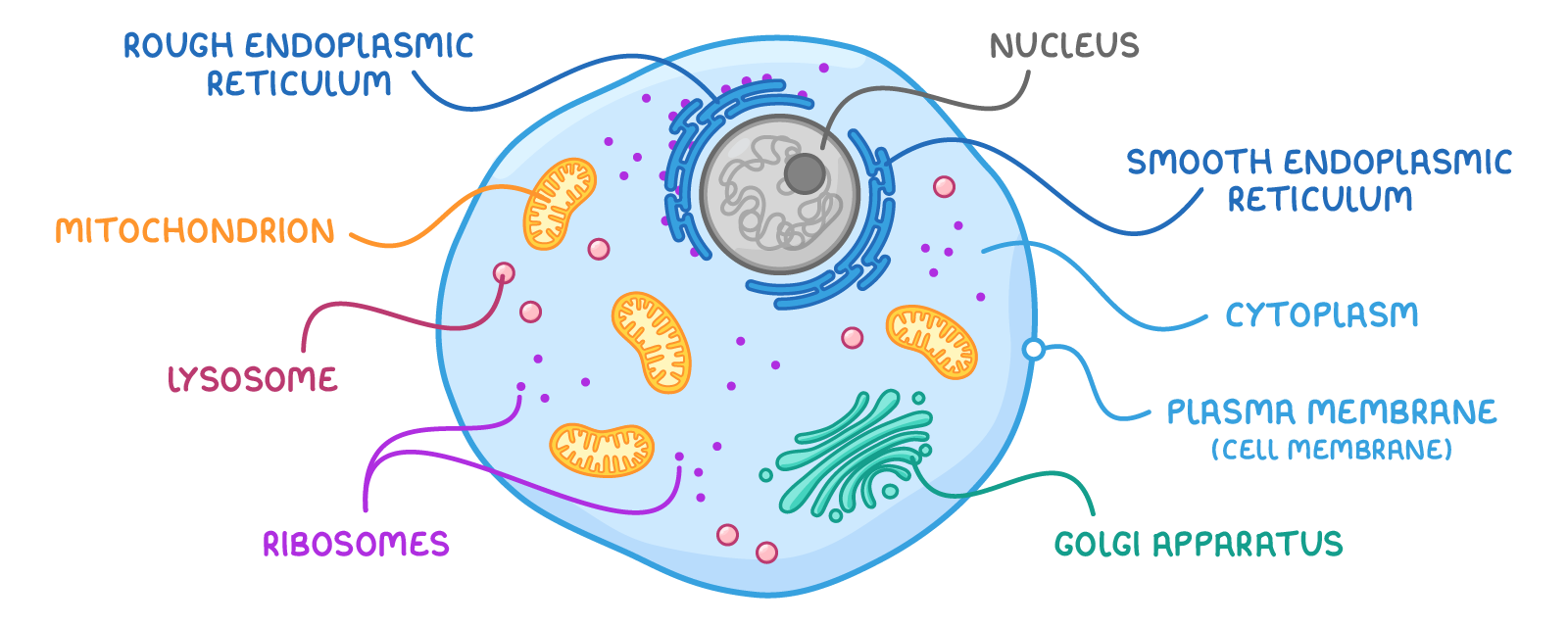
Why organelles matter to cell function
- Specialization - Each organelle has a specific role, such as energy production or waste removal, allowing the cell to efficiently handle multiple tasks.
- Compartmentalization - Organelles create separate environments within the cell for different biochemical reactions, preventing interference and increasing efficiency.
- System interactions - Organelles work together, forming complex networks that ensure the cell operates as a cohesive unit.
This intricate organization enables cells to respond to their environment, grow, and replicate, forming the basis of life in all organisms.
The structure and purpose of ribosomes in protein synthesis
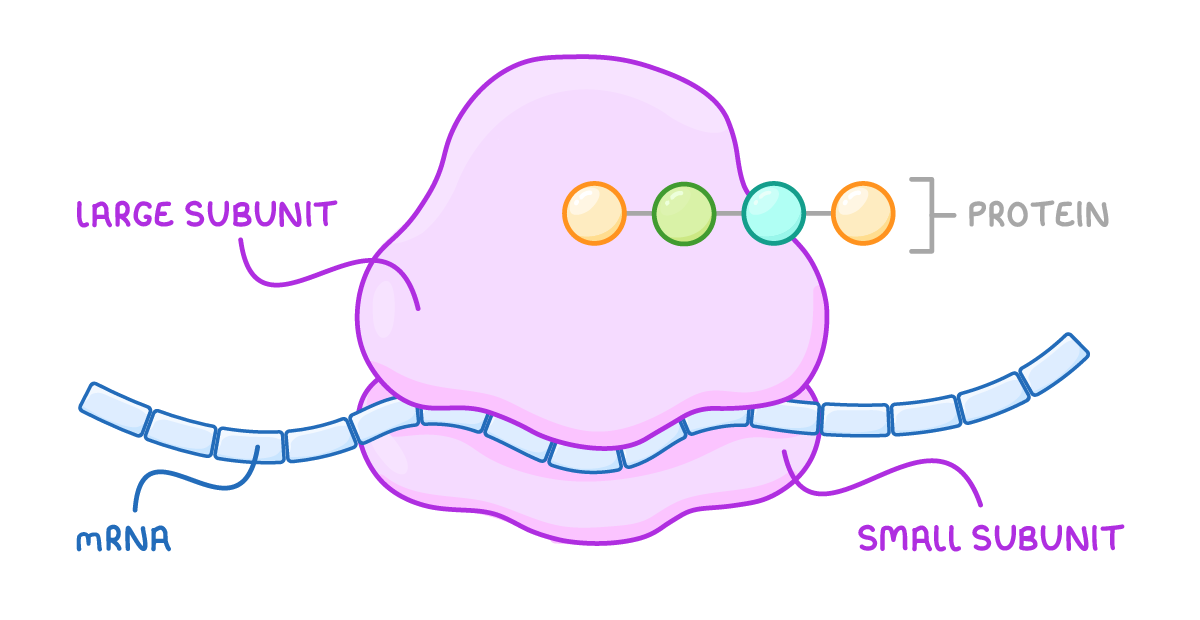
Ribosomes are small, non-membrane-bound structures found in all living cells, highlighting their ancient evolutionary origin and critical role in life. They are composed of ribosomal RNA (rRNA) and proteins, and their primary function is to synthesize proteins based on genetic instructions.
Key features of ribosomes
- Composition - Made of rRNA and proteins, forming a complex that can read genetic code.
- Location - Found free in the cytoplasm or bound to membranes like the endoplasmic reticulum, depending on the type of protein being made.
- Function - Translate messenger RNA (mRNA), a molecule carrying genetic instructions from DNA, into proteins by assembling amino acids in the correct order.
Ribosomes are essential for creating the proteins that build cellular structures, act as enzymes, and regulate cell processes. Their universal presence across all forms of life reflects a shared ancestry among organisms.
The components and functions of the endomembrane system
The endomembrane system is a network of membranes and organelles within eukaryotic cells that work together to modify, package, and transport proteins and lipids. This system includes several key structures, each contributing to the cell's ability to process and distribute essential molecules.
Major components of the endomembrane system
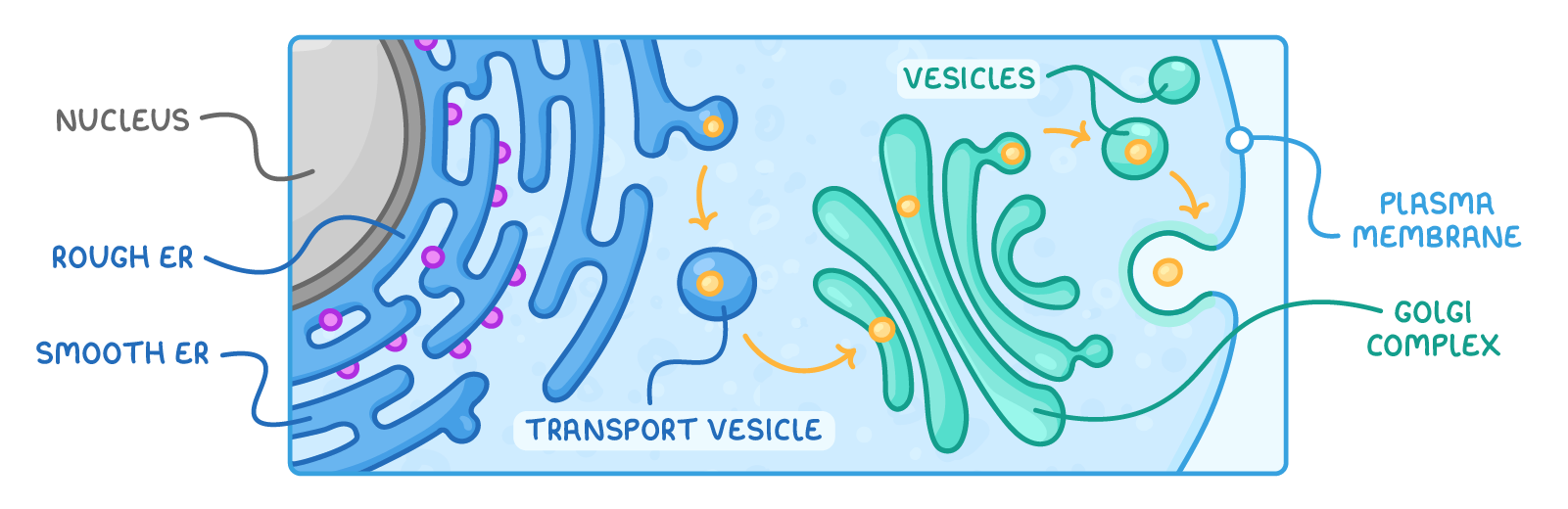
Endoplasmic Reticulum (ER):
- A network of membrane tubes and sacs with two distinct types:
- Rough ER - Studded with ribosomes, it synthesizes proteins and provides compartmentalization within the cell. It also offers mechanical support to maintain cell shape and aids in intracellular transport.
- Smooth ER - Lacks ribosomes and is involved in lipid synthesis and detoxification processes, helping to neutralize harmful substances in the cell.
Golgi Complex:
- A series of flattened membrane sacs.
- Chemically modifies proteins received from the ER (such as adding carbohydrate groups) to ensure they function properly.
- Packages these proteins into vesicles for transport to their final destinations within or outside the cell.
Other components:
- Lysosomes - Discussed in detail in a later section, these are membrane-bound sacs containing digestive enzymes.
- Vacuoles - Also covered later, these sacs store materials and maintain cell pressure in plants.
- Transport Vesicles - Small membrane-bound sacs that shuttle proteins and lipids between organelles of the endomembrane system.
- Nuclear Envelope - A double membrane surrounding the nucleus, controlling the flow of materials in and out.
- Plasma Membrane - The outer boundary of the cell, regulating what enters and exits.
This interconnected system ensures that proteins and lipids are synthesized, modified, and delivered to where they are needed, maintaining cellular organization and function.
The roles of mitochondria and chloroplasts
Cells require energy in the form of ATP (adenosine triphosphate) to perform their functions. Mitochondria and chloroplasts have unique structures that enable them to carry out critical metabolic processes involving ATP production in eukaryotic cells.
Mitochondria
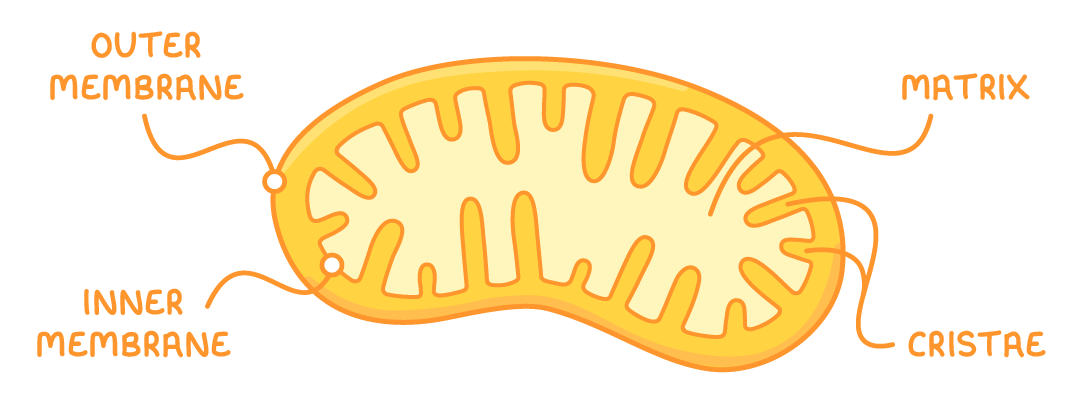
- Structure - Mitochondria have a double membrane. The outer membrane is smooth, while the inner membrane is highly folded into structures called cristae, increasing surface area. They are filled with a fluid called the matrix.
- Function - Site of aerobic cellular respiration, a process that converts nutrients into ATP, the cell's energy currency.
- Efficiency through design - The folded inner membrane provides more space for reactions, allowing greater ATP production.
Mitochondria are essential for energy-intensive processes like muscle contraction and nerve signaling, supporting the cell's energy demands.
Chloroplasts
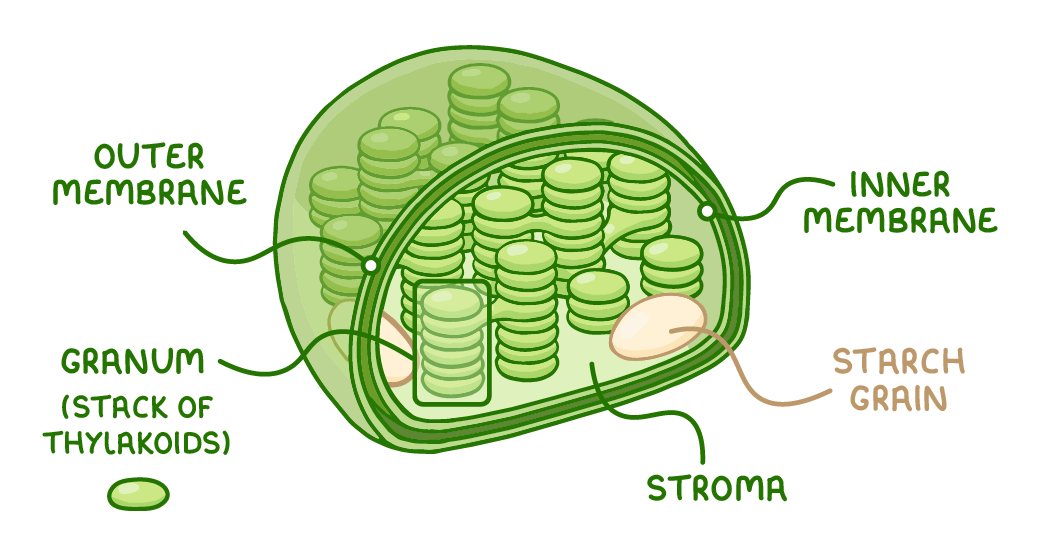
- Structure - Found in plants and photosynthetic algae, chloroplasts also have a double membrane. Inside, there's a fluid called stroma that contains sacs called thylakoids stacked into grana, and starch grains to store carbohydrates. The thylakoid membranes are where light energy is captured during photosynthesis.
- Function - Site of photosynthesis, the process that converts light energy into chemical energy stored in glucose, using water and carbon dioxide.
- Significance - Provides energy for plant growth and produces oxygen as a byproduct, vital for life on Earth.
These organelles demonstrate how structural adaptations enable specific energy-related functions, supporting life at the cellular level.
The functions of lysosomes and vacuoles
Beyond energy production and protein synthesis, cells must manage waste, store materials, and maintain internal conditions. Lysosomes and vacuoles are key organelles that handle these diverse tasks, contributing to cellular health and stability.
Lysosomes
- Structure - Membrane-enclosed sacs filled with hydrolytic enzymes, which are proteins that break down molecules.
- Functions:
- Digestion - Break down waste materials, cellular debris, and engulfed pathogens, recycling components for reuse.
- Apoptosis - Play a role in programmed cell death, a controlled process where cells are intentionally destroyed to eliminate damaged or unnecessary cells.
- Importance - Prevent accumulation of harmful substances and maintain cellular homeostasis by clearing out unneeded materials.
Vacuoles
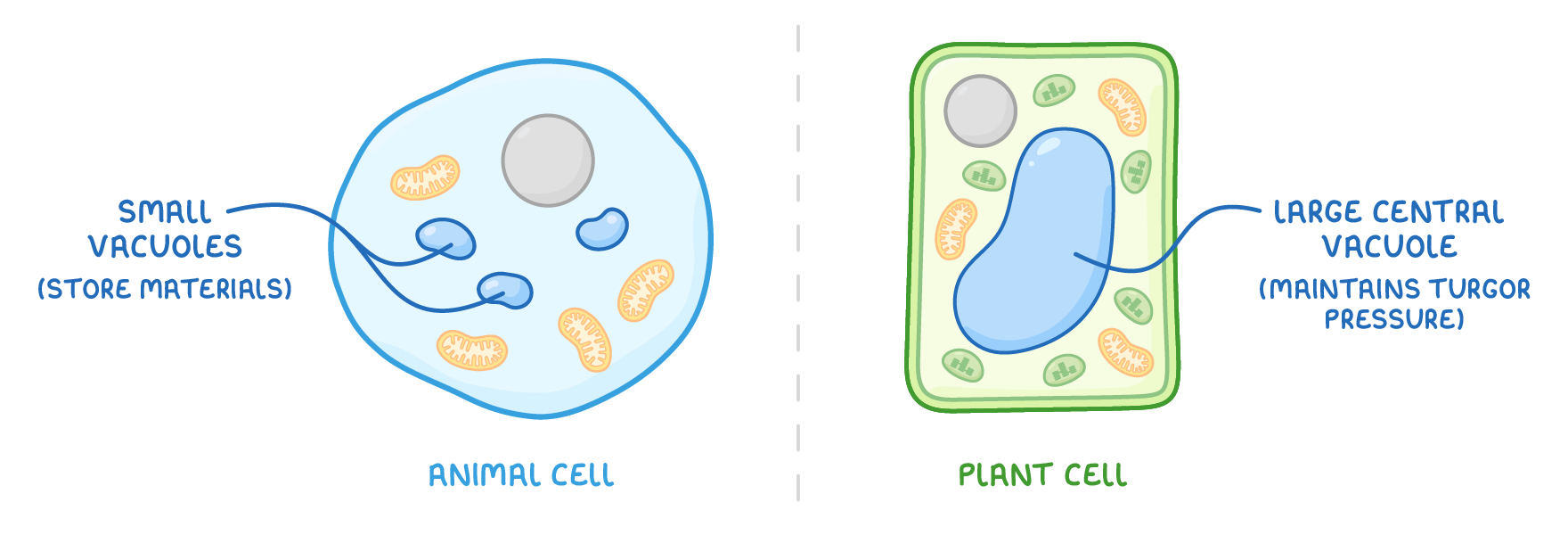
Vacuoles are membrane-bound sacs that vary in size and number depending on the cell type.
Functions:
- In plant cells:
- Typically, a single large vacuole occupies much of the cell's volume.
- Stores water, nutrients, and waste products, maintaining turgor pressure, which keeps the plant cell rigid and supports the plant's structure.
- In animal cells:
- Smaller and more numerous compared to plant cells.
- Store cellular materials like ions, nutrients, and waste, aiding in various metabolic processes.
They adapt to the specific needs of the cell, supporting both storage and structural roles, ensuring the cell can adapt to changing conditions and maintain internal balance.