2.8 - Mechanisms of Transport
The importance of transport across cell membranes
Cell membranes are crucial barriers that separate the internal environment of a cell from the external environment. They control the movement of substances in and out of the cell, ensuring that essential molecules like nutrients and ions are available for cellular processes while waste products are removed. This selective movement is vital for maintaining dynamic homeostasis, which is the balance of internal conditions necessary for a cell to function properly.
Why transport matters
- Nutrient uptake - Cells need to bring in molecules like glucose and amino acids to fuel metabolic reactions.
- Waste removal - Harmful byproducts of metabolism must be expelled to prevent toxicity.
- Ion balance - Maintaining specific concentrations of ions inside and outside the cell is essential for processes like nerve signaling and muscle contraction.
- Homeostasis - Transport mechanisms help regulate internal conditions such as pH and water balance, ensuring optimal cellular function.
Without effective transport mechanisms, cells would be unable to grow, reproduce, or respond to environmental changes, disrupting the overall health of the organism.
The role of membrane proteins in transport processes
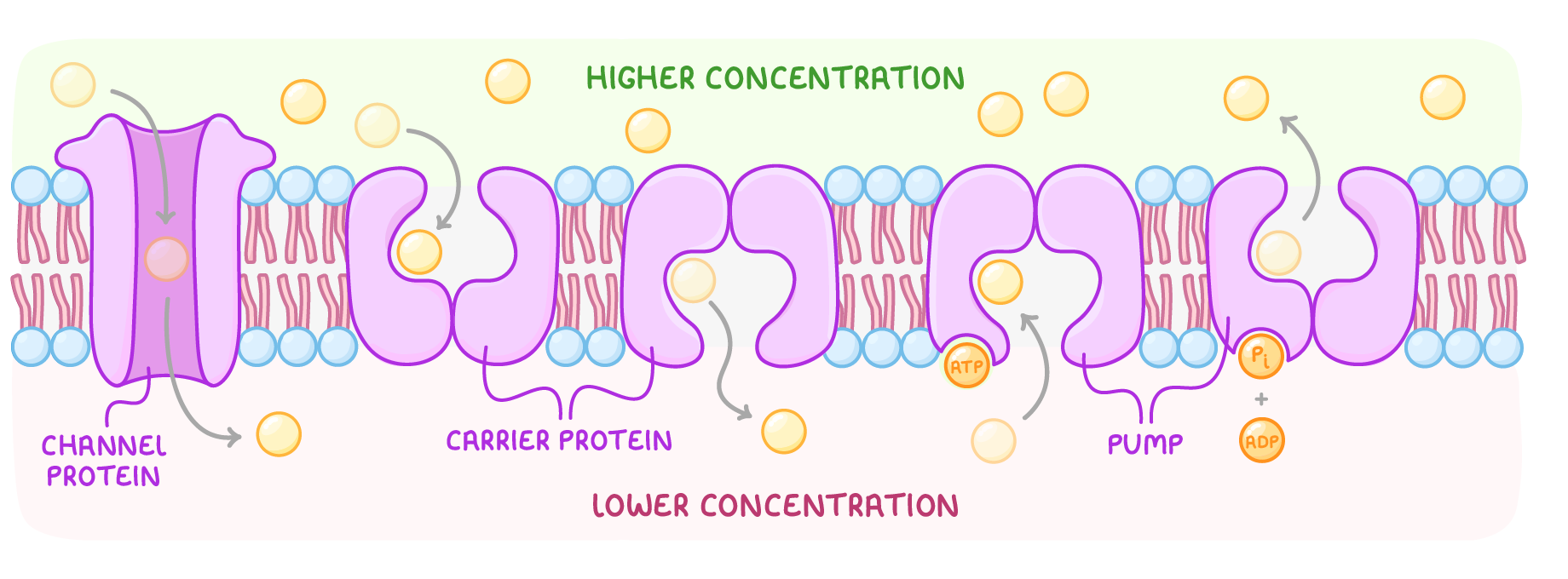
Cell membranes are composed of a phospholipid bilayer that is selectively permeable, meaning only certain substances can pass through it directly. For many molecules and ions, transport requires the assistance of specialized proteins embedded in the membrane. These membrane proteins facilitate the movement of substances that cannot diffuse freely due to their size, charge, or polarity.
Types of membrane proteins involved in transport
- Channel proteins - Form pores or channels that allow specific ions or small molecules to pass through the membrane by diffusion, often down their concentration gradient (from high to low concentration).
- Carrier proteins - Bind to specific molecules or ions and undergo a conformational change to shuttle them across the membrane, often against their concentration gradient (from low to high concentration).
- Pumps - A type of carrier protein that uses energy released from the breakdown of ATP to ADP and an inorgranic phosphate (Pi) to move substances against their concentration gradient, crucial for maintaining ion gradients across the membrane.
These proteins ensure that transport is specific and regulated, allowing cells to control which substances enter or leave and at what rate.
The concept of active transport and its energy requirements
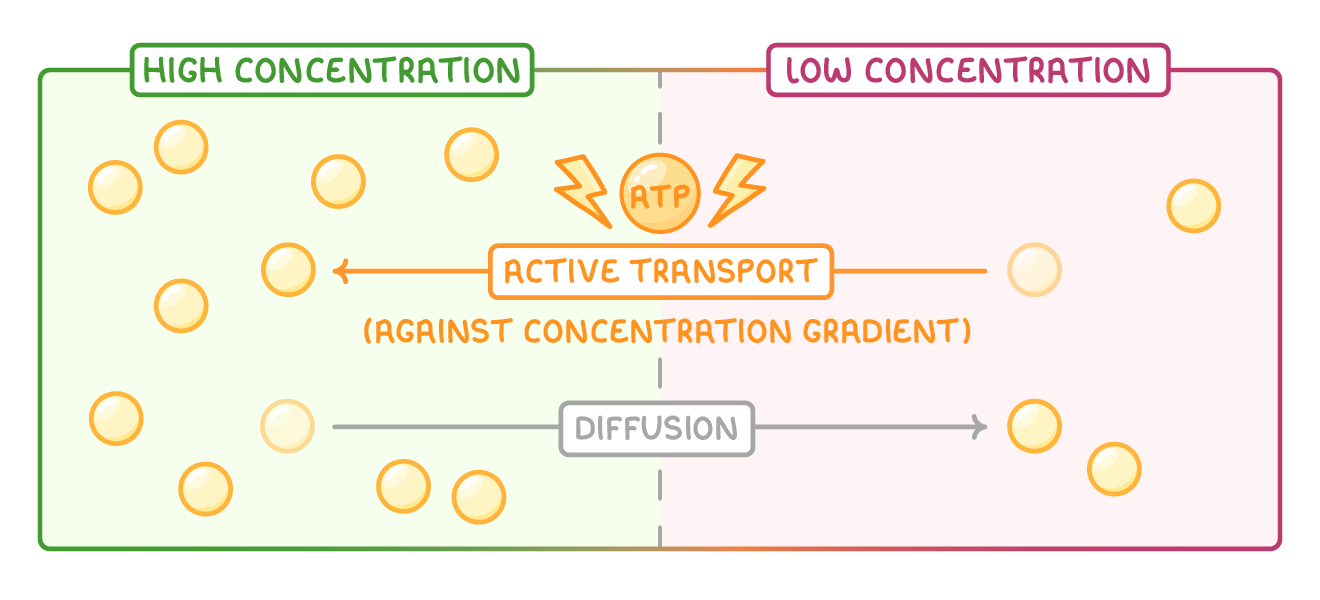
Not all transport across membranes happens passively through diffusion or facilitated diffusion, which rely on concentration gradients and require no energy input. Active transport, on the other hand, is a process that moves molecules or ions against their concentration gradient, from an area of lower concentration to an area of higher concentration. This process is essential for creating and maintaining concentration gradients of substances across the membrane.
Key features of active transport
- Energy dependency - Active transport requires metabolic energy, often in the form of adenosine triphosphate (ATP), a molecule that stores and transfers energy in cells.
- Directionality - Moves substances against their natural tendency to diffuse from high to low concentration, requiring energy to overcome this gradient.
- Role in homeostasis - Allows cells to accumulate necessary substances (like nutrients) or expel waste, even when concentration differences oppose this movement.
- Involvement of proteins - Relies on specific membrane proteins, often called pumps, to bind and transport molecules or ions.
Active transport is critical for processes like nutrient absorption in the intestines and maintaining ion gradients in nerve cells, ensuring cells can function despite unfavorable concentration differences.
The mechanism of the sodium-potassium pump (Na+/K+ pump)
One of the most well-known examples of active transport is the sodium-potassium pump, a membrane protein that maintains specific ion concentrations inside and outside the cell. This pump is vital for creating an electrochemical gradient across the membrane, which is a difference in charge and ion concentration that drives various cellular processes.
How the sodium-potassium pump works
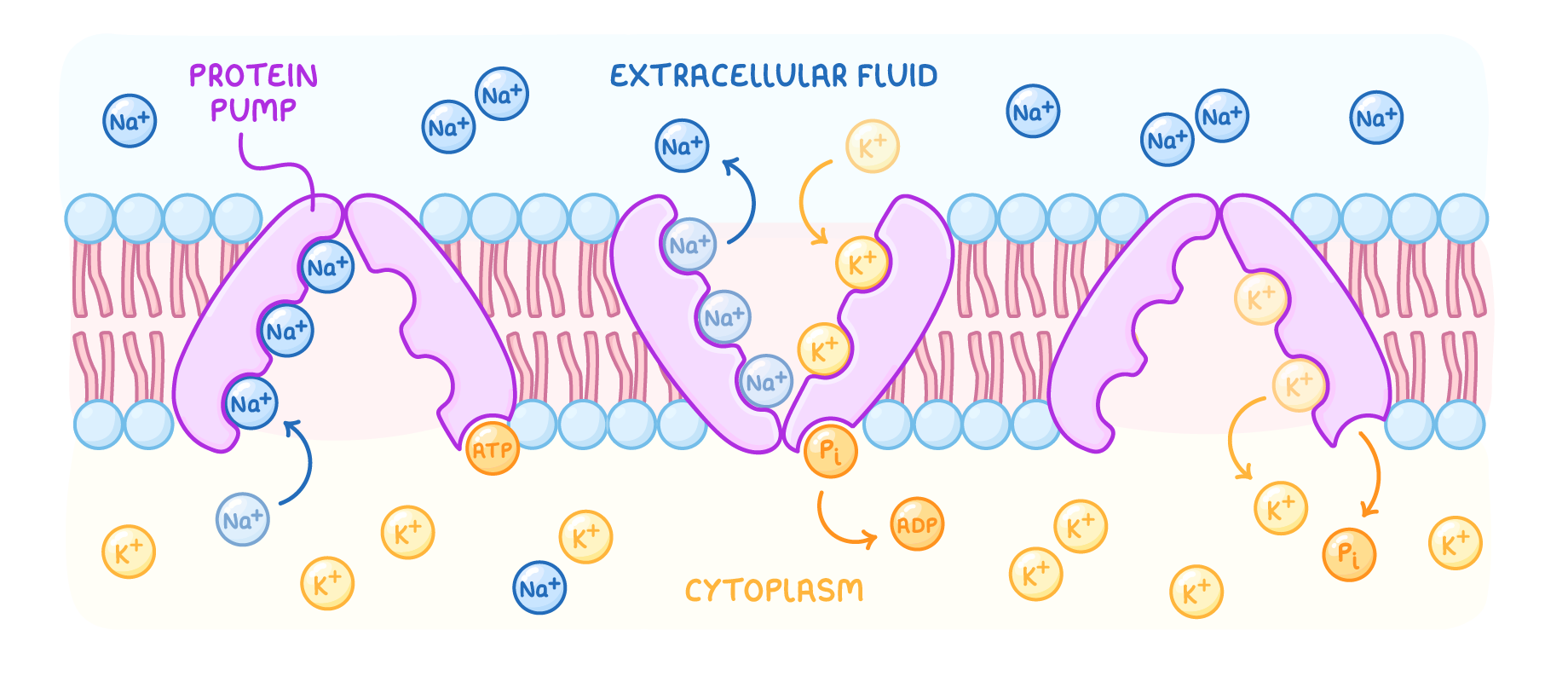
- Binding of sodium ions - Three sodium ions (Na+) from inside the cell bind to specific sites on the pump protein. At this stage, the pump is in a conformation open to the inside of the cell.
- ATP activation - An ATP molecule binds to the pump and is hydrolyzed (broken down) into adenosine diphosphate (ADP) and a phosphate group (Pi). This energy release causes the pump to change shape.
- Release of sodium ions - The shape change opens the pump to the outside of the cell, releasing the three Na+ ions into the extracellular fluid where sodium concentration is higher.
- Binding of potassium ions - Two potassium ions (K+) from outside the cell bind to the pump. The concentration of potassium is higher inside the cell, so this movement is against the gradient.
- Release of phosphate and return - The phosphate group is released from the pump, causing it to revert to its original shape, opening to the inside of the cell. The two K+ ions are released into the cytoplasm.
- Cycle repeats - The process repeats, continuously moving sodium out and potassium in, using energy from ATP each cycle.
Role of ATPase in the pump
The sodium-potassium pump is also known as Na+/K+ ATPase because it acts as an enzyme that breaks down ATP to provide the energy needed for ion transport. Each cycle of the pump hydrolyzes one ATP molecule, ensuring a constant supply of energy to maintain ion gradients.
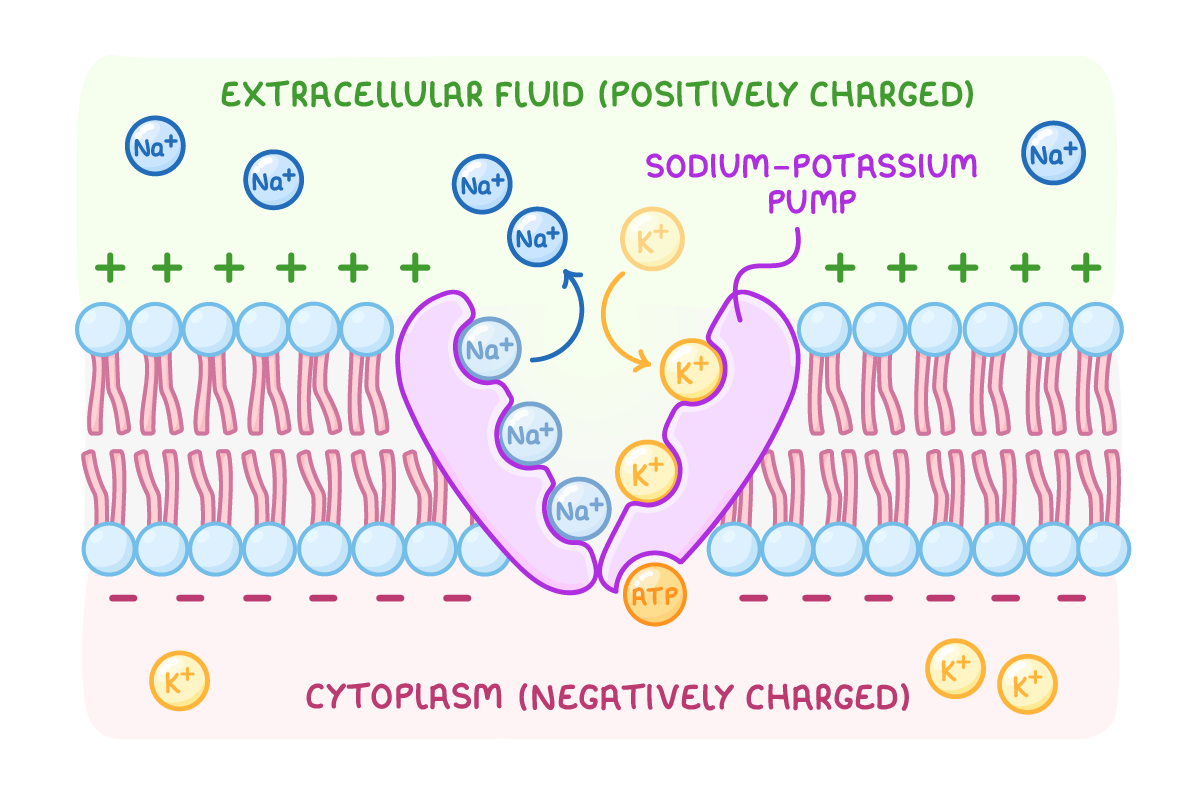
This pump moves three sodium ions out for every two potassium ions in, creating a net positive charge outside the cell and contributing to the cell's membrane potential.
The significance of electrochemical gradients and membrane potential
The activity of pumps like the sodium-potassium pump establishes electrochemical gradients across the cell membrane. An electrochemical gradient combines a concentration gradient (difference in ion numbers) and an electrical gradient (difference in charge) between the inside and outside of the cell. This gradient is critical for many cellular functions.
Understanding membrane potential
Membrane potential is the difference in electrical charge across the cell membrane, typically with the inside of the cell being more negative compared to the outside. By moving more sodium out than potassium in, the pump creates a net positive charge outside and a negative charge inside, establishing a resting membrane potential. This potential is essential for processes like nerve impulse transmission, where changes in membrane potential trigger signals, and muscle contraction, which relies on ion movements.
Applications of electrochemical gradients
- Nerve signaling - The gradient allows rapid changes in membrane potential during action potentials, enabling communication between neurons.
- Secondary active transport - The sodium gradient created by the pump drives other transport processes, such as the uptake of glucose in intestinal cells, by coupling sodium movement with other molecules.
- Cellular homeostasis - Maintaining ion gradients ensures cells can respond to environmental changes and sustain vital functions.
The electrochemical gradient, maintained by active transport mechanisms like the Na+/K+ pump, is a cornerstone of cellular energetics, allowing biological systems to use energy to grow, reproduce, and maintain dynamic balance.