1.6 - Nucleic Acids
The fundamental role of nucleic acids in storing biological information
Nucleic acids are the molecules responsible for storing and transmitting biological information essential to life processes in all living organisms. The two primary types of nucleic acids are deoxyribonucleic acid (DNA) and ribonucleic acid (RNA). These molecules encode the instructions for building proteins and regulating cellular functions through specific sequences that form the genetic code.
Why nucleic acids are crucial for life
- Information storage - Nucleic acids hold the genetic blueprint that determines an organism's traits and functions.
- Information transmission - They enable the transfer of genetic instructions from one generation to the next and within cells for protein synthesis.
- Regulation of cellular processes - Through their sequences, nucleic acids control gene expression, dictating when and where proteins are made.
This ability to store and retrieve information makes nucleic acids the foundation of heredity and cellular function.
The structural components of nucleotides in DNA and RNA
Nucleic acids are polymers made up of repeating units called nucleotides. Each nucleotide is a small building block that contributes to the overall structure and function of DNA and RNA. Understanding the components of nucleotides is key to grasping how nucleic acids store and transmit information.
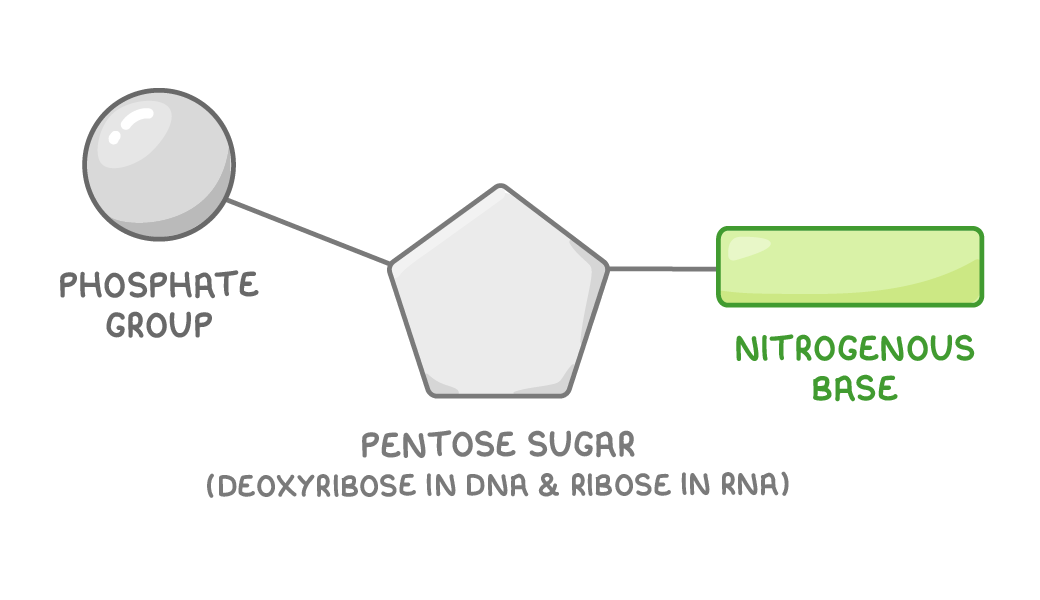
Building blocks of nucleic acids
- Five-carbon sugar - This is the central component of a nucleotide. In DNA, the sugar is deoxyribose, while in RNA, it is ribose. The difference lies in the presence of an oxygen atom on the second carbon of the sugar ring of ribose, which is absent in deoxyribose.
- Phosphate group - Attached to the sugar, this group forms the backbone of the nucleic acid strand by linking nucleotides together through strong covalent bonds.
- Nitrogenous base - This is the variable part of the nucleotide that carries genetic information. There are five possible bases: adenine (A), thymine (T), guanine (G), cytosine (C), and uracil (U). DNA contains A, T, G, and C, while RNA has A, U, G, and C.
These components combine to form a nucleotide, and the sequence of these bases in a strand of DNA or RNA determines the genetic message.
The linear sequence and directionality of nucleic acid strands
Nucleic acids are not just random chains of nucleotides; they have a specific orientation that is critical to their function. Each strand of DNA or RNA has a defined start and end, which influences how the genetic information is read and replicated.
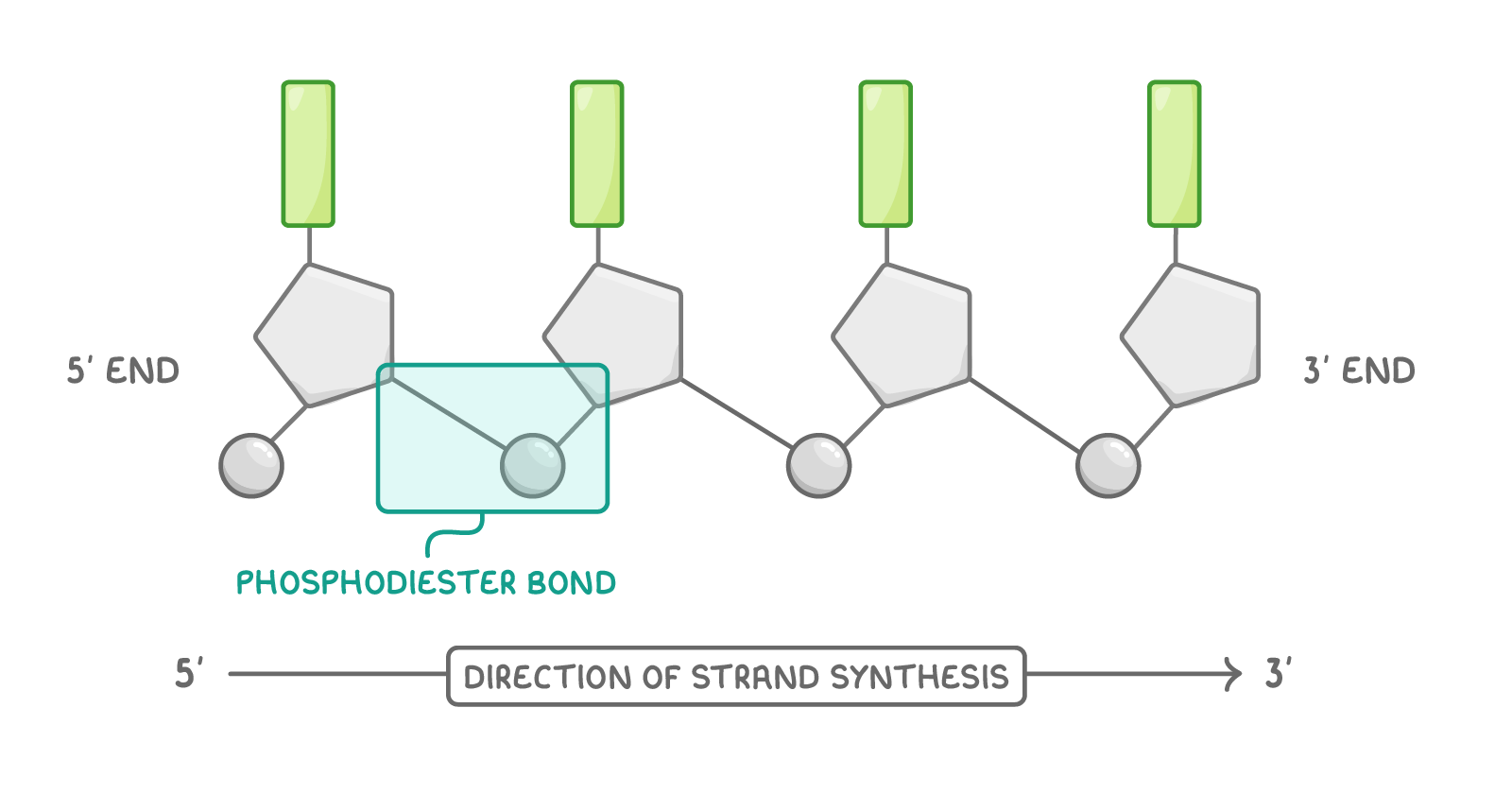
Understanding directionality in nucleic acids
- Defined ends - Each nucleotide in a strand has a 5' (five prime) end, marked by a phosphate group attached to the fifth carbon of the sugar, and a 3' (three prime) end, marked by a hydroxyl group on the third carbon of the sugar.
- Growth direction - During the synthesis of a nucleic acid strand, new nucleotides are always added to the 3' end of the growing chain. This results in the formation of covalent bonds, called phosphodiester bonds, between the 3' hydroxyl of one nucleotide and the 5' phosphate of the next.
- Linear sequence - The order of nucleotides from the 5' end to the 3' end forms a unique sequence that encodes specific genetic information.
This directionality is essential for processes like replication and transcription, ensuring that nucleic acids are built and read in a consistent manner.
The double-helix structure of DNA and base pairing rules
DNA has a unique three-dimensional structure that allows it to store vast amounts of information in a compact form while protecting the genetic code. This structure, along with specific pairing rules between nucleotides, ensures accurate storage and replication of genetic information.
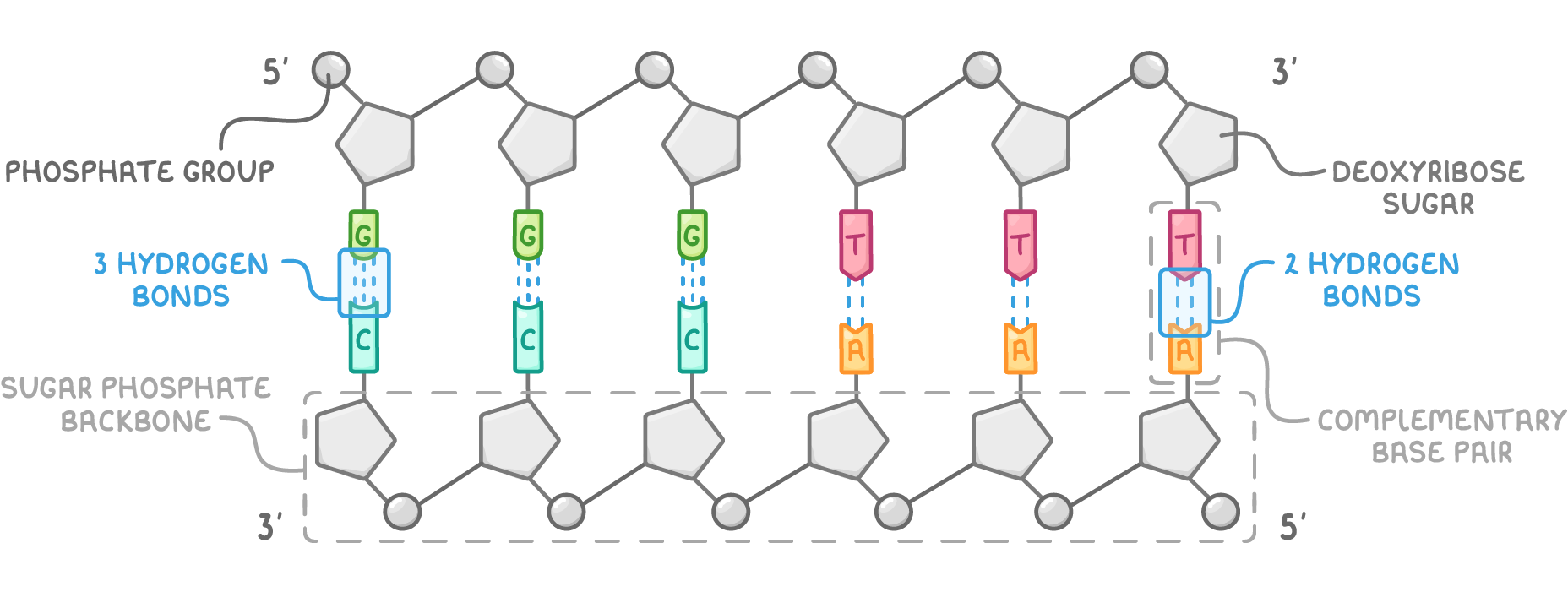
Key features of DNA structure
- Antiparallel double helix - DNA consists of two strands of nucleotides twisted into a spiral shape called a double helix. These strands run in opposite directions, meaning one strand goes from 5' to 3', while the other goes from 3' to 5'. This arrangement is called antiparallel.
- Base pairing rules - The two strands are held together by hydrogen bonds between complementary nitrogenous bases:
- Adenine (A) pairs with thymine (T) via two hydrogen bonds.
- Guanine (G) pairs with cytosine (C) via three hydrogen bonds.
- Stability and specificity - The specific pairing of bases ensures that the genetic code is accurately maintained and replicated, as each base only bonds with its complementary partner.
This double-helix structure not only compacts the DNA into the cell nucleus but also protects the genetic information by keeping the bases paired inside the helix, shielded by the sugar-phosphate backbone.
Key structural differences between DNA and RNA
While DNA and RNA share the same fundamental role of storing and transmitting genetic information, they differ in their structure, which reflects their distinct functions in the cell. DNA primarily stores the genetic blueprint, while RNA is involved in translating that blueprint into proteins.
Comparing DNA and RNA structures
| Feature | DNA (deoxyribonucleic acid) | RNA (ribonucleic acid) |
|---|---|---|
| Nitrogenous bases | Adenine (A), Thymine (T), Guanine (G), Cytosine (C) | Adenine (A), Uracil (U), Guanine (G), Cytosine (C) |
| Strand structure | Typically double-stranded, forming a double helix | Typically single-stranded, with varied shapes like loops or hairpins |
| Base pairing | A pairs with T; G pairs with C | A pairs with U; G pairs with C |
| Sugar | Deoxyribose (no oxygen atom on the 2' carbon) | Ribose (oxygen atom on the 2' carbon) |
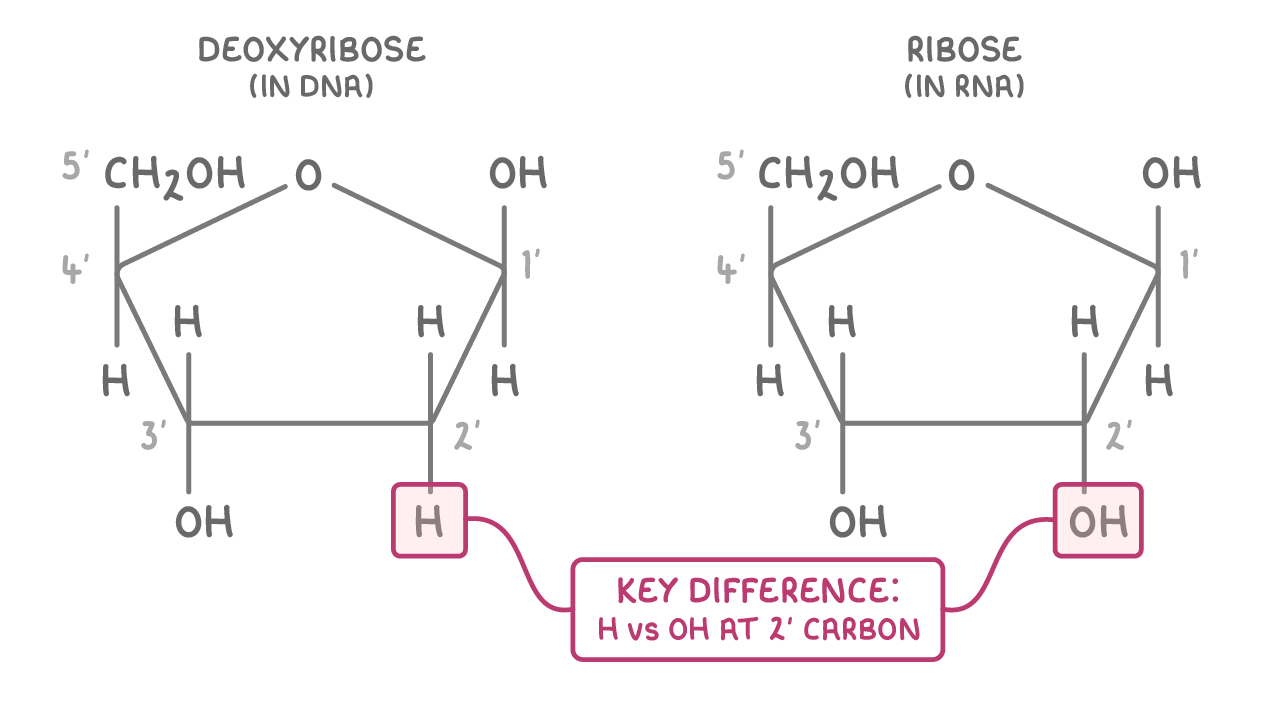
Functional implications of structural differences
- Sugar difference - The presence of an extra oxygen in ribose makes RNA less stable than DNA, which suits RNA's temporary role in protein synthesis compared to DNA's long-term storage function.
- Base difference - Uracil in RNA replaces thymine, which allows RNA to form temporary bonds during processes like transcription, where it copies DNA's code.
- Strand difference - DNA's double-stranded nature provides stability and redundancy for genetic information, while RNA's single-stranded form allows flexibility to fold into functional shapes for tasks like carrying genetic messages or catalyzing reactions.
These structural distinctions enable DNA and RNA to perform complementary roles in the storage, retrieval, and expression of genetic information within living systems.