4.6 - Regulation of Cell Cycle
The importance of regulating the cell cycle
The cell cycle is a series of events that a cell goes through as it grows and divides to produce new cells. Proper regulation of this cycle is crucial for maintaining healthy growth, repair, and reproduction in multicellular organisms. Without tight control, cells could divide too quickly or fail to divide when needed, leading to serious health issues.
Why regulation matters
- Controlled growth - Regulation ensures cells divide only when necessary, supporting proper development and tissue maintenance.
- Prevention of errors - It helps avoid mistakes during DNA replication, ensuring genetic information is accurately passed to daughter cells.
- Balance in tissues - Regulation maintains a balance between cell division and cell death, preventing abnormal tissue growth or loss.
This precise control is achieved through specific mechanisms that monitor and guide the cell through its cycle, ensuring everything happens in the correct order and at the right time.
The role of checkpoints in controlling cell cycle progression
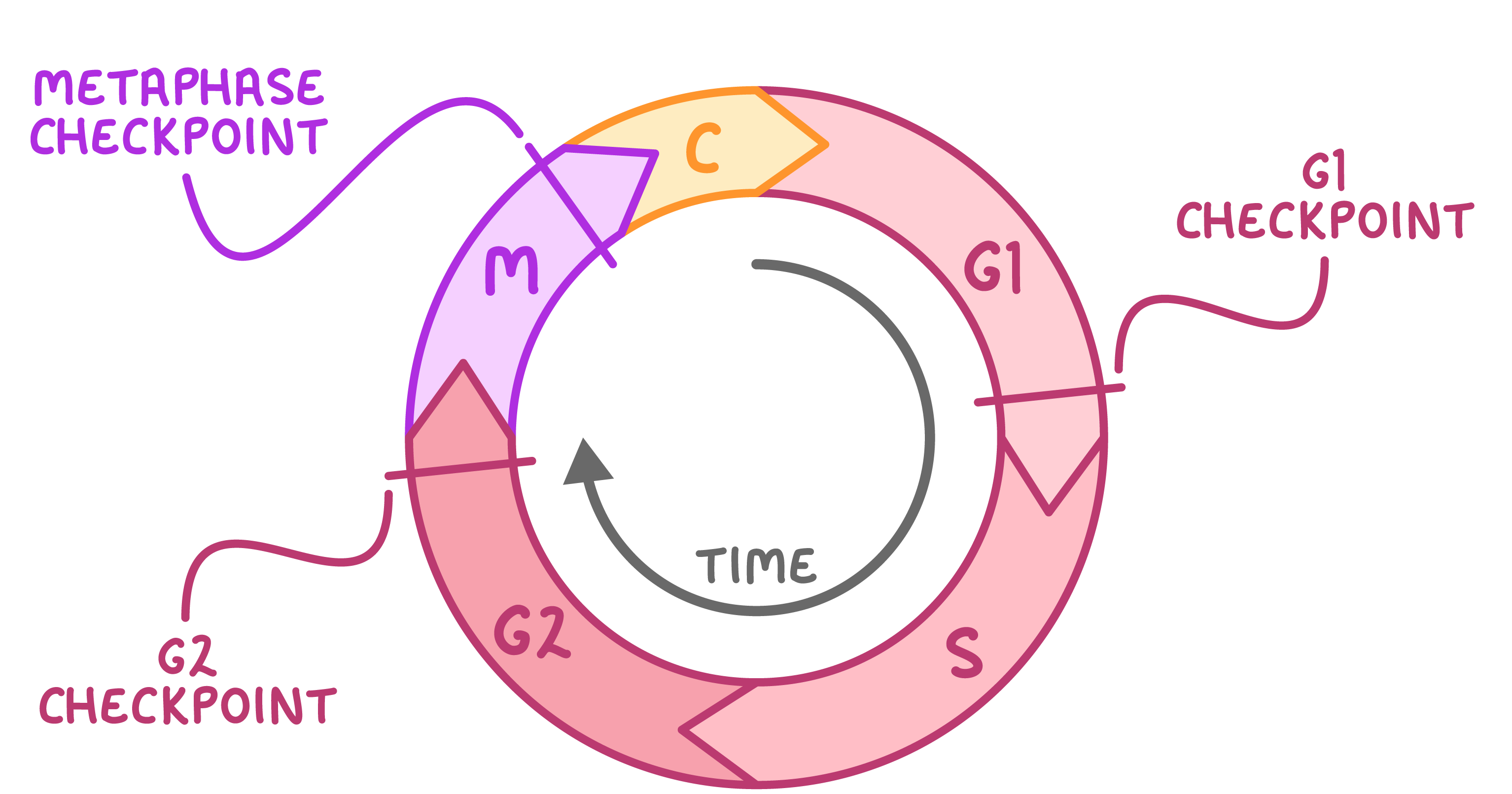
Cell cycle checkpoints are critical control points that monitor the cell's readiness to move from one phase of the cycle to the next. These checkpoints act like quality control inspectors, ensuring that each stage is completed correctly before allowing progression. If issues are detected, the cycle can be paused or halted to address them.
Key checkpoints in the cell cycle
- G1 checkpoint (Restriction point) - Occurs near the end of the G1 phase (first gap phase, where the cell grows). This checkpoint assesses whether the cell has adequate resources and undamaged DNA to proceed to the S phase (DNA synthesis). If conditions are not met, the cell may enter a resting state called G0 until ready.
- G2 checkpoint - Takes place at the end of the G2 phase (second gap phase, involving further growth and preparation for division). It verifies that DNA replication in the S phase was completed accurately and that the cell is prepared for mitosis (cell division). Errors here can delay progression until repairs are made.
- M checkpoint (Spindle checkpoint) - Happens during metaphase of mitosis, ensuring that all chromosomes are properly attached to the spindle apparatus (a structure that pulls chromosomes apart). This prevents unequal distribution of genetic material to daughter cells.
These checkpoints collectively ensure the integrity of the cell cycle by halting progression when problems arise, protecting the organism from potential cellular dysfunction.
The interaction between cyclins and cyclin-dependent kinases in cycle regulation
The cell cycle is driven by specific proteins that interact to signal when a cell should move from one phase to the next. Two key players in this process are cyclins and cyclin-dependent kinases (CDKs), which work together to regulate the timing of cycle progression.
How cyclins and CDKs control the cycle
- Cyclins - These are regulatory proteins whose levels fluctuate predictably during the cell cycle. Different cyclins are produced and degraded at specific times, signaling the cell to transition between phases.
- Cyclin-dependent kinases (CDKs) - These are enzymes that, when bound to cyclins, become active and trigger key events in the cell cycle by phosphorylating (adding phosphate groups to) target proteins. This activation drives processes like DNA replication or chromosome separation.
- Cyclin-CDK complexes - The binding of a specific cyclin to a CDK forms a complex that activates the kinase. This complex then targets proteins necessary for advancing the cycle, ensuring each phase occurs in sequence.
This dynamic partnership allows precise timing of cell cycle events, as cyclin levels rise and fall to activate CDKs only when needed, pushing the cell forward or holding it back based on internal and external signals.
The consequences of disruptions to the cell cycle
When the mechanisms regulating the cell cycle fail, the consequences can be severe for both the individual cell and the organism as a whole. Disruptions can lead to uncontrolled cell division or premature cell death, both of which impact tissue function and overall health.
Potential outcomes of cell cycle dysregulation
- Uncontrolled division - If checkpoints fail to stop the cycle despite errors, cells may divide uncontrollably, leading to the formation of abnormal masses of tissue.
- Cell death - Alternatively, if damage is detected and cannot be repaired, the cell may be directed to undergo programmed cell death to prevent harm to the organism.
- Impact on organism - These disruptions can affect growth, repair, and maintenance of tissues, potentially leading to disease states that compromise health.
Understanding these outcomes highlights the importance of maintaining strict control over the cell cycle to ensure proper cellular function and organismal well-being.
The connection between cell cycle dysregulation and conditions like cancer and apoptosis
Disruptions in cell cycle regulation can lead to specific biological outcomes, such as cancer or apoptosis. These conditions represent opposite ends of the spectrum - one involving excessive cell growth and the other involving deliberate cell death - but both stem from failures in the regulatory mechanisms discussed earlier.
Cancer: Uncontrolled cell growth
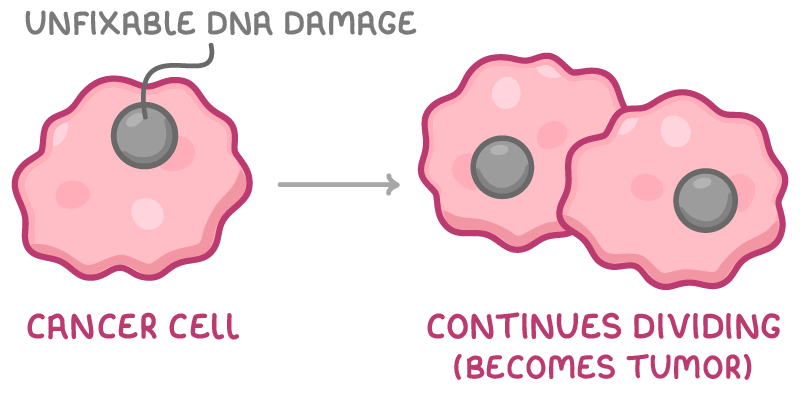
Cancer is a disease characterized by uncontrolled cell division, often resulting from failures at cell cycle checkpoints or mutations in genes that regulate cyclins and CDKs. This leads to the formation of tumors, which are abnormal masses of cells.
Mechanism and effects of cancer:
- Mechanism of dysregulation - Mutations can cause cyclins to be overproduced or CDKs to remain active, bypassing checkpoints and driving continuous division. DNA damage may go unrepaired, accumulating errors in daughter cells.
- Resulting effects - Tumors can become invasive, spreading to other tissues (a process called metastasis) and disrupting normal bodily functions.
- Impact on organism - Cancer can impair organ function, compete for resources, and, if untreated, lead to severe health decline.
Apoptosis: Programmed cell death
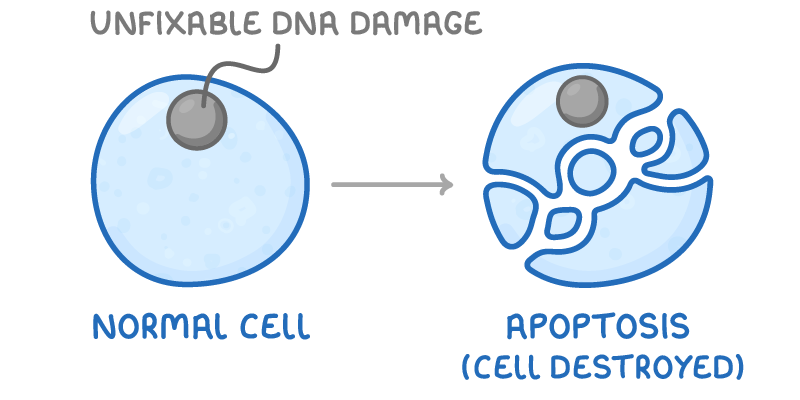
Apoptosis, often referred to as programmed cell death, is a controlled process where a cell self-destructs in response to irreparable damage or as part of normal development. It is a protective mechanism triggered by cell cycle disruptions.
Mechanism and effects of apoptosis:
- Mechanism of activation - If checkpoints detect severe DNA damage or other critical issues, signals are sent to initiate apoptosis. This involves a cascade of events that dismantle the cell in an orderly manner.
- Resulting effects - The cell breaks down into fragments that are engulfed by neighboring cells, preventing inflammation or damage to surrounding tissues.
- Impact on organism - While apoptosis is essential for removing damaged cells, excessive or inappropriate activation can lead to tissue loss, as seen in degenerative diseases.
Both cancer and apoptosis illustrate how critical cell cycle regulation is to maintaining a balance between cell survival and death, ensuring the organism functions properly without succumbing to disease or dysfunction.