6.6 - Gene Expression & Cell Specialization
The basics of gene expression and its importance in cells
Gene expression is the process by which the information encoded in a gene is used to create a functional product, such as a protein. This process is fundamental to life because it allows cells to produce the specific molecules they need to carry out their functions. In multicellular organisms, gene expression is tightly controlled to ensure that different cell types develop unique characteristics despite having the same genetic material.
Gene expression
Gene expression is the conversion of genetic information from DNA into functional products like proteins, which determine cell structure and function. Gene expression occurs in two primary steps: transcription (copying DNA into RNA) and translation (using RNA to build proteins).
Importance in cell specialization
- By controlling which genes are expressed, cells can differentiate into specialized types, such as muscle cells or nerve cells, each with distinct roles in the organism.
- Precise regulation of gene expression is critical to ensure that the right genes are active at the right time and place, preventing errors in development or function.
This regulation of gene expression is what allows a single fertilized egg to develop into a complex organism with diverse cell types, each contributing to the organism's overall function.
How transcription factors and promoter regions influence gene expression
Gene expression begins with transcription, the process of copying a segment of DNA into RNA. This step is initiated and controlled by specific proteins and DNA sequences that determine which genes are turned on or off in a cell. Understanding this mechanism is key to grasping how cells control their functions and ultimately influence an organism's traits.
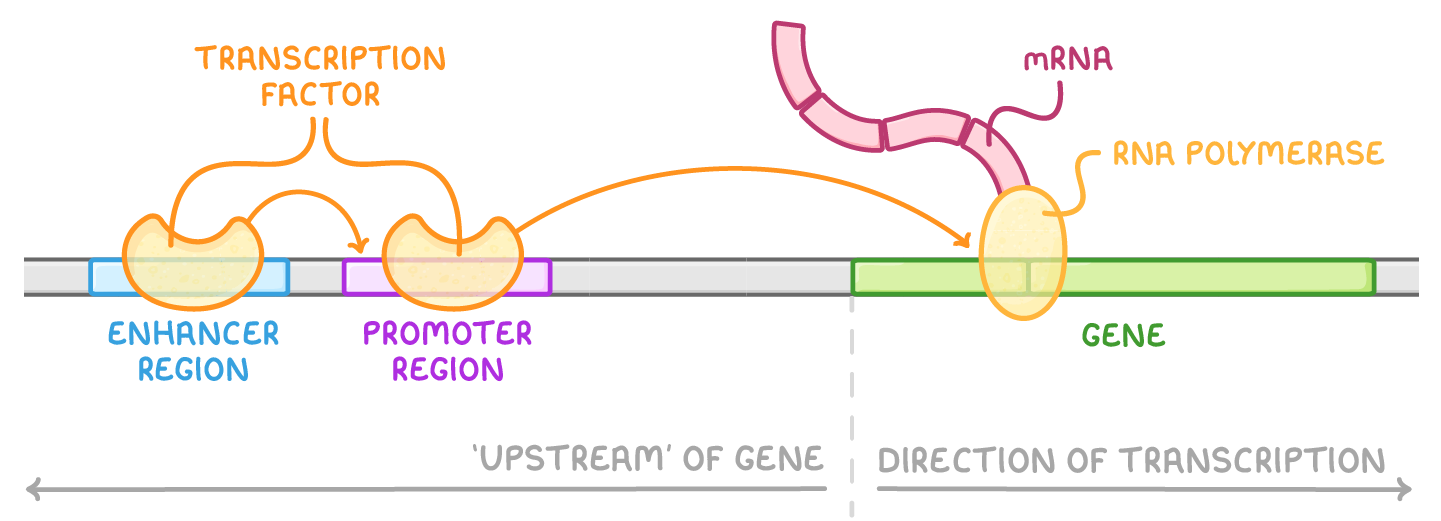
The role of transcription factors and RNA polymerase
- Transcription factors - These are proteins that bind to specific DNA sequences to regulate the transcription of genes. They can act as activators (promoting transcription) or repressors (inhibiting transcription).
- RNA polymerase - This enzyme is responsible for synthesizing RNA by reading the DNA template during transcription. It binds to specific regions of DNA to start the process.
- Promoter regions - These are specific sequences of DNA located near the start of a gene where RNA polymerase and transcription factors bind to initiate transcription. Promoters are typically upstream of the transcription start site (the point where RNA synthesis begins).
- Enhancer regions - These are additional DNA sequences, which can be upstream or downstream of the gene, that transcription factors bind to in order to increase the rate of transcription. They help fine-tune gene expression levels.
When transcription factors bind to promoter or enhancer regions, they help recruit RNA polymerase to the correct location on the DNA. This interaction ensures that the gene is transcribed at the appropriate time, directly affecting which proteins are produced and, consequently, the cell's specific functions and traits (phenotype) of the organism.
Cause and effect of binding on phenotype
- Binding leads to transcription - When transcription factors and RNA polymerase bind to promoter or enhancer regions, transcription is initiated, leading to the production of specific proteins.
- Protein production shapes traits - These proteins can be enzymes, structural components, or signaling molecules that determine physical and functional characteristics of the cell and, by extension, the organism.
- Variation in expression - Different cells bind transcription factors to different genes, resulting in varied protein production that leads to diverse cell types and traits across the organism.
This precise control over which genes are transcribed is a foundational mechanism for how identical DNA in all cells can lead to such a wide array of cell types and organismal characteristics.
The role of negative regulatory molecules in controlling transcription
While some molecules promote gene expression, others work to inhibit it, providing a balancing mechanism to ensure genes are not overexpressed or activated at inappropriate times. These inhibitory molecules are crucial for maintaining cellular function and preventing developmental errors.
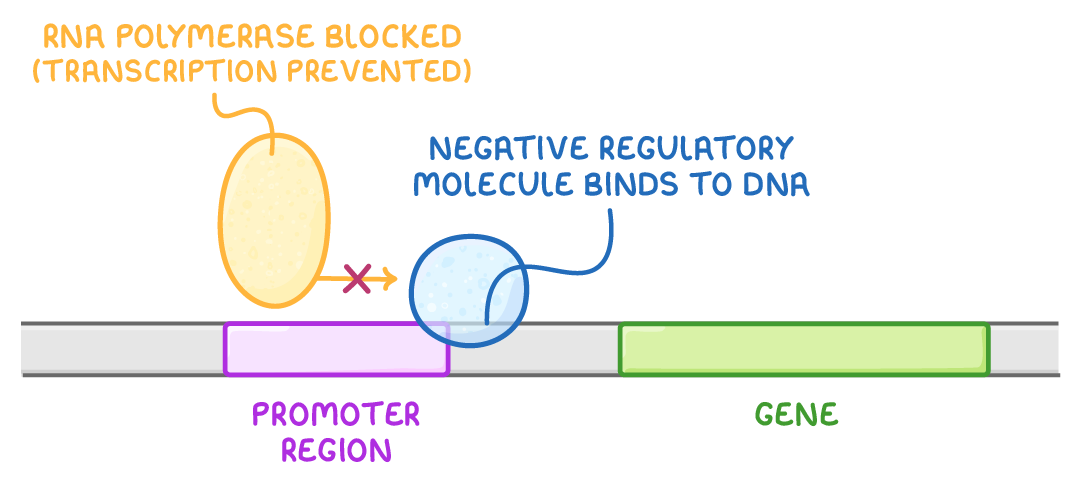
How negative regulation works
- Negative regulatory molecules - These are proteins or other molecules that bind to DNA or transcription factors to prevent transcription from occurring.
- Mechanism of inhibition - By binding to specific DNA sequences or interacting with transcription machinery, these molecules block RNA polymerase from initiating transcription, effectively silencing the gene.
- Impact on gene expression - This inhibition stops the production of certain proteins, which can be just as important as activation in defining a cell's role and the organism's traits.
This process of negative regulation ensures that gene expression is a dynamic and responsive system, allowing cells to adapt to changing conditions or developmental needs by turning genes off when their products are unnecessary or harmful.
The connection between gene regulation and phenotypic differences
Gene regulation refers to the various mechanisms cells use to control which genes are expressed and to what extent. This regulation is directly linked to the differences in appearance and function (phenotype) among cells and organisms, even when they share the same genetic makeup.
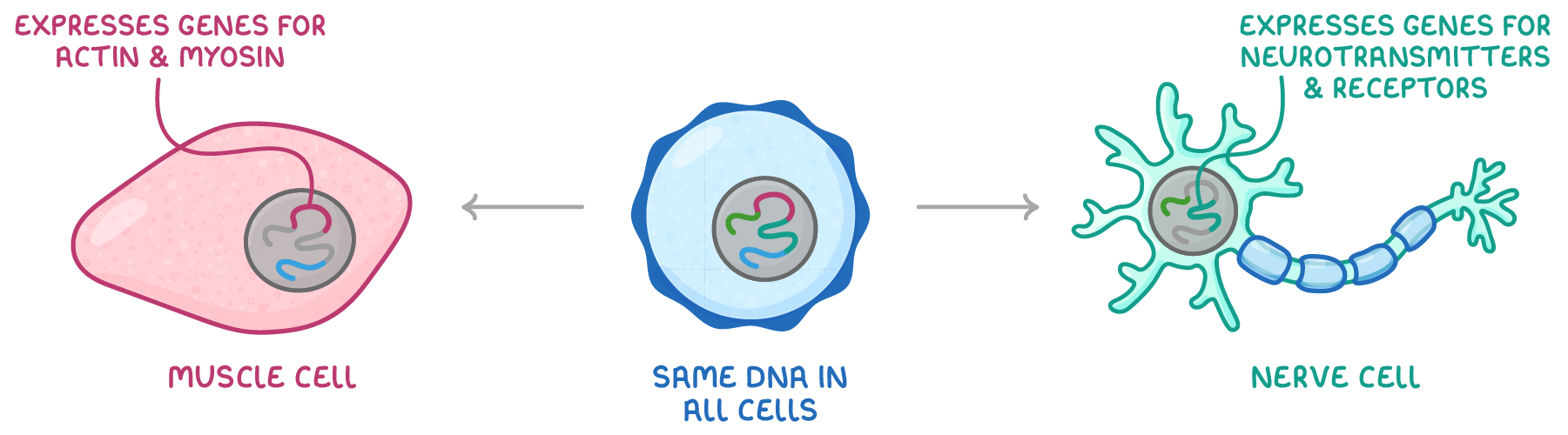
How gene regulation leads to phenotypic diversity
- Differential gene expression - Not all genes are active in every cell. By selectively expressing certain genes, cells produce different sets of proteins, leading to distinct structures and functions. For example, a muscle cell expresses genes for contractile proteins like actin and myosin, while a nerve cell expresses genes for neurotransmitters and receptors.
- Influence on cell products - The specific proteins and other molecules produced as a result of gene expression determine a cell's role, such as whether it contracts like a muscle cell or transmits signals like a neuron.
- Impact on organismal traits - The combined effect of differential gene expression across all cells shapes the organism's overall phenotype, including physical characteristics (like eye color) and physiological capabilities (like immune response).
This connection between gene regulation and phenotype explains why cells with identical DNA can look and behave so differently, and why organisms of the same species can exhibit a range of traits based on how their genes are regulated.
The impact of small RNA molecules on gene expression regulation
Beyond proteins like transcription factors, certain small RNA molecules play a significant role in regulating gene expression. These molecules provide an additional layer of control, fine-tuning which genes are active and influencing cellular functions and organismal traits.
Small RNA molecules
Small RNA molecules are short RNA sequences, such as microRNA (miRNA) and small interfering RNA (siRNA), that do not code for proteins but instead regulate gene expression.
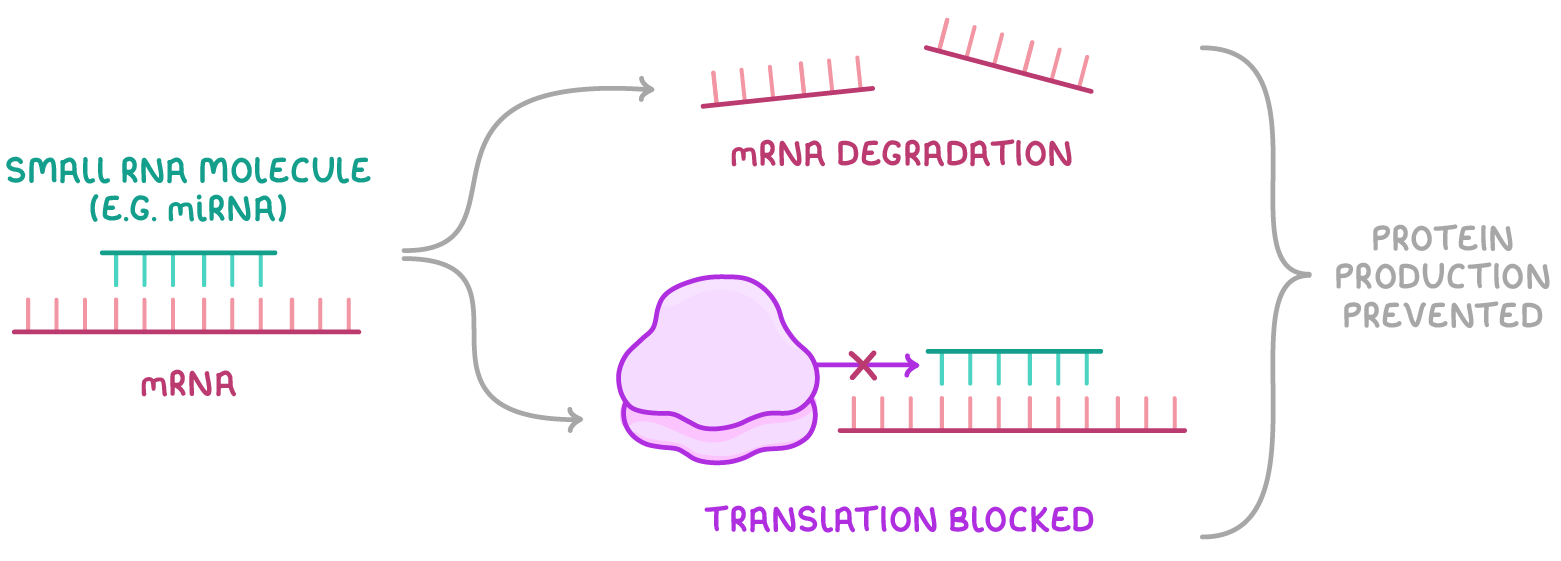
Functions of small RNA molecules in regulation
- Mechanism of action - Small RNA molecules can bind to messenger RNA (mRNA), the intermediate molecule between DNA and protein, to prevent translation or target it for degradation. They can also interact with DNA to silence genes at the transcriptional level.
- Effect on phenotype - By inhibiting specific genes, small RNA molecules influence which proteins are produced, thereby affecting cell function and contributing to the diversity of traits seen in cells and organisms.
This regulatory mechanism adds complexity to gene expression control, allowing cells to respond quickly to environmental changes or developmental cues by modulating gene activity without altering the DNA sequence itself.