6.7 - Mutations
What are mutations and why do they matter?
Mutations are alterations in the DNA sequence of an organism's genome. These changes can occur in various ways and have significant impacts on the proteins produced, which in turn can alter the traits or characteristics (phenotype) of the organism. Understanding mutations is crucial because they can be beneficial, detrimental, or neutral, depending on how they affect the resulting protein and the organism's ability to function in its environment.
Key characteristics of mutations
- Alteration in DNA - Mutations involve changes at the nucleotide level, which are the building blocks of DNA.
- Impact on proteins - These changes can modify the type or amount of protein produced, potentially altering cellular functions.
- Effect on phenotype - The phenotype, or observable traits of an organism, may change as a result of mutated proteins, leading to varied outcomes in health, behavior, or appearance.
- Varied consequences - Mutations can improve survival (beneficial), harm the organism (detrimental), or have no noticeable effect (neutral).
Types of mutations in DNA sequences
Mutations can occur in different forms, each with unique effects on the genetic code and the resulting proteins.
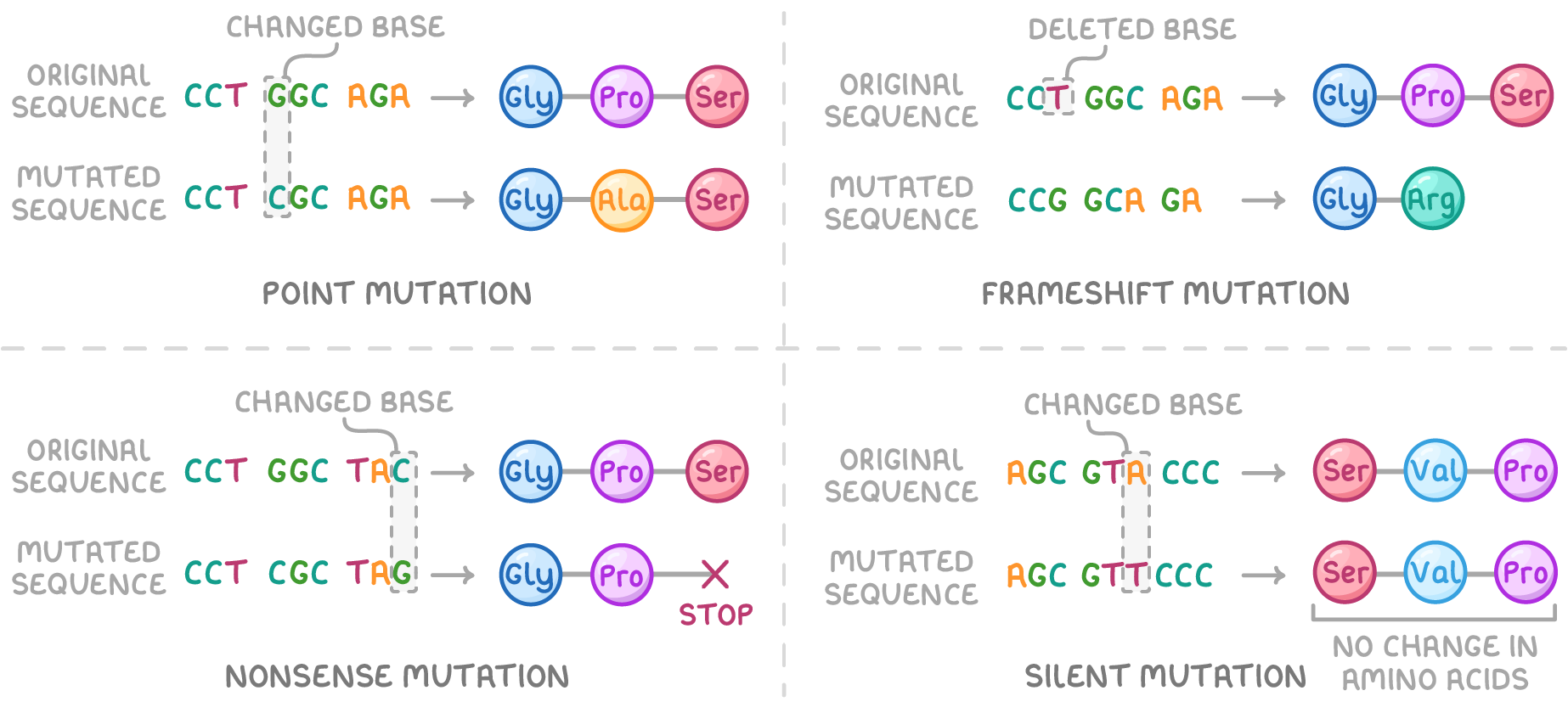
Point mutations
Point mutations occur when a single nucleotide in the DNA sequence is substituted with a different nucleotide. This change can alter a single amino acid in the protein sequence, potentially affecting protein function. For example, a mutation in the CFTR gene, which is involved in ion transport across cell membranes, can lead to cystic fibrosis, a condition characterized by thick mucus buildup in the lungs and digestive system.
Frameshift mutations
Frameshift mutations happen when one or more nucleotides are inserted into or deleted from the DNA sequence, shifting the reading frame of the genetic code. This shift alters how the sequence is read during protein synthesis, often resulting in a completely different and usually nonfunctional protein. These mutations typically have more severe effects compared to point mutations because they disrupt the entire sequence downstream of the mutation.
Nonsense mutations
A nonsense mutation is a type of point mutation that changes a codon (a sequence of three nucleotides that codes for an amino acid) into a premature stop codon. This causes the protein synthesis to stop early, resulting in a truncated, often nonfunctional protein. The shortened protein may fail to perform its necessary role, leading to potential health issues.
Silent mutations
Silent mutations are changes in the DNA sequence that do not alter the amino acid sequence of the protein. Due to the redundancy of the genetic code (multiple codons can code for the same amino acid), these mutations have no effect on protein structure or function. These mutations are neutral and do not typically affect the organism's phenotype.
Causes of mutations and their effects on genotype and phenotype
Mutations arise from various sources and can lead to changes in an organism's genotype (genetic makeup), which may then influence its phenotype.
Sources of mutations
- Errors in DNA replication - During cell division, mistakes can occur as DNA is copied, leading to unintended changes in the sequence.
- DNA repair mechanism failures - Cells have systems to fix DNA damage, but errors in these mechanisms can allow mutations to persist.
- External factors - Exposure to radiation (like UV rays from the sun) or reactive chemicals (such as those in cigarette smoke) can damage DNA, causing random mutations.
Impact on genotype and phenotype
- Genotype changes - Mutations modify the DNA sequence, altering the genetic instructions encoded in the genotype.
- Phenotype changes - If a mutation affects a protein critical to a trait, the phenotype may change. For instance, a mutation in the MC1R gene can cause adaptive melanism in pocket mice, leading to darker fur that provides camouflage in certain environments.
- Environmental context - Whether a mutation is beneficial, detrimental, or neutral often depends on the environment. A mutation providing camouflage in a dark habitat is beneficial, but the same mutation might be detrimental in a light habitat where it makes the organism more visible to predators.
Mutations as a source of genetic variation
Mutations are a fundamental source of genetic variation, which is the diversity of genetic material within a population. This variation is essential for evolution and adaptation to changing environments.
How mutations contribute to variation
- Random changes - Mutations introduce new genetic variants into a population randomly, increasing diversity.
- Foundation for evolution - These genetic differences provide raw material for evolutionary processes, allowing populations to adapt over time.
- Contextual impact - The effect of a mutation often depends on environmental conditions, where a variant might be advantageous in one setting but not in another.
Errors in cell division and their phenotypic effects
Beyond mutations at the DNA level, errors during cell division processes like mitosis (cell division for growth and repair) and meiosis (cell division for producing gametes) can also lead to changes in phenotype. These errors often involve changes in chromosome number or structure.
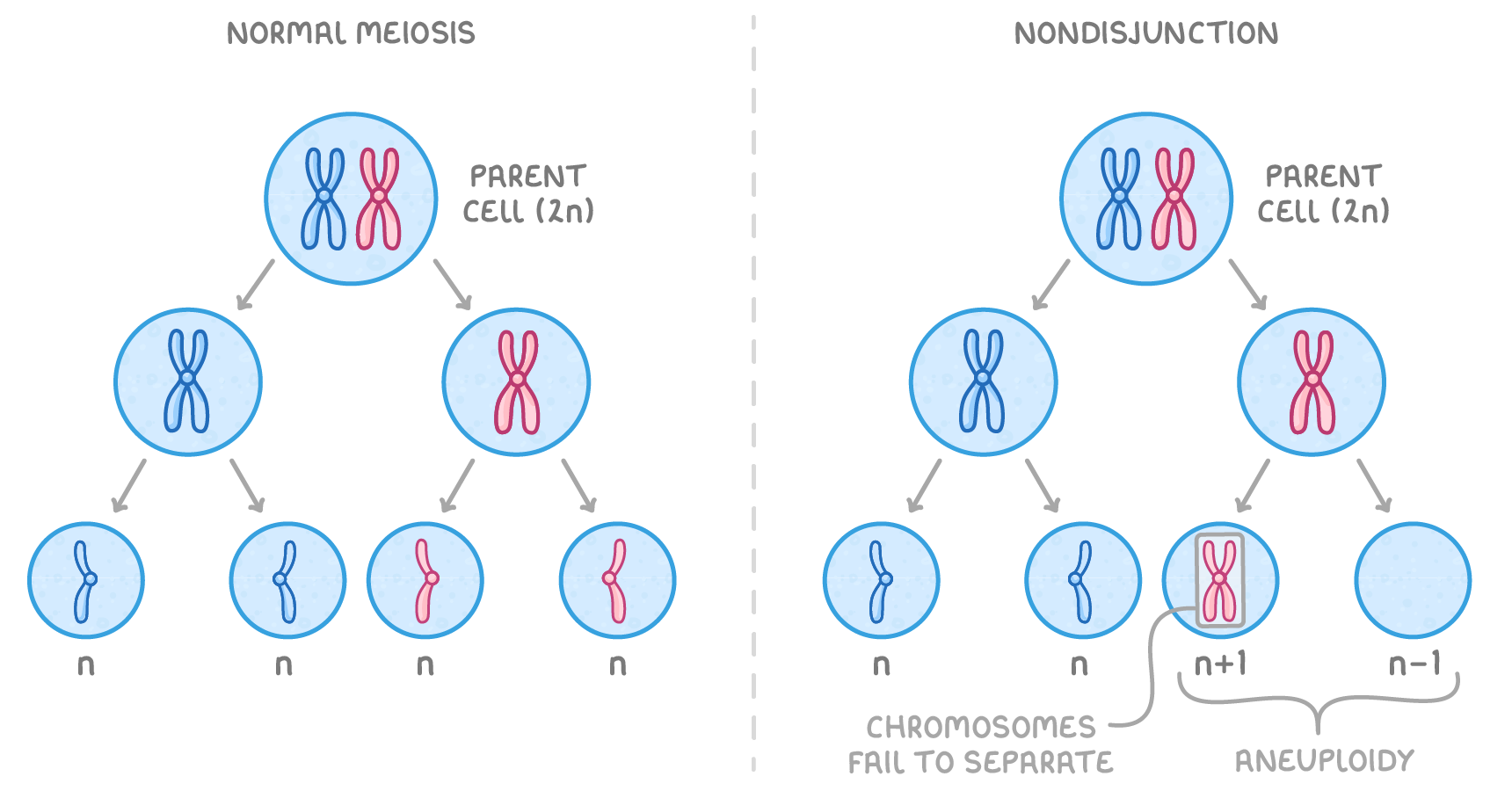
Errors in chromosome number
- Nondisjunction - This occurs when chromosomes fail to separate properly during meiosis, resulting in gametes with an abnormal number of chromosomes.
- Resulting conditions - Nondisjunction can lead to aneuploidy (an abnormal number of chromosomes, such as an extra or missing chromosome).
- Phenotypic impact - These conditions often cause new phenotypes, which may include developmental limitations or distinct physical traits due to the imbalance in genetic material.
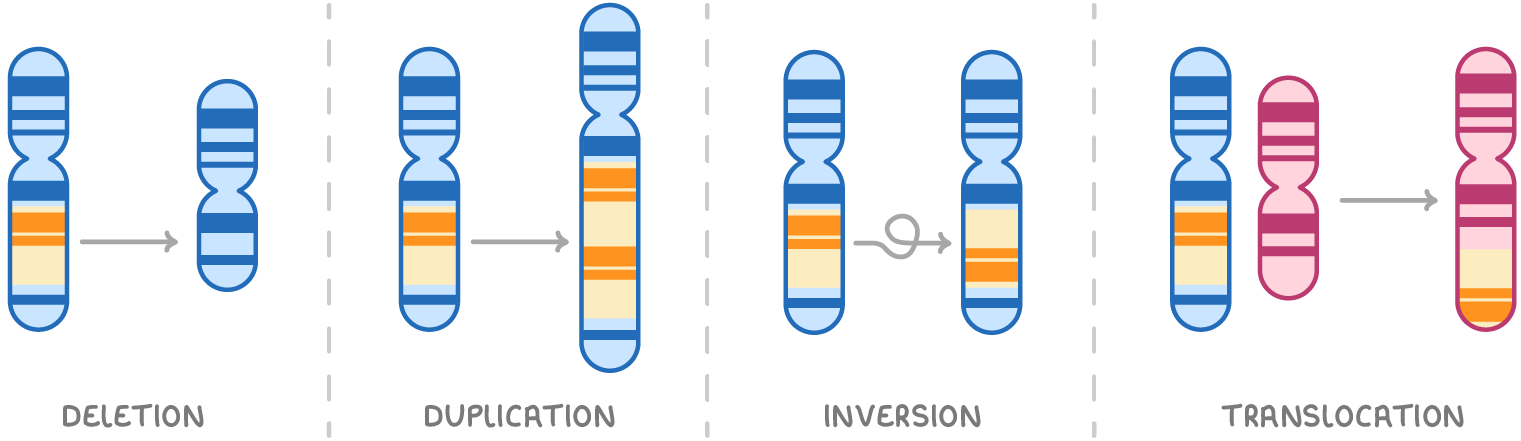
Errors in chromosome structure
- Structural alterations - Changes such as deletions, duplications, inversions, or translocations of chromosome segments can disrupt gene function or regulation.
- Genetic disorders - These alterations often lead to disorders by affecting critical genes or their expression, resulting in abnormal phenotypes.
Mutations, genetic variation, and natural selection
Mutations not only create genetic variation but also play a critical role in natural selection, the process by which environmental pressures favor certain traits over others, driving evolution.
How mutations influence natural selection
- Phenotypic variation - Changes in genotype from mutations can lead to new phenotypes that affect an organism's survival and reproductive success.
- Environmental selection - If a mutation enhances survival or reproduction in a specific environment, it is more likely to be passed on to future generations. For example, a mutation causing sickle cell anemia (a condition where red blood cells are abnormally shaped) can provide resistance to malaria in certain regions, making it advantageous in those environments.
- Evolution through selection - Over time, beneficial mutations can become more common in a population, driving evolutionary change.
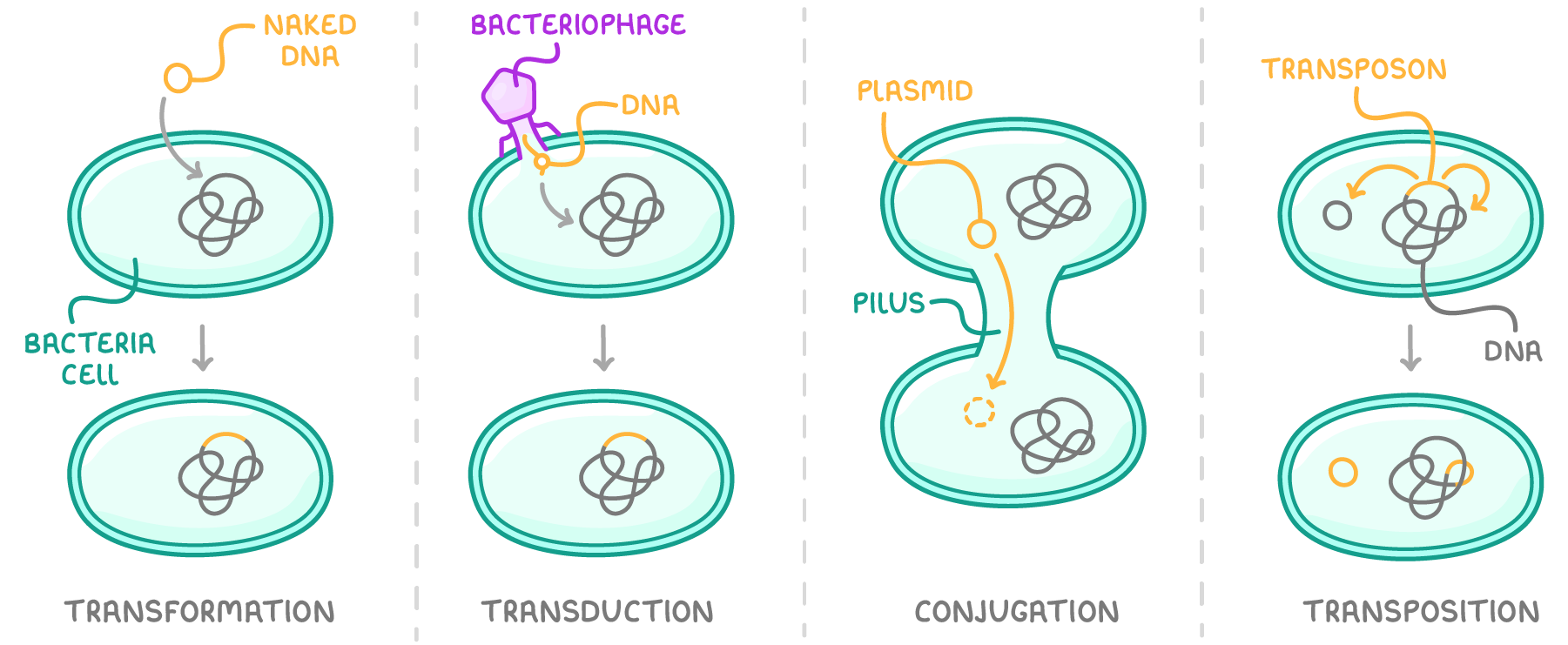
Mechanisms increasing genetic variation in prokaryotes
- Transformation - The uptake of naked DNA from the environment by bacterial cells introduces new genetic material.
- Transduction - Viruses (bacteriophages) transfer genetic information between bacteria, contributing to variation.
- Conjugation - Direct cell-to-cell transfer of DNA, often via a plasmid (a small, circular piece of DNA), allows bacteria to share genetic traits.
- Transposition - Movement of DNA segments (transposons) within or between DNA molecules reshuffles genetic material, creating diversity.
Genetic recombination in viruses
- Host cell infection - When related viruses infect the same host cell, they can recombine their genetic information, producing new viral variants.
- Increased variation - This recombination adds to the genetic diversity of viral populations, potentially leading to new strains with different characteristics.
Conservation of reproductive processes
- Shared mechanisms - Many processes that increase genetic variation, such as sexual reproduction in eukaryotes or conjugation in bacteria, are evolutionarily conserved across diverse organisms.
- Evolutionary advantage - These conserved processes ensure that genetic variation persists, providing populations with the flexibility to adapt to changing environments through natural selection.
By understanding mutations and their broader impacts, the intricate relationship between genetic changes, phenotypic variation, and evolutionary processes becomes clear, highlighting the dynamic nature of life at the molecular level.