7.2 - Natural Selection
The role of natural selection in shaping populations
Natural selection is a key mechanism of evolution, driving the diversity and unity of life on Earth. It is the process by which certain traits become more or less common in a population over generations based on their impact on survival and reproduction. This process acts on the variations present within a population, determining which individuals are more likely to pass their traits to the next generation.
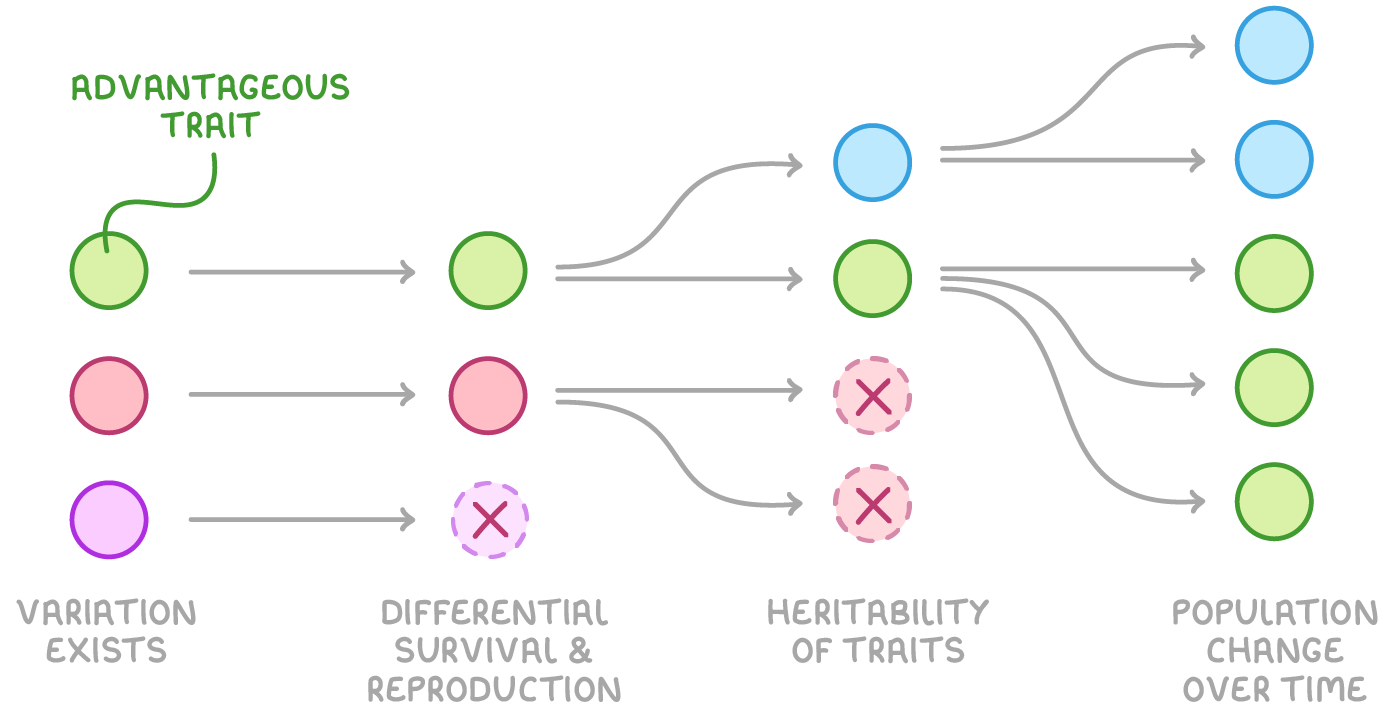
Key principles of natural selection
- Variation exists - Individuals within a population show differences in their traits, known as phenotypic variation (observable characteristics resulting from genetic and environmental influences).
- Differential survival and reproduction - Some traits improve an organism's ability to survive and reproduce in its specific environment, while others may hinder it.
- Heritability of traits - Traits that enhance survival and reproduction are often passed on to offspring, leading to changes in the population over time.
This process ensures that populations adapt to their surroundings, as advantageous traits become more prevalent through successive generations.
The importance of phenotypic variation in evolution
Phenotypic variation refers to the range of observable traits within a population, such as differences in size, color, or behavior. This variation is critical for natural selection because it provides the raw material upon which selective forces act. Without variation, all individuals would be equally suited (or unsuited) to their environment, and adaptation could not occur.
Why phenotypic variation matters
- Basis for selection - Natural selection operates by favoring individuals with traits that are better suited to their environment, increasing their chances of survival and reproduction.
- Adaptation to diverse conditions - Variation allows some individuals to thrive under changing or challenging conditions, ensuring the population's persistence.
- Driving evolutionary change - Over time, the accumulation of favorable traits through natural selection can lead to significant evolutionary changes, including the formation of new species.
Phenotypic variation is often rooted in genetic differences, but it can also be influenced by environmental factors. Regardless of its origin, this diversity is essential for a population's long-term survival.
How environmental changes act as selective pressures
Environments are not static; they change over time due to factors like climate shifts, habitat alterations, or the introduction of new predators or competitors. These changes create selective pressures, forces that influence which individuals in a population are more likely to survive and reproduce. Selective pressures shape populations by favoring traits that enhance fitness in the new conditions.
Understanding selective pressures
- Changing conditions - Environmental shifts, such as temperature changes or resource scarcity, can make certain traits more advantageous or detrimental.
- Impact on survival - Individuals with traits suited to the new environment are more likely to survive and pass those traits to their offspring.
- Population adaptation - Over generations, the frequency of advantageous traits increases, allowing the population to better cope with the altered environment.
Example: Flowering time in plants and climate change
Global climate change has altered temperature and seasonal patterns, affecting the timing of flowering in plants. Plants that flower at times aligned with pollinator availability or optimal growing conditions are more likely to reproduce successfully. As a result, natural selection may favor individuals with genetic variations that adjust flowering time to match these new environmental cues, demonstrating how selective pressures drive adaptation.
The connection between molecular variation and organism fitness
Fitness, in evolutionary terms, refers to an organism's ability to survive and reproduce in its environment, passing its genes to the next generation. Variation in the molecules within cells, such as proteins or enzymes, can significantly influence an organism's fitness by affecting how well it functions under specific conditions.
How molecular variation affects fitness
- Diversity in cellular components - Differences in the number and types of molecules within cells can enable organisms to respond differently to environmental challenges.
- Survival advantages - Certain molecular variations may provide benefits, such as improved metabolic efficiency or resistance to stressors, increasing an organism's likelihood of survival.
- Reproductive success - Molecular traits that enhance survival often translate to better reproductive outcomes, ensuring those variations are passed on to future generations.
This connection highlights how even small-scale differences at the molecular level can have profound effects on an organism's ability to thrive in diverse environments.
Real-world examples of natural selection in action
Natural selection is not just a theoretical concept; it can be observed in various organisms and contexts. The following examples illustrate how phenotypic and molecular variations interact with environmental pressures to shape populations.
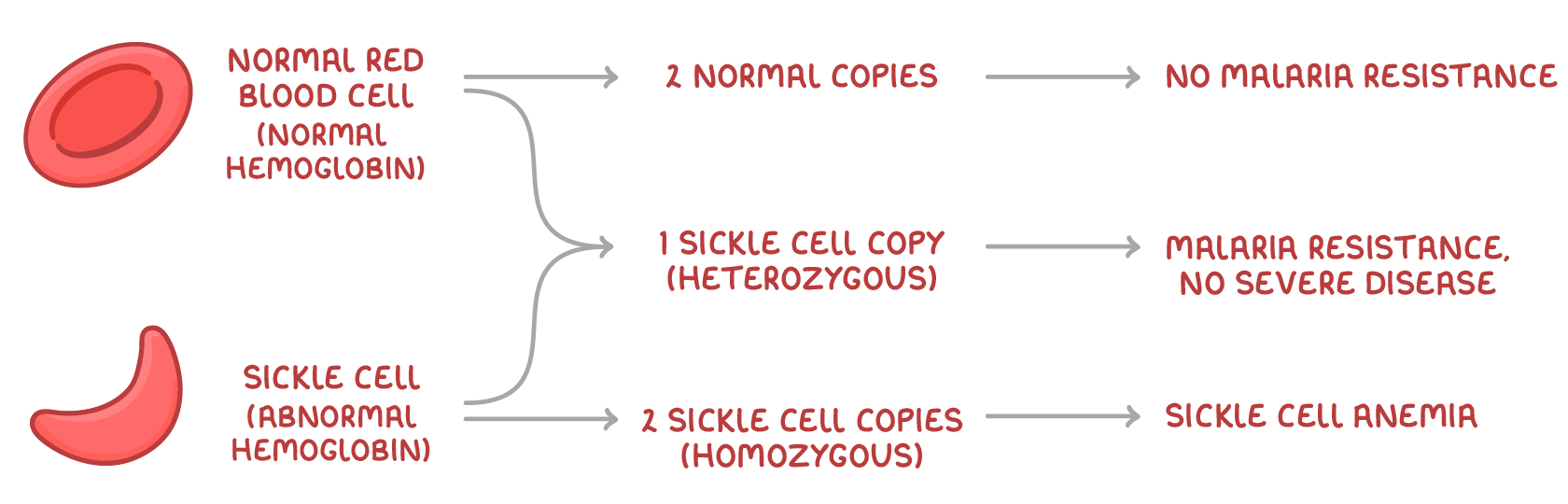
Sickle cell anemia and malaria resistance
- Trait description - Sickle cell anemia is a genetic disorder caused by a mutation in the hemoglobin gene, leading to abnormally shaped red blood cells. Hemoglobin is the protein in red blood cells responsible for carrying oxygen.
- Environmental pressure - In regions where malaria (a parasitic disease transmitted by mosquitoes) is prevalent, individuals with one copy of the sickle cell gene (heterozygous) have a survival advantage because their altered red blood cells are less hospitable to the malaria parasite.
- Fitness impact - While having two copies of the sickle cell gene (homozygous) causes severe health issues, having one copy increases fitness by providing resistance to malaria without the full disease. This balance results in a higher frequency of the sickle cell trait in malaria-endemic areas, showcasing natural selection's role in maintaining certain traits.
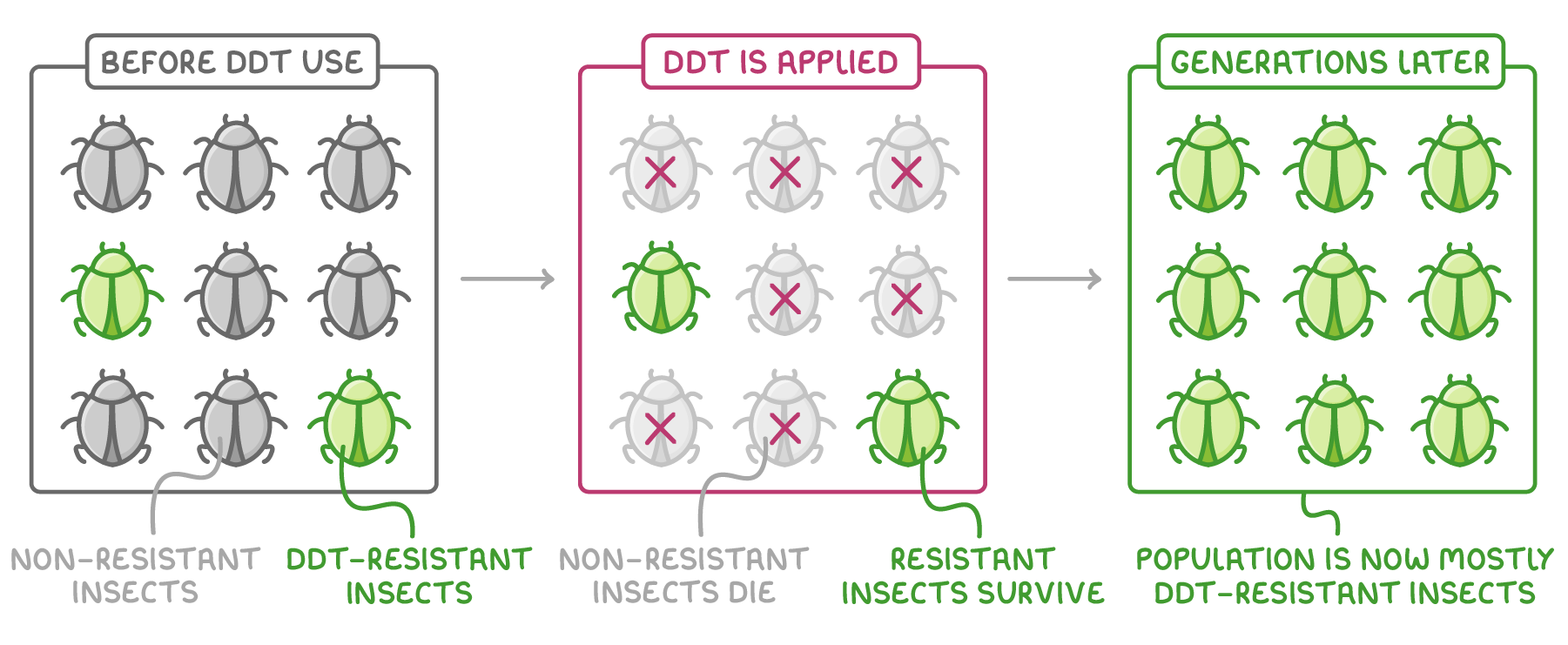
DDT resistance in insects
- Trait description - DDT (dichlorodiphenyltrichloroethane) is a pesticide once widely used to control insect populations. Some insects developed genetic mutations that altered enzymes or target sites in their cells, rendering DDT less effective.
- Environmental pressure - Widespread DDT use created a strong selective pressure, as insects without resistance were more likely to die before reproducing.
- Fitness impact - Insects with resistance mutations had a higher survival rate and reproduced more successfully, leading to an increase in resistant individuals within populations. This example demonstrates how human-induced environmental changes can drive rapid evolutionary shifts through natural selection.
These cases underscore the dynamic interplay between variation, environmental pressures, and fitness, illustrating how natural selection continuously shapes life on Earth.