6.8 - Biotechnology
The role of biotechnology in genetic engineering
Biotechnology is a field of science that uses biological systems, organisms, or derivatives to develop products and processes for specific uses. In the context of genetic engineering, it involves techniques to analyze and manipulate DNA (deoxyribonucleic acid), the molecule that carries genetic information in living organisms, and RNA (ribonucleic acid), which plays a key role in protein synthesis. These techniques allow scientists to study genetic material at a molecular level, opening doors to advancements in medicine, agriculture, and forensics.
Genetic engineering is a subset of biotechnology focused on directly altering the genetic makeup of organisms. This can involve inserting, deleting, or modifying specific DNA sequences to achieve desired traits or outcomes. Understanding these techniques is essential for exploring how living systems store, retrieve, and transmit information critical to life processes.
Key techniques for analyzing and manipulating DNA
Several foundational techniques are used in genetic engineering to work with DNA and RNA. While the intricate details of these processes are beyond the scope of typical AP Biology exams, grasping their basic principles and purposes is crucial for understanding how genetic material is studied and modified.
Gel electrophoresis
Gel electrophoresis is a laboratory method used to separate DNA fragments based on their size and electrical charge. This technique helps scientists visualize and analyze DNA by creating distinct bands of fragments, which can be compared across samples.
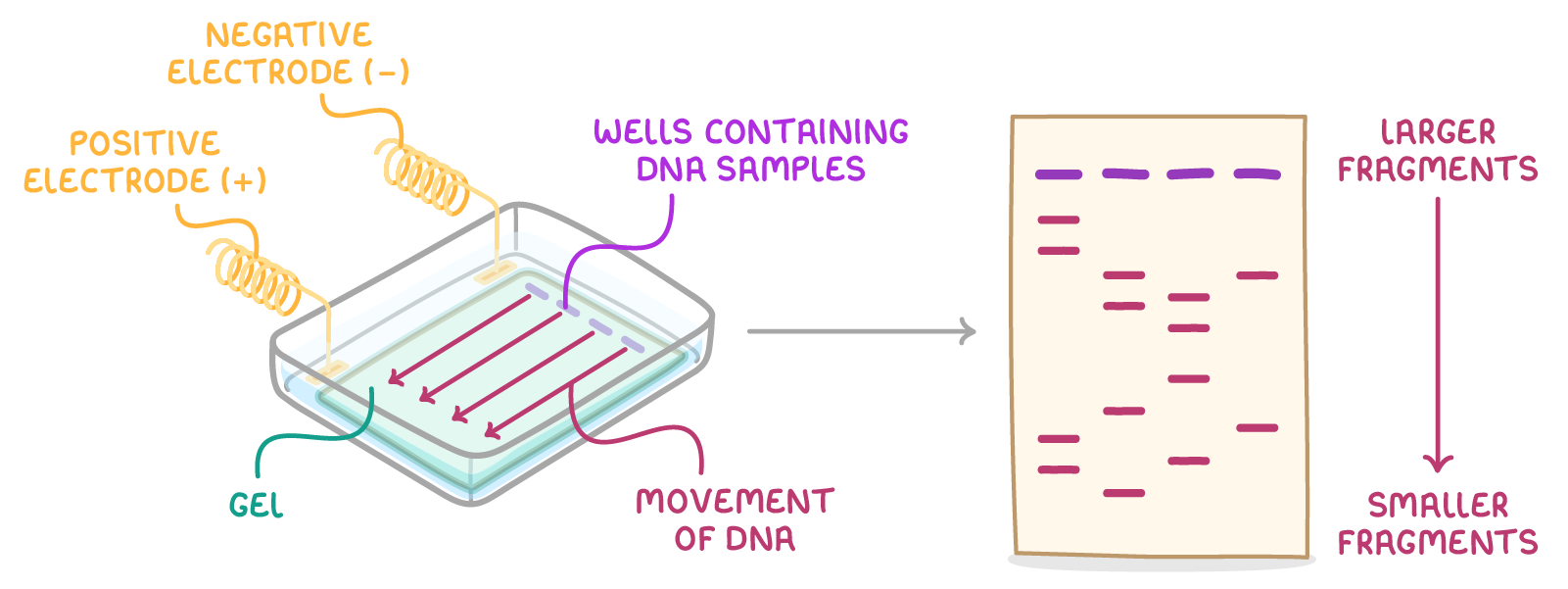
How gel electrophoresis works:
- DNA, which carries a negative charge, is placed in a gel matrix and subjected to an electric field.
- Smaller fragments move faster through the gel towards the positive electrode, while larger ones move slower, resulting in separation by size.
- Often used to identify specific DNA sequences or compare genetic material from different sources.
Polymerase chain reaction (PCR)
Polymerase chain reaction, commonly known as PCR, is a technique used to make multiple copies (amplify) of a specific DNA segment. PCR allows scientists to generate large quantities of DNA from a small sample, making it easier to study or manipulate.
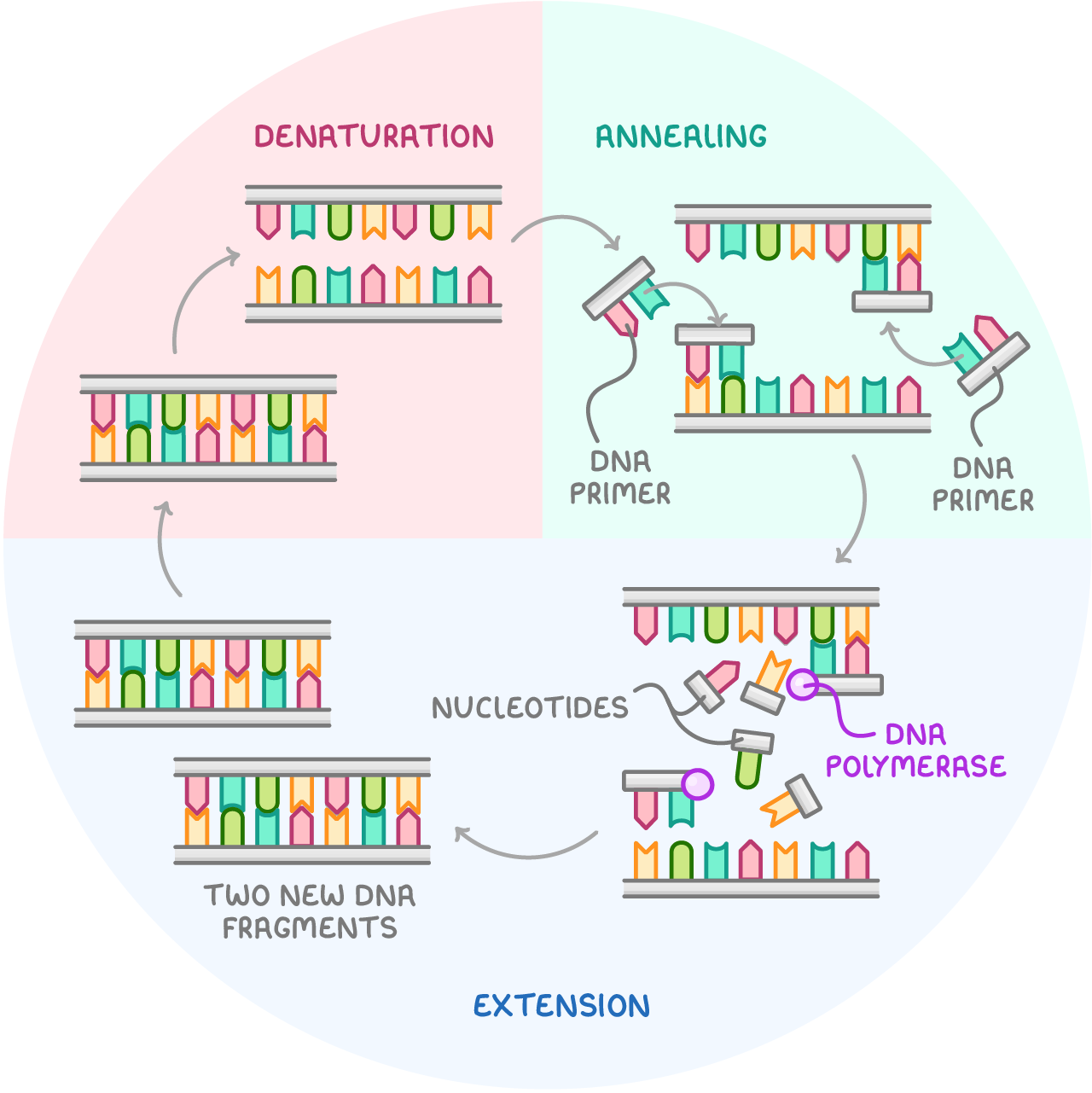
The PCR process involves three key steps repeated in cycles:
- Denaturation - Heating the DNA to separate it into single strands by breaking hydrogen bonds between base pairs.
- Annealing - Cooling the mixture to allow short DNA sequences called primers to bind to specific sites on the single-stranded DNA.
- Extension - Heating again to enable a heat-stable enzyme, DNA polymerase, to build new DNA strands by adding nucleotides to the primers.
PCR is essential for genetic research, diagnostics, and creating enough DNA for further analysis or cloning.
Bacterial transformation
Bacterial transformation is a process where bacteria take up foreign DNA from their environment. This technique is used to introduce new genes into bacterial cells, often to produce specific proteins or study gene function.
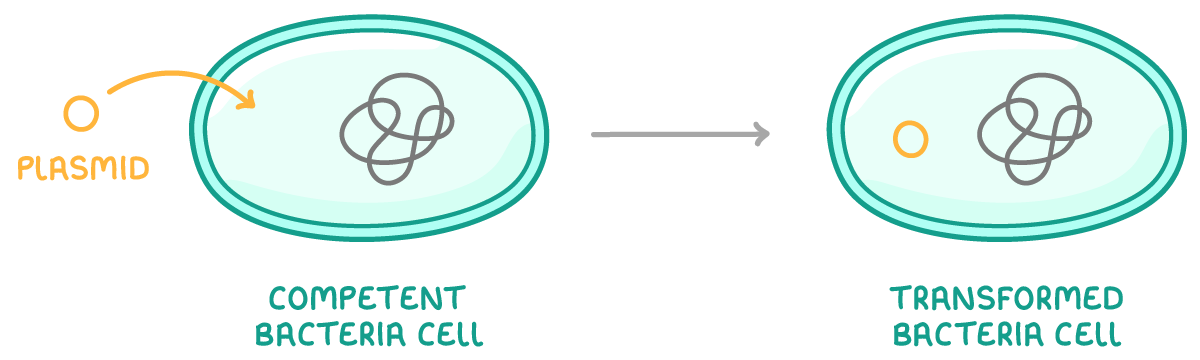
How bacterial transformation works:
- Bacteria are made "competent" (more permeable) through chemical treatment or electric shock.
- This allows them to absorb external DNA, such as plasmids (small, circular DNA molecules).
- Widely used in creating genetically modified bacteria for research or industrial purposes, like producing insulin.
DNA sequencing
DNA sequencing is a method used to determine the precise order of nucleotides (adenine, thymine, cytosine, and guanine) in a DNA molecule. It provides a detailed "readout" of genetic information, allowing scientists to understand gene structure and function.
How DNA sequencing works:
- Modern sequencing technologies break DNA into fragments, read the sequence of each fragment, and assemble the data to reconstruct the full sequence.
- Generates a unique DNA fingerprint, a pattern representing an individual's or organism's genetic makeup, which can be used for comparisons between samples.
Applications of genetic engineering in various fields
Genetic engineering techniques have far-reaching impacts across multiple domains. By manipulating DNA, scientists can address complex biological questions and develop practical solutions to real-world problems.
Identifying organisms and phylogenetic analysis
- Using PCR, scientists can amplify specific DNA regions to study genetic similarities and differences among organisms.
- These amplified fragments help construct evolutionary trees, showing how closely related different species are based on their genetic makeup.
- Comparing DNA sequences from various plants can reveal their evolutionary history and aid in classifying them accurately.
Forensic identification through DNA analysis
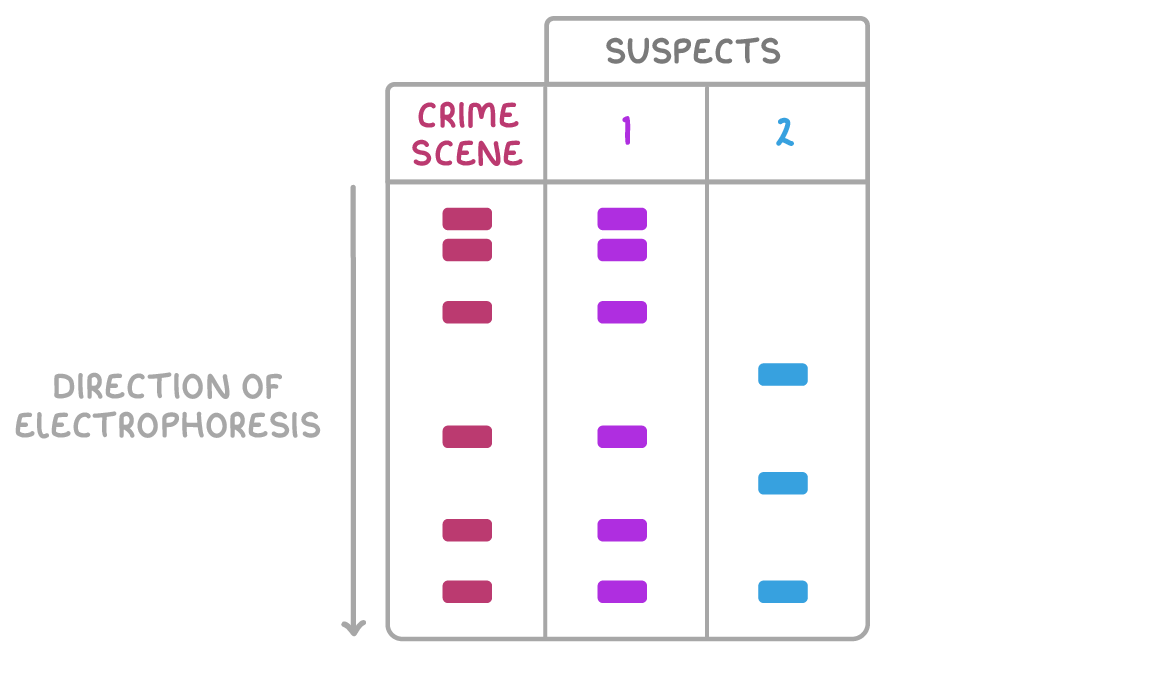
- Techniques like gel electrophoresis and DNA sequencing produce unique patterns that can identify individuals from biological samples (e.g., blood, hair).
- Used in criminal investigations to match suspects to evidence or identify victims through genetic profiles.
- Provides a highly reliable method for personal identification, as each person's DNA fingerprint is unique (except in identical twins).
Genetically modified organisms (GMOs)
- Transgenic animals are organisms that have had foreign DNA inserted into their genome.
- Often created for research (e.g., studying disease mechanisms) or agricultural benefits (e.g., producing animals with enhanced traits).
- Mice engineered to express human genes help scientists study human diseases in a controlled model.
Gene cloning for DNA propagation
- Gene cloning is the process of making multiple identical copies of a specific DNA fragment, often using bacterial transformation.
- Allows scientists to propagate and study specific genes or produce large quantities of a desired DNA sequence.
- Used in creating libraries of DNA fragments for research or producing proteins like enzymes or hormones in industrial settings.
The connection between experimental results and broader biological concepts
Genetic engineering techniques not only provide tools for manipulating DNA but also deepen our understanding of fundamental biological processes. The results from these experiments often have implications that connect to larger theories and concepts in biology.
Linking techniques to information storage and transmission
- Living systems store, retrieve, and transmit genetic information essential for life, a principle central to biology.
- Techniques like PCR and DNA sequencing reveal how DNA serves as the blueprint for life, encoding instructions for building and maintaining organisms.
- By amplifying or sequencing DNA, scientists can explore how genetic information is passed from one generation to the next or how mutations lead to diversity or disease.
Experimental results and evolutionary theory
- Comparing DNA sequences using amplified fragments from PCR helps confirm evolutionary relationships, supporting the theory of common ancestry.
- DNA fingerprinting shows genetic variation within populations, providing data on how evolutionary forces like natural selection shape diversity.
- These techniques validate and expand on Darwinian concepts by offering molecular evidence for evolutionary biology.
Practical applications and ethical considerations
- The creation of transgenic animals through bacterial transformation ties directly to concepts of heredity and gene function, showing how traits can be engineered.
- These experiments illustrate how genetic information can be manipulated, raising questions about gene regulation and expression in natural systems.
- Results from genetic engineering also connect to broader societal and ethical theories, prompting discussions on the limits of altering life at a genetic level.
By understanding the outcomes of genetic engineering experiments, the intricate relationships between DNA, organismal function, and evolutionary processes become clearer, providing a foundation for both scientific advancement and critical thinking in biology.