8.6 - Biodiversity
The concept of biodiversity and its importance in ecosystems
Biodiversity refers to the variety of life within an ecosystem, including the number of different species, their genetic diversity, and the variety of habitats and ecological roles present. This diversity is crucial for the health and stability of ecosystems, as it supports a wide range of interactions and functions that sustain life.
Why biodiversity matters
- Ecosystem productivity - Diverse ecosystems tend to be more productive because each species has a unique role, or niche, that contributes to the overall functioning of the system.
- Stability and balance - A variety of species ensures that ecosystems can maintain balance, as different organisms can compensate for fluctuations in others' populations.
- Resource availability - Biodiversity provides a range of resources, such as food, medicine, and materials, which are essential for human survival and well-being.
Biodiversity acts as a foundation for ecosystem health, influencing how well an ecosystem can withstand and recover from disturbances.
The relationship between ecosystem diversity and resilience to environmental changes
Ecosystem resilience is the ability of an ecosystem to resist, absorb, or recover from disturbances, such as natural disasters, climate shifts, or human activities. The level of diversity within an ecosystem plays a critical role in determining its resilience to such changes.
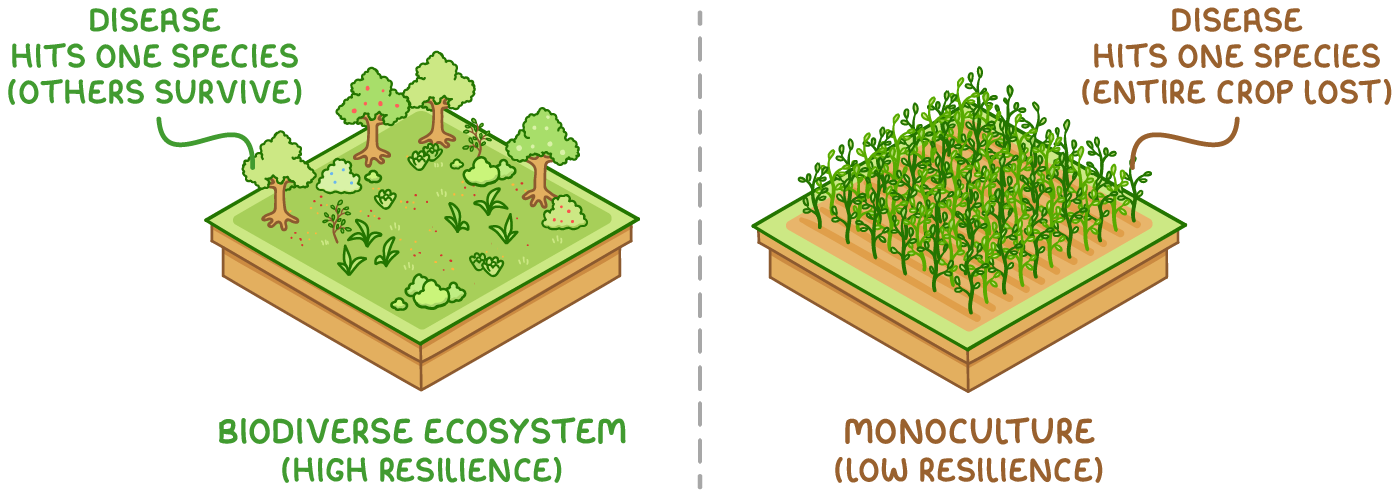
Diversity and resilience connection
- Low diversity, low resilience - Ecosystems with fewer species or less variety among their components are often less resilient. For example, a monoculture crop field (a field with only one type of plant) can be devastated by a single pest or disease because there are no alternative species to maintain ecosystem functions.
- High diversity, high resilience - Ecosystems with many species and varied interactions can better withstand changes. In a diverse forest, if one tree species is affected by disease, others with different resistances can continue to provide canopy cover, soil stability, and habitat.
Diverse ecosystems often have multiple species performing similar roles. This redundancy means that if one species declines, others can fill its role, preventing ecosystem collapse.
The roles of keystone species, producers, and essential factors in maintaining diversity
Certain components of an ecosystem are particularly important for sustaining biodiversity and overall ecosystem health. These include keystone species, producers, and both abiotic (non-living) and biotic (living) factors that shape the environment and interactions within it.
Key contributors to ecosystem diversity
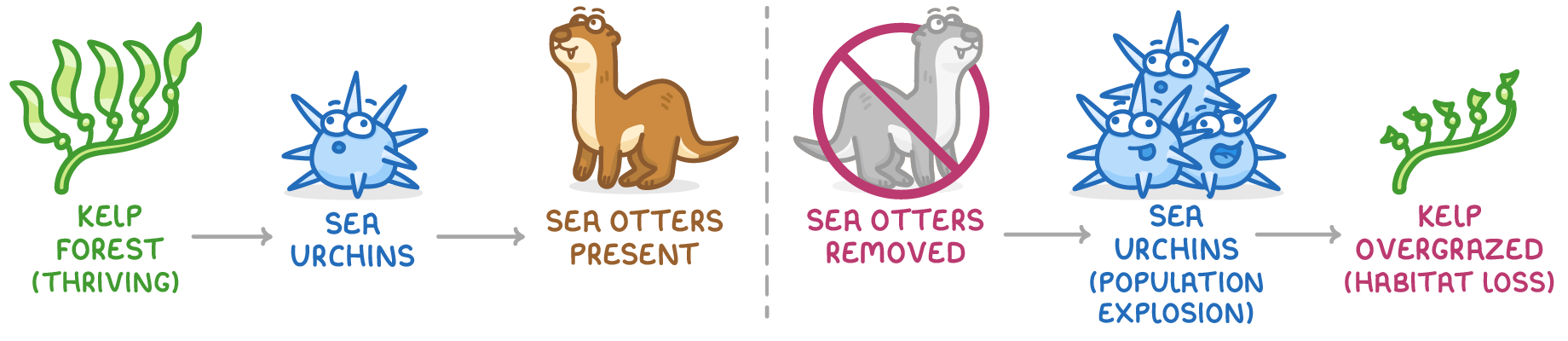
- Keystone species - These are species whose impact on the ecosystem is disproportionately large compared to their abundance. Their presence or absence can significantly alter the structure and diversity of the community. For example, sea otters in kelp forest ecosystems control sea urchin populations, preventing overgrazing of kelp and maintaining habitat for numerous other species.
- Producers - These are organisms, such as plants and algae, that convert sunlight into energy through photosynthesis, forming the base of the food web. They support biodiversity by providing energy and resources for a wide range of consumers, from herbivores to top predators.
- Essential abiotic factors - Non-living components like water, soil, temperature, and sunlight influence which species can thrive in an ecosystem. For instance, the availability of water in a desert ecosystem determines the types and diversity of plants and animals that can survive there.
- Essential biotic factors - Living components, such as pollinators, decomposers, and predators, interact with other species to maintain ecosystem balance. Pollinators, for example, ensure plant reproduction, which sustains diverse plant communities and the animals that depend on them.
These elements work together to create a web of interactions that supports biodiversity, ensuring that ecosystems remain dynamic and capable of supporting varied life forms.
The short-term and long-term effects of adding or removing ecosystem components
Changes to an ecosystem, such as the introduction or removal of a species or factor, can have immediate (short-term) and cascading (long-term) effects on its structure and function. Understanding these impacts helps predict how ecosystems respond to disturbances.
Short-term effects of component changes
- Addition of a species - Introducing a new species, such as an invasive plant or animal, can disrupt existing interactions. For example, introducing a predatory fish into a lake may immediately reduce populations of native fish, altering food availability for other predators.
- Removal of a species - Removing a species can cause rapid shifts in community dynamics. If a major herbivore is removed, plant overgrowth may occur in the short term, affecting light availability for smaller plants.
- Abiotic alterations - Changes in abiotic factors, such as a sudden drought, can quickly stress species adapted to specific conditions, leading to immediate declines in population sizes for water-dependent organisms.
Long-term effects of component changes
- Ecosystem restructuring - Over time, the addition of an invasive species can lead to the extinction of native species, permanently altering food webs and habitat structures. For instance, invasive plants may outcompete natives, reducing biodiversity and changing soil chemistry.
- Collapse from keystone loss - The removal of a keystone species often leads to long-term ecosystem collapse. In the case of sea otters, their removal allows sea urchins to overgraze kelp forests, leading to habitat loss for fish and other marine life over extended periods.
- Adaptation or recovery - Some ecosystems may adapt to changes over time if diversity remains high. For example, after the removal of a predator, prey species may increase in number, but new predators or environmental pressures might eventually restore balance.
These effects highlight the interconnectedness of ecosystem components and the importance of considering both immediate and future consequences of any change.
Predicting ecosystem responses to disruptions
Being able to predict how ecosystems will respond to disruptions is a critical skill in ecology. By understanding the roles and interactions of different components, it's possible to anticipate the causes and effects of changes within biological systems.
Factors to consider when predicting outcomes
- Role of the affected component - Determine if the disrupted component is a keystone species, a producer, or a critical abiotic factor. Losing a keystone species, for example, is likely to have a more severe impact than losing a species with a minor role.
- Level of diversity - Assess the ecosystem's biodiversity. High diversity often buffers against disruptions, as other species can compensate for losses, while low diversity increases vulnerability.
- Type of disruption - Consider whether the change is natural (e.g., a wildfire) or human-induced (e.g., pollution). Human-induced changes often persist longer and may prevent recovery without intervention.
- Scale of impact - Evaluate whether the disruption affects a small area or the entire ecosystem. Localized disturbances might allow recovery through migration from unaffected areas, while widespread changes can lead to broader collapse.
Example scenarios for prediction
| Disruption | Likely short-term effect | Potential long-term effect |
|---|---|---|
| Removal of a keystone predator | Increase in prey population, overgrazing of plants | Ecosystem collapse due to habitat loss |
| Introduction of an invasive species | Competition with native species, population declines | Loss of native species, altered food webs |
| Loss of water availability | Stress on plants and animals, reduced reproduction | Shift to drought-tolerant species, reduced diversity |
By analyzing these factors, predictions can be made about how ecosystems might respond to specific changes, aiding in conservation efforts and management strategies to protect biodiversity and resilience.