8.12 - Military Intervention & Aid
What is military intervention
Military intervention occurs when one country deploys its armed forces or resources to influence events in another country. This involvement can take various forms and often stems from a mix of motives, including protecting human rights or pursuing national interests.
Types of military intervention
- Military aid - Providing resources such as weapons, training, or financial support to strengthen another country's armed forces.
- Indirect support - Assisting an ally's military efforts without direct combat involvement, such as offering logistical help or intelligence.
- Direct intervention - Engaging actively in conflict, for example through airstrikes, invasions, or declaring war.
These actions can demonstrate a country's power and expand its influence, but they frequently spark controversy due to their potential impact on international relations and human rights.
Justifications for military intervention
Countries often need to explain their reasons for intervening in another nation's affairs to gain domestic and international support. While strategic, political, or economic goals may drive these decisions, human rights concerns are commonly cited as a primary justification.
Human rights as a basis for intervention
- Human rights refer to the basic freedoms and protections that all individuals should enjoy, such as freedom from torture or genocide.
- Some interventions are framed as necessary to prevent violations of these rights.
- The concept of a 'just war' suggests that military action is only acceptable for morally defensible reasons, like stopping mass atrocities. Without such justification, interventions risk global criticism and retaliation.
- But there can be strategic motivations behind human rights claims, as interventions may also aim to secure resources, support allies, or eliminate threats. For instance, a country might intervene to gain access to oil reserves while publicly emphasising human rights protection.
This dual purpose can lead to questions about the true intentions of intervening nations, especially when their own records on human rights are inconsistent.
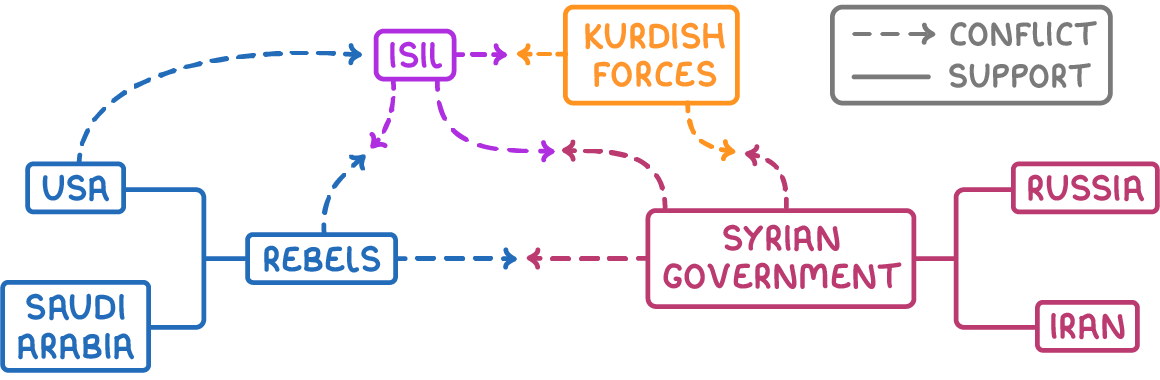
Military aid and its effects on human rights
Military aid forms part of development assistance, where one country helps another build its armed forces. While it can foster alliances, it sometimes enables human rights abuses, creating contradictions for donor nations that publicly champion human rights.
Forms and purposes of military aid
- Types of aid - Includes training personnel, supplying weapons, offering credits for arms purchases, or selling equipment at discounted rates.
- Strategic benefits - Donor countries use aid to form alliances and ensure recipients can support shared interests, such as joint military operations.
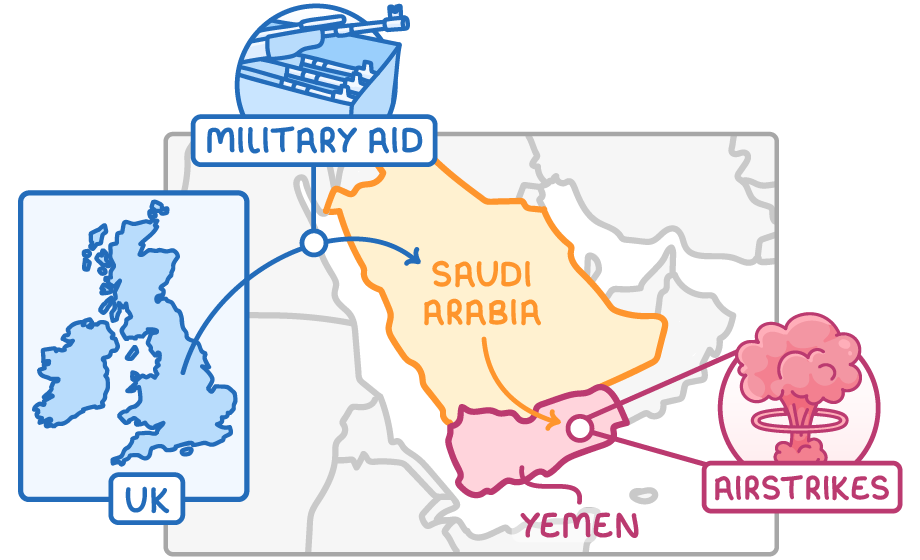
Major donors like the USA and France often provide aid to countries with poor human rights records, such as Saudi Arabia and India. This can weaken the donors' credibility, as they criticise some nations for abuses while arming others.
Global arms trade patterns
The arms trade illustrates how military aid flows from exporters to importers, often influencing human rights dynamics.
Top arms exporters and importers (2015-2019):
| Country | Role | Percentage of world trade |
|---|---|---|
| USA | Exporter | 34% |
| Russia | Exporter | 19% |
| France | Exporter | 8.5% |
| Saudi Arabia | Importer | 11% |
| India | Importer | 9.5% |
| Egypt | Importer | 6.1% |
These figures show that leading exporters, who often advocate for human rights, supply arms to importers with questionable human rights practices.
The 'war on terror' and human rights contradictions
The 'war on terror' refers to the global campaign launched by the USA after the 11 September 2001 attacks by al-Qaeda (a terrorist organisation), which killed around 3,000 people. This initiative involved direct and indirect interventions, justified in part by human rights, but it also led to abuses by the interveners.
Interventions in Afghanistan and Iraq
- Afghanistan invasion (2001) - The USA and allies targeted al-Qaeda's base under Taliban rule. The Taliban imposed strict limits on women's rights and used harsh punishments. Interveners claimed removing the Taliban would advance human rights, particularly for women.
- Iraq invasion (2003) - The USA argued that overthrowing Saddam Hussein's dictatorship would end abuses against groups like the Kurds and eliminate threats from weapons of mass destruction.
- Broader actions - The USA provided aid and support in countries like Somalia and Yemen, without UN Security Council approval for the main invasions.
Despite these justifications, the Taliban regained control of Afghanistan in 2021 after foreign troops withdrew, raising questions about the long-term impact.
Human rights abuses by intervening countries
- Although human rights were used to rationalise the interventions, some participating nations committed violations, contradicting their stated goals.
- US forces tortured prisoners at Abu Ghraib in Iraq and held suspects without trial at Guantánamo Bay, a US prison in Cuba.
- These actions breach the Universal Declaration of Human Rights, which prohibits torture and inhumane punishment. The USA and allies have signed this and other anti-torture agreements, making their violations particularly hypocritical.
This irony shows how human rights rhetoric can mask other motives, while the interventions themselves sometimes perpetuate abuses.