8.6 - Migration from Former Colonies
Historical migration patterns
Migration has played a key role in shaping the ethnic diversity and cultural heterogeneity of nation states. These patterns often stem from colonial histories, where imperial core countries established connections with their colonies.
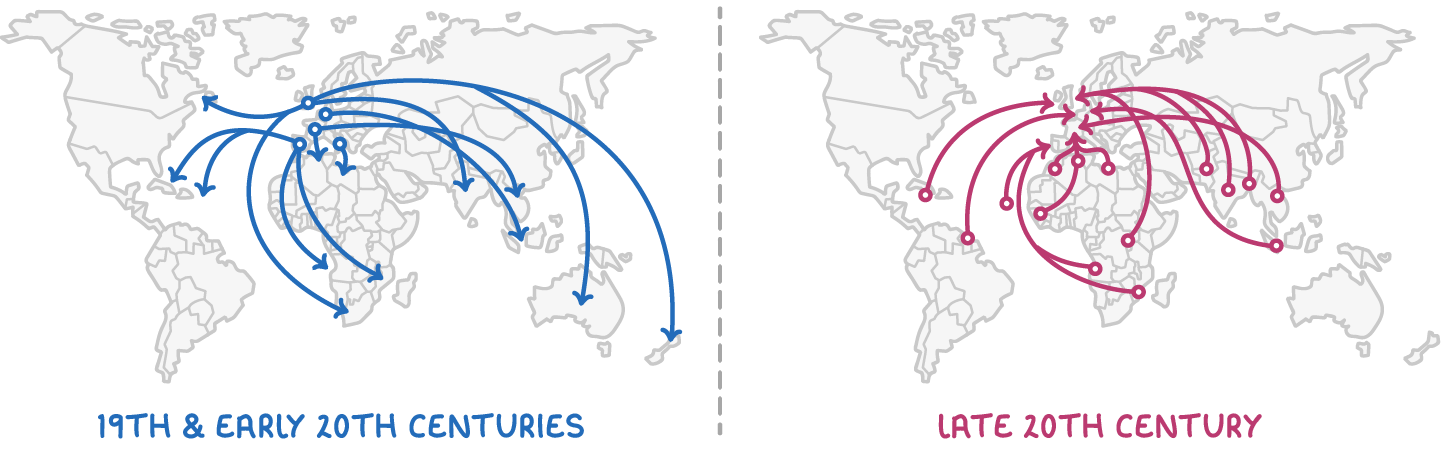
Migration in the 19th and early 20th centuries
During this period, large-scale movement occurred from European countries to their colonies. Millions of Europeans emigrated to places like Australia and South Africa to settle and establish communities.
Reversal of migration in the late 20th century
After the decline of colonial empires, migration patterns shifted. People began moving from former colonies back to the imperial core countries, such as from South Africa, India, Pakistan, and the Caribbean to Europe. Similar patterns exist in other former colonising countries, like France, which has seen significant migration from its ex-colonies in North Africa and West Africa.
Postwar migration to the UK
Following the Second World War, migration to the UK intensified due to specific policies and economic needs. This period marked a significant shift in the UK's demographic makeup.
The British Nationality Act 1948
The UK actively encouraged migration from its colonies and former colonies to aid reconstruction. The British Nationality Act of 1948 facilitated this movement.
Effects of the Act:
- Over the next 20 years, approximately 900,000 individuals arrived from India, Pakistan, African countries, and the Caribbean.
- This influx transformed the UK's ethnic composition, making it more diverse.
Key examples of postwar migration
- Windrush generation - Named after the Empire Windrush ship, which in 1948 brought nearly 500 workers from the Caribbean to the UK.
- Recruitment in transport - Between 1956 and 1970, London Transport recruited about 6,000 employees from the Caribbean.
- Recruitment in healthcare - In the National Health Service (NHS), by 1960, nearly 40% of junior doctors originated from India, Bangladesh, Pakistan, and Sri Lanka.
Cultural impacts of migration
Migration from former colonies has increased the cultural heterogeneity of the UK through the introduction of new traditions and practices. Migrant communities have introduced elements like food, music, languages, and art.
Specific examples in the UK
The arrival of people from India and Pakistan popularised dishes like curry, which is now a staple in British food culture.
Current migration trends and restrictions
Migration from former colonies to imperial core countries continues today, influenced by historical ties and family networks.
Factors driving continued migration
- Shared history and language - Common colonial legacies, including language.
- Family and community networks - New migrants often join extended families or established communities from their home countries.
In 2021, over 33% of migrants living in the UK were from former colonies such as India, Pakistan, Kenya, and Nigeria.
Population data from former colonies
The following table shows the number of UK residents in 2021 born in selected former British colonies:
| Country of birth | Number of people living in the UK in 2021 |
|---|---|
| India | 896,000 |
| Pakistan | 456,000 |
| Kenya | 144,000 |
| Nigeria | 312,000 |
| Singapore | 63,000 |
Immigration restrictions and their effects
- From the early 1960s, the UK introduced laws that restricted immigration specifically from former colonies.
- These policies altered migration patterns.