7.9 - Tensions & Counterfeiting
Intellectual property and its rights
Intellectual property refers to creative outputs such as the design of a product, a piece of art, a musical score, a piece of literature, or a brand linked to a range of products. These ideas represent valuable assets that belong to their creators or owners. As a result, protecting them is essential to prevent unauthorised use and ensure fair economic benefits.
Intellectual property rights
- Intellectual property rights are legal protections that stop others from using an idea or design without permission, especially for profit.
- Theft of intellectual property can lead to significant revenue losses for the original creators or companies.
- If a company wants to use someone else's intellectual property legally, they must pay royalties – ongoing fees based on usage or sales.
- Royalties can create substantial income streams, particularly for widely used inventions like drug manufacturing processes.
- However, high royalty costs sometimes encourage illegal theft when companies cannot afford them.
Breaches of these rights have increased sharply with the growth of the internet, making it easier to copy and distribute protected materials globally.
The World Intellectual Property Organisation
The United Nations runs the World Intellectual Property Organisation (WIPO), a global body that oversees intellectual property regulations. This organisation helps creators safeguard their work and the internal operations of their businesses.
WIPO regulates intellectual property and enables creators to protect their work.
How counterfeiting breaches intellectual property rights
Counterfeiting involves producing fake versions of products that imitate protected designs or brands, directly violating intellectual property rights. Theft can lead to two main types of outcomes.
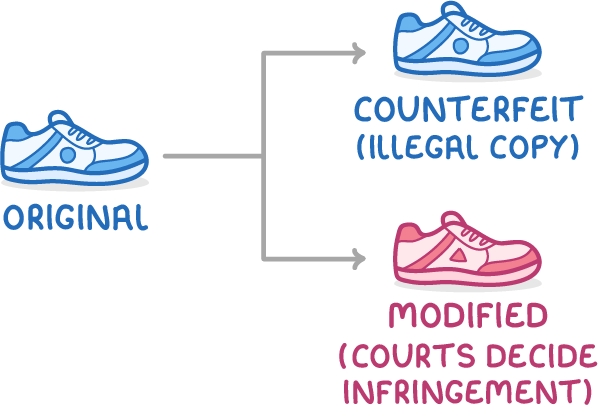
Outcomes of intellectual property theft
- Production of counterfeit goods - Companies steal designs to make items that closely resemble the originals, making them hard to distinguish. This is a straightforward illegal breach, as it copies the product without permission.
- Creation of modified products - Thieves might incorporate some features of the original into a new item that appears different. These cases often end up in court, where judges decide if the new product is sufficiently original or if it infringes on the protected intellectual property.
Economic and geopolitical impacts
Economic effects of counterfeiting
Counterfeiting has a massive financial footprint. For example, in 2019, counterfeit goods imported into the European Union amounted to US$134 billion worth of products. Globally, the trade in fakes represented 2.5% of all world trade that year.
Geopolitical tensions from counterfeiting
- Perceived political weakness - If a government fails to curb counterfeiting, it may appear ineffective in enforcing laws, weakening its position in international negotiations or agreements.
- Reluctance in trade deals - Countries might avoid forming economic partnerships with nations that ignore counterfeiting, viewing it as an attempt to unfairly compete by flooding markets with cheap fakes.
- Disputes between nations - Production often occurs in places like China and Turkey, sparking conflicts with countries whose intellectual property is stolen.
Effects of counterfeiting on TNCs
Ways counterfeiting influences TNC operations
- Reduced investment in research and development - TNCs might cut back on building research facilities in countries with high counterfeiting rates.
- Withdrawal of broader activities - If local authorities seem unresponsive, TNCs could pull out manufacturing or other operations entirely.