6.12 - Addition Polymers from Alkenes
- 1
How alkenes can polymerise to form addition polymers
- 2
Drawing and naming addition polymers
- 3
The issues of plastic waste and methods for disposal
- 4
Principles for sustainable polymer manufacturing
- 5
Biodegradable polymers
Alkenes polymerise by opening their double bonds
Alkenes contain a carbon-carbon double bond.
This bond can open up, allowing alkene molecules to join end-to-end and form long chains called polymers.
- The individual alkene molecules are called monomers.
- Joining many monomers together is called polymerisation.
- Polymers made this way are called addition polymers because the double bond opens up and monomer units are added to the chain.
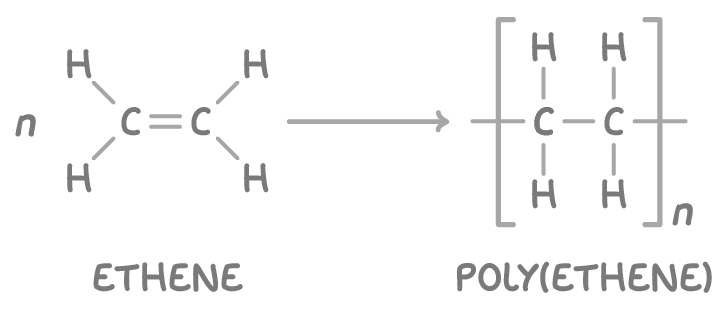
For example, ethene monomers polymerise to form the addition polymer poly(ethene):
Drawing polymer repeating units
Polymers are made up of smaller repeating units. A repeating unit is the smallest section of a polymer chain that repeats over and over.
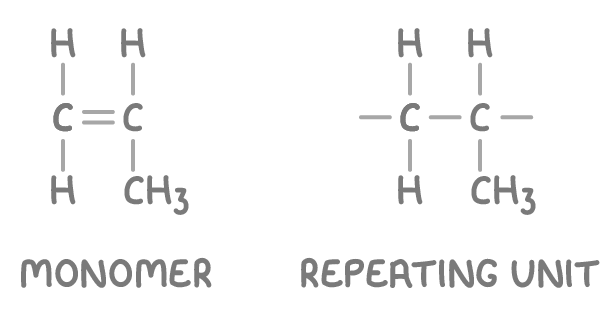
To draw the repeating unit from given monomer:
- Replace the carbon-carbon double bond with a single bond.
- Extend single bonds from each carbon atom to represent attachment sites within the polymer chain.
For example, the repeating unit of poly(propene) can be deduced from the propene monomer.
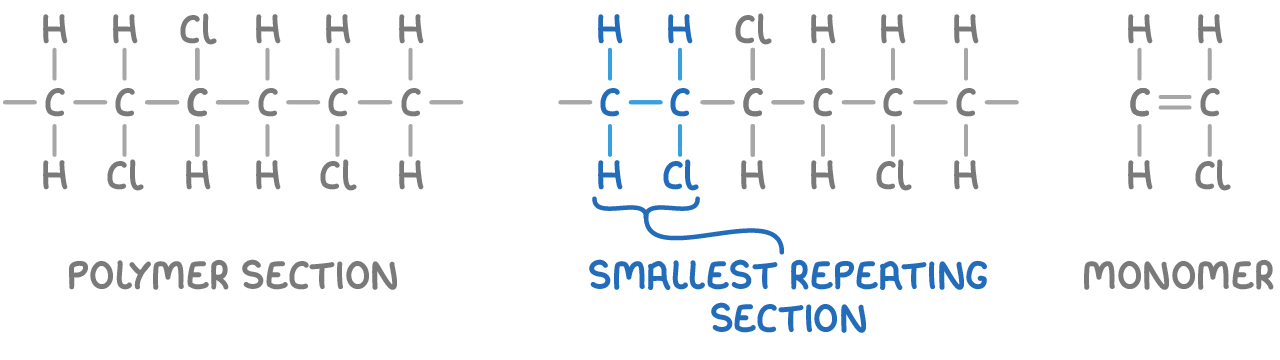
To deduce the monomer from a given polymer section:
- Identify the smallest section that repeats in the full polymer chain.
- Replace the carbon-carbon single bond with a double bond.
For example, the monomer of poly(chloroethene) can be deduced from a section of the polymer chain.
Naming addition polymers
Addition polymers made from alkenes follow systematic naming rules:
- Take the name of the alkene monomer.
- Enclose the monomer name in brackets.
- Add the prefix "poly".
For example, the addition polymer made from butene is poly(butene).
Addition polymers made from alkenes are called polyalkenes.
Dealing with the accumulation of waste plastics
The UK produces over 2 million tonnes of plastic waste every year. It is essential to find environmentally responsible ways to dispose of this waste to reduce harm to the environment. Several strategies can be employed to address this problem.
1. Landfill disposal of waste plastics
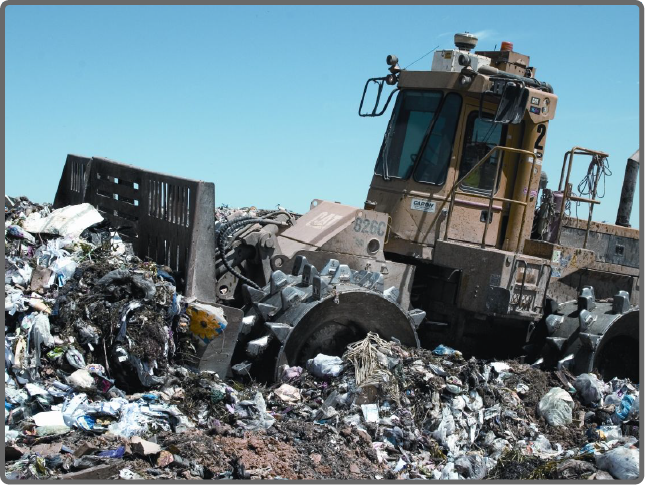
Landfill is a disposal method used when:
- Separating plastic from other waste proves difficult.
- The quantity of plastic is too small to justify the cost of separation.
- Recycling the plastic is technically impractical. However, as the volume of waste increases, there is a growing need to reduce reliance on landfill.
2. Reusing waste plastics
Since many plastics are made from non-renewable oil fractions, reusing them is a logical approach.
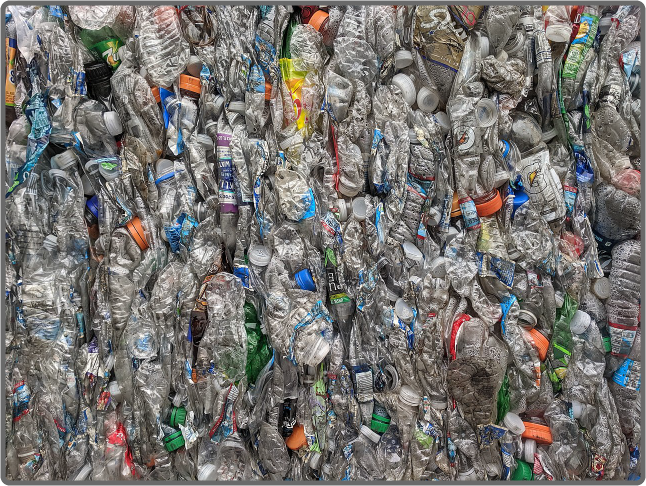
Plastics can be reused in various ways. After sorting them by type:
- Some plastics, such as polypropylene, can be recycled by melting and remoulding.
- Certain plastics can be cracked into their constituent monomers. These monomers can then be used as organic feedstock for producing new plastics or other chemicals.
3. Burning waste plastics
When recycling is not an option, waste plastics can be incinerated, and the resulting heat can be used to generate electricity.
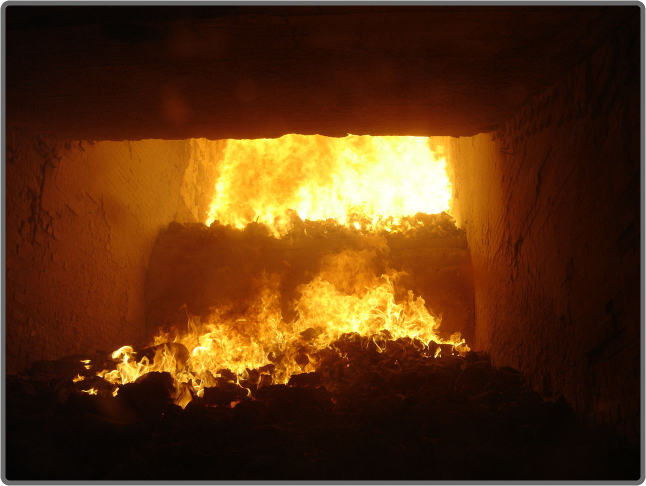
- The incineration process must be carefully managed to minimise the release of toxic gases. For example, polymers containing chlorine, such as PVC, emit hydrogen chloride (HCl) when burned, which must be captured.
- Scrubbers are employed to neutralise gases like HCl by allowing the waste gases from combustion to pass through them, where they react with a base.
- Sorting plastics before incineration can help isolate materials that produce toxic gases.
Sustainable polymer manufacturing principles
Chemicals used in polymer production can be hazardous.
To minimise harmful effects on human health and the environment, chemists follow several principles when designing sustainable polymer manufacturing processes:
- Use reactant molecules that are as safe and environmentally friendly as possible.
- Minimise the use of additional materials, such as solvents.
- Choose environmentally benign chemicals when additional substances are required.
- Employ renewable raw materials whenever feasible.
- Keep energy consumption to a minimum by using catalysts in polymer synthesis to reduce energy use.
- Minimise waste production, especially hazardous waste.
- Ensure the polymer's lifespan matches its intended use, which can reduce the frequency of replacement.
Biodegradable polymers and their decomposition
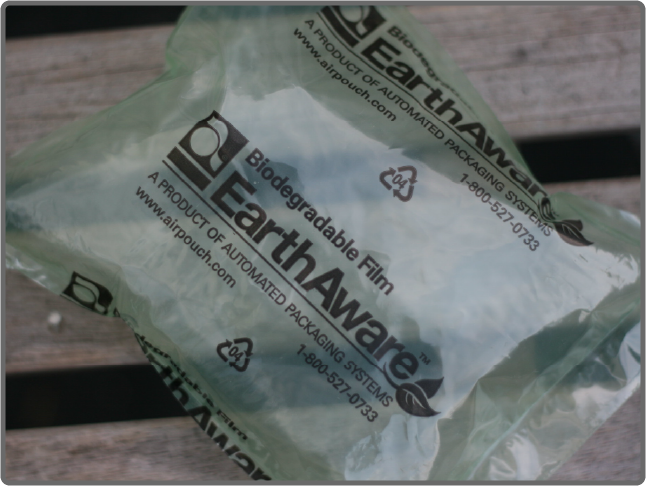
Biodegradable polymers are designed to decompose naturally. Under specific conditions, these polymers break down quickly because organisms can digest them. Biodegradable polymers can be made from renewable raw materials like starch (from maize and other plants) or from oil fractions such as the hydrocarbon isoprene.
Benefits of using renewable raw materials:
- Renewable raw materials, unlike oil, are not exhaustible.
- When biodegradable polymers break down, they release carbon dioxide (a greenhouse gas). If the polymer is derived from plants, the CO2 released during decomposition is equivalent to the CO2 absorbed by the plant during its growth.
- Conversely, biodegradable polymers made from oil effectively transfer carbon from oil reserves to the atmosphere.
- Over their lifecycle, some plant-based polymers can conserve energy compared to oil-based plastics.
Even though these polymers are biodegradable, they still require specific conditions to decompose. This necessitates the collection and separation of biodegradable polymers from non-biodegradable plastics. At present, biodegradable polymers also tend to be more expensive than their non-biodegradable alternatives.